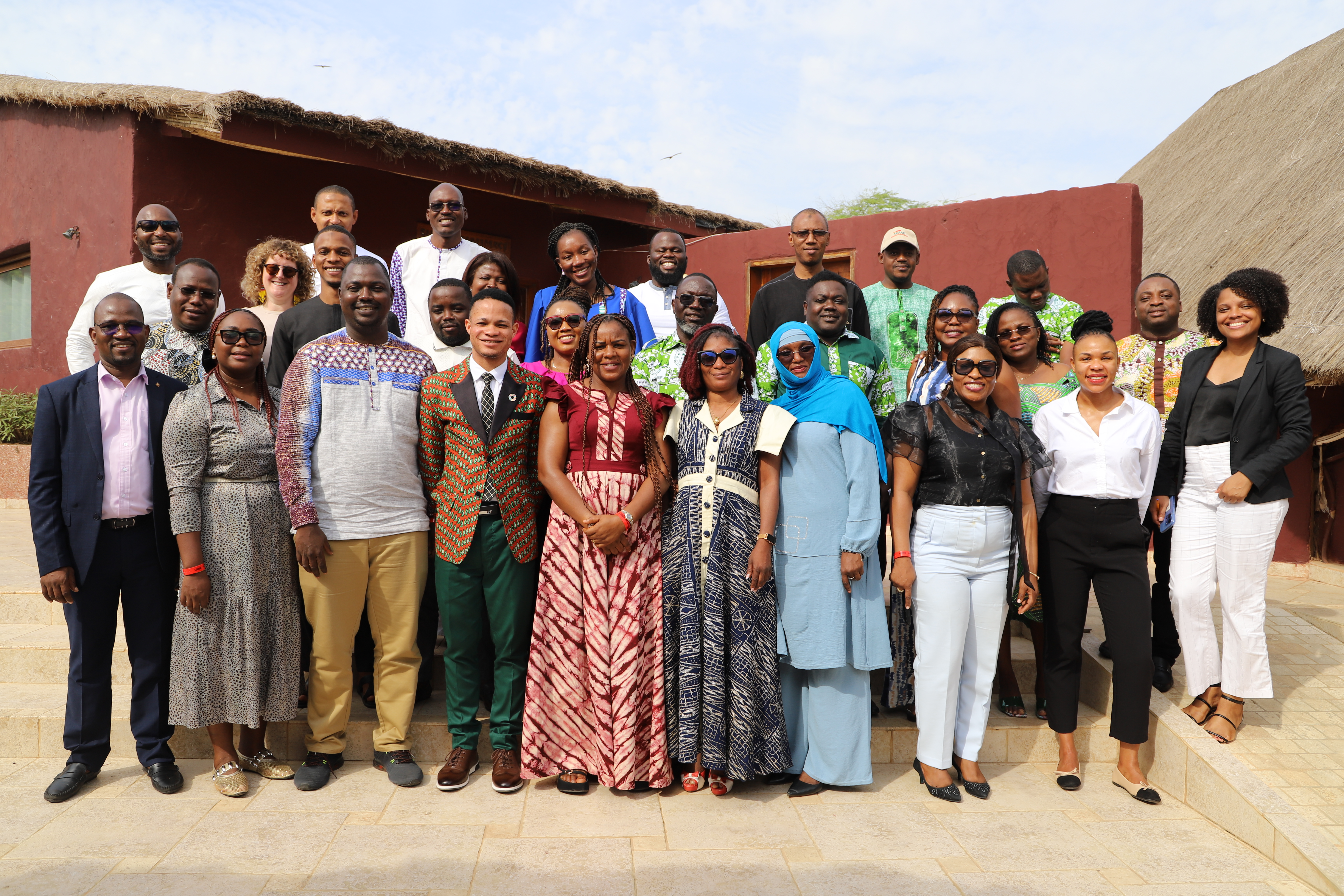




As delegates from 34 African countries gathered for the 9th RHNK Pan-African Adolescent and Youth Sexual Reproductive Health and Rights (AYSRHR) Scientific Conference in Mombasa, Kenya, which took place from 2-5 June 2026, one of the key conversations focused on expanding access to quality abortion care across Africa. The conference was organized by Reproductive Health Network Kenya (RHNK), which is IPPF’s affiliate in the country.
Among the initiators of this conversation was Mr. Kader Avonnon, who leads the Comprehensive Abortion Care in West Africa (SCAAO) programme at IPPF Africa Regional Office. Jointly funded by The Hewlett Foundation and the Foundation for a Just Society International, SCAAO aims to expand access to person-centered abortion care for women and girls in Francophone west and central Africa. During the conference, Mr. Avonnon moderated a panel discussion featuring IPPF MAs implementing the programme, highlighting some of its successes so far. In this interview with Maryanne W. WAWERU, he reflects on some of the key messages from the session.

The SCAAO programme is being implemented by IPPF MAs in Niger, Togo, Burkina Faso and Cameroon. In the panel discussion that you moderated, what learnings did you hope the participants would take away?
While reaffirming the importance of recognizing abortion as essential healthcare, the session focused on the programme’s approaches that have proven effective in advancing laws, policies and access to abortion services in some of Africa’s most challenging contexts. Many participants from the different countries represented at the conference highlighted the challenges and barriers they face in their efforts to expand access to abortion care within complex and heavily restrictive legal and social environments. Therefore, drawing on the experiences of the SCAAO programme, we sought to demonstrate that success is indeed possible. This we did by showcasing the practical tools, innovative approaches and evidence-based strategies that continue to successfully deliver results in the countries we work in.
What do you consider the SCAAO programme's most significant achievement so far, and why?
The most significant achievement of the SCAAO program has been the creation of a growing space for honest, constructive dialogue on abortion care across Francophone west and central Africa. These dialogues with key stakeholders including governments, civil society actors, legislators, religious leaders, women’s rights defenders, and healthcare providers have translated into stronger political commitment in countries like Cameroon, Niger, and Togo. Even in challenging contexts such as Niger, legal reforms have expanded access to abortion care in cases of rape and incest. The results have been tangible, an example being on the service delivery level, where our MAs in Cameroon and Togo have reported more women accessing person-centered services in their facilities. These changes demonstrate that progress is indeed possible, even in restrictive environments.

One of SCAAO’s core approaches has been fostering collaboration between stakeholders from different sectors. How has this multi-sectoral approach contributed to the programme’s success?
One of the most meaningful strategies of SCAAO has been its ability to build bridges between governments, civil society, local political and religious leaders, healthcare providers and other key stakeholders. This collaborative approach has helped create an enabling environment for advocacy on quality, person-centered abortion care. We have seen this translate into practical results in Togo and Cameroon, where Ministries of Health, Justice, and Members of Parliament are working together on a roadmap to improve abortion laws.
In Niger, the Ministry of Health has taken ownership of several SCAAO initiatives, including funding and implementing activities such as training healthcare providers, which is a powerful sign of commitment, and which also speaks to sustainability. At the national levels, SCAAO has supported the establishment of networks and task forces aimed at sustaining momentum, strengthening engagement with decision makers and promoting accountability. We have also witnessed inspiring collaboration around advocacy efforts, such as the International Safe Abortion Day.
The RHNK Conference brought together over one thousand SRHR advocates, healthcare workers, researchers, policymakers, and youth leaders from across Africa. How important are forums like this in advancing access to abortion care and reproductive justice on the continent?
Platforms like the RHNK conference remind us that none of us are working alone, and that we are part of a broader movement working towards a common goal. For many healthcare workers, the challenges can sometimes feel overwhelming, especially those working in restrictive environments. Conferences like this not only offer a good learning and exchange forum, but they also offer a sense of community and solidarity. The RHNK conference was not just about sharing strategies, but about listening to each other, learning from real experiences, and finding strength in shared commitment. Conferences like these provide us with the opportunity to refine our approaches, build genuine partnerships, and expand our networks.
Looking ahead, what are the priorities for Phase 2 of SCAAO (2025-2028), and how will the programme build on the gains made so far?
One of the key priorities in Phase 2 of SCAAO is to keep advocating for legal and policy reforms. We are also keen on solidifying our partnerships with governments, civil society organizations, legislators, religious leaders, healthcare providers and other key stakeholders, to ensure that the results are locally driven and sustainable. While building stronger networks, we also aim to ensure we safeguard the gains already achieved so far. Additionally, we will remain vigilant against efforts to roll back on abortion rights. We remain committed to ensuring that women and girls in Africa have expanded access to quality, person-centered abortion care.
What gives me hope is the energy we witnessed at the conference, especially the strength and commitment of young people. Their voices, combined with the networks we are building, will help us face the challenges ahead and turn our goals into reality.

when
country
Kenya
region
Africa
Subject
Abortion Care