



At the edge of Musenyi Congolese refugee camp in Muyinga Province, life is shaped by uncertainty. Families displaced by conflict live with overcrowded shelters, food insecurity, and limited freedom of movement. In such a fragile humanitarian setting, decisions about sexual and reproductive health (SRH) are often pushed aside, not because they are unimportant, but because survival comes first.
For adolescents, young women, women of reproductive age, and couples, access to SRHR services has long been constrained. Strong sociocultural and religious resistance, widespread rumours about contraception, fear of stigma, and the absence of trusted service providers within the camp meant that many women quietly carried an unmet need for family planning.
“People used to say contraceptives would make women infertile or sick,” recalls Aline, a young mother living in Musenyi. “I wanted to space my children, but I was afraid. There was no one I trusted to ask and the weight of community gossip made the isolation even worse”


The numbers told the same story. In August 2025, before WISH 2 interventions began, uptake of Sayana Press, a discreet, self-injectable contraceptive well suited to humanitarian contexts, was almost non-existent, only three adolescent users under 20 and 20 women aged 25 and above accessed the method. Demand existed, but access and trust did not.
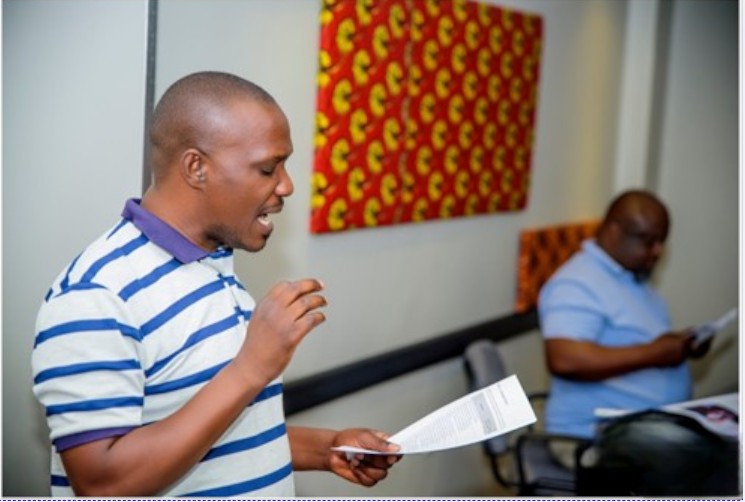
Recognising that facility-based services alone could not meet needs in a humanitarian setting, IPPF’s Member Association, the Association Burundaise pour le Bien-Etre Familial (ABUBEF), through the WISH 2 project, adopted a different approach, one that placed trust, proximity, and lived experience at the centre. 60 community health workers (CHWs), women and men drawn directly from the refugee community, were trained to provide accurate sexual and reproductive health and rights (SRHR) information, mobilise households, and deliver community-based distribution of contraceptives, with a focus on Sayana Press. The intervention was implemented in close collaboration with Burundi’s Ministry of Public Health, through the National Reproductive Health Programme, with technical support from national trainers and financial backing from WISH 2.
For Jean-Claude, one of the newly trained CHWs, the shift was immediate:
“Because I live here, people know me. They know my family and they see how I live. When I speak to them about family planning, they listen differently, with curiosity rather than suspicion. They ask questions they were too afraid to ask before about side effects and about their futures, because they know I have a stake in this community’s well-being just like they do.”
Through community-level service delivery, WISH 2 complemented overstretched health facilities and overcame barriers linked to mobility, distance, and fear. The impact was visible within months. During supervised practical sessions, 300 Sayana Press injections were safely administered, with each trained CHW completing at least five validated injections. More importantly, trust began to replace fear. By December 2025, uptake had risen to 21 adolescent users and 121 women aged 25 and above, a significant shift from the earlier baseline and a clear sign of latent demand once barriers were addressed.
Women reported greater confidence and autonomy in making reproductive choices. Rumours began to fade as accurate information spread through household visits, peer-to-peer conversations, and community dialogues.
“Now I can talk openly,” says Aline. “The health worker is my neighbour. She explains everything. I chose Sayana Press because I feel safe and in control. Today, I realize that having the right information is the first step toward taking control of your own life.”
This trust-based approach increased service uptake while strengthening community ownership and accountability. Building on these results, ABUBEF, through WISH 2, plans to institutionalise and scale this community-centred model to additional refugee camps, embedding people-led SRHR delivery within broader humanitarian health responses, demonstrating that in Musenyi, lasting change began not with infrastructure, but with neighbours empowered to restore choice and dignity.

when
country
Burundi
region
Africa
Subject
Comprehensive Sex Education
Related Member Association
Association Burundaise pour le Bien-Etre Familial