




Women and children are disproportionately affected by natural disaster and war - pregnant women face dangerous deliveries and, in unprotected refugee settlements, rape, trafficking and gender-based violence increase. IPPF delivers essential lifesaving services for women, men and children in times of crisis.
Articles about Emergencies
24 February 2026
Restoring dignity and continuity of SRH care in emergencies: A Story from Al-Dabbah, Sudan
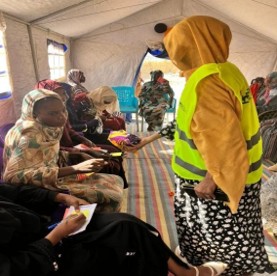
When the conflict reached El Fasher in late 2025, families fled with little more than what they could carry. Within weeks, an estimated 37,000 people arrived in Al-Dabbah, Northern State, transforming an open area into a newly established internally displaced person (IDP) camp almost overnight. Shelters went up quickly, but essential health services did not. For displaced women and adolescent girls, the consequences were immediate. Access to family planning, antenatal and postnatal care, and support for survivors of gender-based violence (GBV) disappeared at the very moment when these services were most needed. Adolescents, women with disabilities, and survivors of violence faced heightened risks in a fragile setting marked by limited infrastructure, overcrowding, and fear. One woman recalled the early days of displacement: “We escaped the fighting, but when we arrived here, there was nowhere to go for care. We did not know who to trust.” Recognizing the urgency, the Sudan Family Planning Association (SFPA), with support from WISH 2, moved quickly. Within a short period, an integrated reproductive health clinic was established inside the Al-Dabbah IDP camp. Using temporary tents, mobile equipment, and essential reproductive health commodities, the clinic began providing family planning, maternal health services, and GBV- related support, restoring care where none had existed. In the first 3 months, the clinic served a very few women and girls, many of whom had gone weeks or months without access to care. Yet the success of the clinic was not only about infrastructure. It was about trust. A pivotal moment came with the assignment of Mr. Mubarak, a laboratory technician who himself had been displaced by the conflict. He spoke the local language, understood cultural norms, and shared the community’s lived experience of loss and uncertainty. “People were hesitant at first,” Mr. Mubarak explained. “But when they saw familiar faces, people who had lived what they lived, they began to believe the clinic was truly for them.” His presence helped overcome cultural barriers that often prevent women from seeking sexual and reproductive health (SRH) services. Alongside him, clinic staff received on-the-job mentoring in client-centred and culturally sensitive care, ensuring that every interaction prioritised dignity, confidentiality, and respect, particularly for GBV survivors. Gradually, trust grew. Women began returning, not just once, but repeatedly. Adolescents sought counselling. Pregnant women resumed antenatal visits. Survivors of violence found a safe place to be heard. One beneficiary described the change simply: “Now I can get family planning and maternal health services without worrying. The staff understand us. They treat us with respect.” Through the strategic engagement of local displaced professionals, the reuse of mobile and laboratory equipment, and the rapid mobilisation of limited resources, the intervention delivered timely and cost-effective results. Despite modest funding, the clinic restored essential services and strengthened the health system’s capacity to respond to emergencies, demonstrating strong value for money for the donor. The intervention showed that even in fragile and humanitarian settings, quality SRH services can be restored rapidly when responses are grounded in local leadership and adaptive learning. Challenges remained. Infrastructure was basic. Resources were stretched. Cultural hesitancy did not disappear overnight. But through adaptive strategies, engaging trusted community members, mentoring staff, and prioritising culturally appropriate care, the team transformed obstacles into learning. The experience in Al-Dabbah offers powerful lessons for other fragile contexts. Displaced professionals are not only beneficiaries; they are also essential responders. Trust and cultural understanding are as critical as medical supplies, and integrated, mobile SRH services can restore care, dignity, and hope even in times of crisis. Today, the clinic in Al- Dabbah stands as more than a health facility. It is a symbol of resilience, proof that with rapid action, local expertise, and dignity-centred care, displacement does not have to mean the end of access to essential health services. It is a reminder that even in the most uncertain moments, hope can be rebuilt, one service, one conversation, and one trusted face at a time.

31 March 2017
SPRINT: Sexual and reproductive health in crisis and post-crisis situations
The SPRINT Initiative provides one of the most important aspects of humanitarian assistance that is often forgotten when disaster and conflicts strike: access to essential life-saving sexual and reproductive health services. We build capacity of humanitarian workers to deliver essential life-saving sexual and reproductive health services in crisis and post-crisis situations through the delivery of the Minimum Initial Service Package (SRH) for reproductive health in emergencies. Through funding from the Australian Government's Department of Foreign Affairs and Trade (DFAT) our SPRINT Initiative has brought sexual and reproductive health to the humanitarian agenda, increased capacity and responded to a number of humanitarian emergencies. Australia has funded the SPRINT initiative since 2007 and has supported reaching 1,138,175 people to date and continues to respond to ongoing emergencies. In each priority country, we work with an IPPF Member Association to coordinate and implement SPRINT activities. Through these partnerships, SPRINT helps strengthen the enabling environment, improve national capacity and provide lifesaving services during times of crisis. You can read more about the SPRINT Initiative and IPPF Humanitarian’s Programme here. Australian Government's Department of Foreign Affairs and Trade (DFAT) Australia's location in the Indo-Pacific provides us with a unique perspective on humanitarian action. Australia is committed to helping partner governments manage crisis response themselves. This is done through building the capacity of the national government and civil society to be able to respond to disaster. DFAT also works with experienced international partners to prepare for and respond to disasters, including other donors, United Nations agencies, the International Red Cross and Red Crescent Movement and non-government organisations.
24 February 2026
Restoring dignity and continuity of SRH care in emergencies: A Story from Al-Dabbah, Sudan
When the conflict reached El Fasher in late 2025, families fled with little more than what they could carry. Within weeks, an estimated 37,000 people arrived in Al-Dabbah, Northern State, transforming an open area into a newly established internally displaced person (IDP) camp almost overnight. Shelters went up quickly, but essential health services did not. For displaced women and adolescent girls, the consequences were immediate. Access to family planning, antenatal and postnatal care, and support for survivors of gender-based violence (GBV) disappeared at the very moment when these services were most needed. Adolescents, women with disabilities, and survivors of violence faced heightened risks in a fragile setting marked by limited infrastructure, overcrowding, and fear. One woman recalled the early days of displacement: “We escaped the fighting, but when we arrived here, there was nowhere to go for care. We did not know who to trust.” Recognizing the urgency, the Sudan Family Planning Association (SFPA), with support from WISH 2, moved quickly. Within a short period, an integrated reproductive health clinic was established inside the Al-Dabbah IDP camp. Using temporary tents, mobile equipment, and essential reproductive health commodities, the clinic began providing family planning, maternal health services, and GBV- related support, restoring care where none had existed. In the first 3 months, the clinic served a very few women and girls, many of whom had gone weeks or months without access to care. Yet the success of the clinic was not only about infrastructure. It was about trust. A pivotal moment came with the assignment of Mr. Mubarak, a laboratory technician who himself had been displaced by the conflict. He spoke the local language, understood cultural norms, and shared the community’s lived experience of loss and uncertainty. “People were hesitant at first,” Mr. Mubarak explained. “But when they saw familiar faces, people who had lived what they lived, they began to believe the clinic was truly for them.” His presence helped overcome cultural barriers that often prevent women from seeking sexual and reproductive health (SRH) services. Alongside him, clinic staff received on-the-job mentoring in client-centred and culturally sensitive care, ensuring that every interaction prioritised dignity, confidentiality, and respect, particularly for GBV survivors. Gradually, trust grew. Women began returning, not just once, but repeatedly. Adolescents sought counselling. Pregnant women resumed antenatal visits. Survivors of violence found a safe place to be heard. One beneficiary described the change simply: “Now I can get family planning and maternal health services without worrying. The staff understand us. They treat us with respect.” Through the strategic engagement of local displaced professionals, the reuse of mobile and laboratory equipment, and the rapid mobilisation of limited resources, the intervention delivered timely and cost-effective results. Despite modest funding, the clinic restored essential services and strengthened the health system’s capacity to respond to emergencies, demonstrating strong value for money for the donor. The intervention showed that even in fragile and humanitarian settings, quality SRH services can be restored rapidly when responses are grounded in local leadership and adaptive learning. Challenges remained. Infrastructure was basic. Resources were stretched. Cultural hesitancy did not disappear overnight. But through adaptive strategies, engaging trusted community members, mentoring staff, and prioritising culturally appropriate care, the team transformed obstacles into learning. The experience in Al-Dabbah offers powerful lessons for other fragile contexts. Displaced professionals are not only beneficiaries; they are also essential responders. Trust and cultural understanding are as critical as medical supplies, and integrated, mobile SRH services can restore care, dignity, and hope even in times of crisis. Today, the clinic in Al- Dabbah stands as more than a health facility. It is a symbol of resilience, proof that with rapid action, local expertise, and dignity-centred care, displacement does not have to mean the end of access to essential health services. It is a reminder that even in the most uncertain moments, hope can be rebuilt, one service, one conversation, and one trusted face at a time.
31 March 2017
SPRINT: Sexual and reproductive health in crisis and post-crisis situations
The SPRINT Initiative provides one of the most important aspects of humanitarian assistance that is often forgotten when disaster and conflicts strike: access to essential life-saving sexual and reproductive health services. We build capacity of humanitarian workers to deliver essential life-saving sexual and reproductive health services in crisis and post-crisis situations through the delivery of the Minimum Initial Service Package (SRH) for reproductive health in emergencies. Through funding from the Australian Government's Department of Foreign Affairs and Trade (DFAT) our SPRINT Initiative has brought sexual and reproductive health to the humanitarian agenda, increased capacity and responded to a number of humanitarian emergencies. Australia has funded the SPRINT initiative since 2007 and has supported reaching 1,138,175 people to date and continues to respond to ongoing emergencies. In each priority country, we work with an IPPF Member Association to coordinate and implement SPRINT activities. Through these partnerships, SPRINT helps strengthen the enabling environment, improve national capacity and provide lifesaving services during times of crisis. You can read more about the SPRINT Initiative and IPPF Humanitarian’s Programme here. Australian Government's Department of Foreign Affairs and Trade (DFAT) Australia's location in the Indo-Pacific provides us with a unique perspective on humanitarian action. Australia is committed to helping partner governments manage crisis response themselves. This is done through building the capacity of the national government and civil society to be able to respond to disaster. DFAT also works with experienced international partners to prepare for and respond to disasters, including other donors, United Nations agencies, the International Red Cross and Red Crescent Movement and non-government organisations.