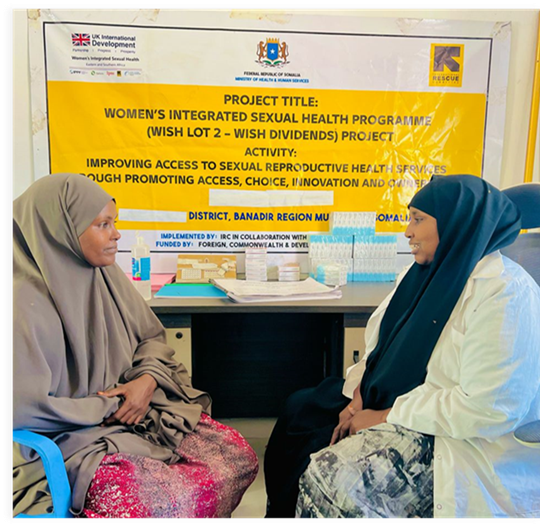




In Karan District, Mogadishu, access to family planning (FP) services remains limited due to persistent myths and misconceptions about modern contraceptives, fear of side effects, and deeply rooted social norms. These barriers disproportionately affect women in fragile and humanitarian settings, where repeated pregnancies pose significant health risks and access to accurate information is constrained.
Nimca Ahmed Ali, a 27-year-old mother of six, had never used modern family planning methods. Despite her husband’s encouragement, she resisted FP due to fear of perceived side effects and limited understanding of available options. Her husband, increasingly concerned about her declining health as a result of closely spaced pregnancies, sought support from health providers and encouraged Nimca to seek counselling at De-Martini Hospital.

Under the WISH 2 project, Nimca received focused, client-centred counselling at De-Martini Hospital from a trained health care provider, Sagal. The provider had previously been trained in Empathways skills, enabling her to engage Nimca with empathy, active listening, and trust-building techniques that supported informed and voluntary decision-making.
The counselling process addressed myths and misconceptions around family planning, explained how different FP methods work, discussed their benefits and potential side effects, and created space for Nimca to ask questions openly. Importantly, the approach encouraged constructive male partner engagement, ensuring Nimca’s husband was supportive without undermining her autonomy.
Following comprehensive counselling and reassurance of continued follow-up support, Nimca chose Implanon, a long-acting reversible contraceptive, with a clear understanding of the method and confidence that she could return to the facility if she experienced any concerns.
As observed during routine supervision and mentorship, Nimca’s decision to adopt family planning enabled her to delay her next pregnancy and regain control over her reproductive health. She reported improved physical and emotional well-being, reduced anxiety related to frequent pregnancies, and more stable family relationships. With fewer health concerns and increased confidence, she now has more time to care for her children and nurture her marriage.
Nimca has since become an informal advocate within her community, encouraging other women to seek accurate information and counselling at health facilities rather than relying on rumours or fear.
“I was afraid because I did not understand family planning. After counselling, I felt confident in my decision. I feel healthier, and my family is more stable.”
— Nimca Ahmed Ali, FP client, Mogadishu
Her experience demonstrates how empathetic counselling combined with supportive male engagement can shift attitudes, improve informed choice, and increase uptake of modern FP methods in fragile settings.
Initial resistance driven by myths and fear of side effects was the primary challenge. This was addressed through personalised counselling, clear explanations using visual demonstrations, and assurance of follow-up care. Continuous support from the health care provider and Nimca’s husband helped reinforce confidence and sustain her choice.
In fragile and humanitarian contexts, combining empathetic, client-centred counselling with supportive male partner engagement can effectively address myths and fears around contraception. When women are provided with accurate information, trust-based counselling, and space for family dialogue, uptake of modern family planning methods increases while preserving informed choice and autonomy.

when
country
Somaliland
region
Africa
Subject
Contraception