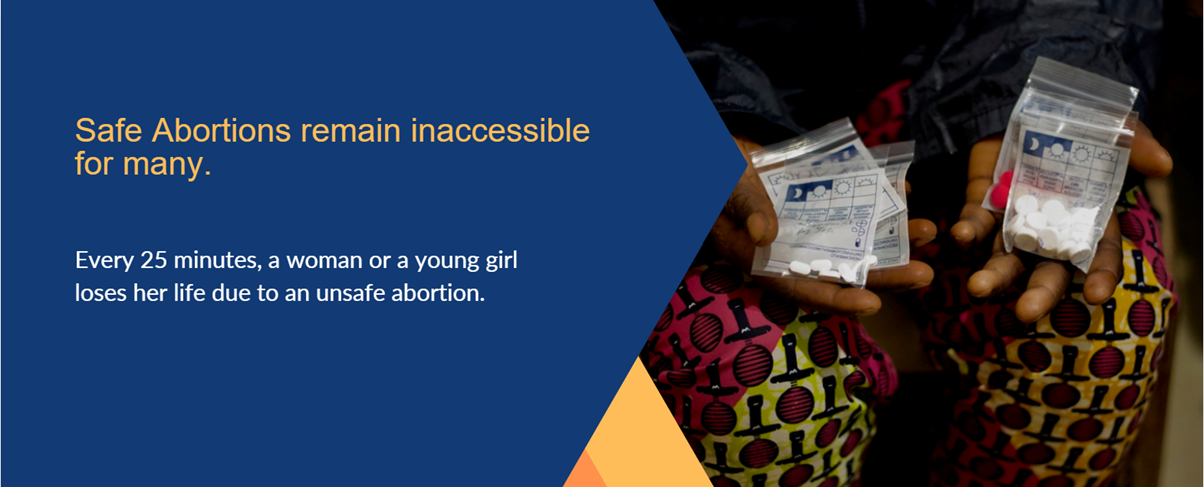




Nyakato* is a 20-year-old university student in Bushenyi district, western Uganda. 13 months ago, she found herself in a predicament: she was unexpectedly pregnant. In this article, Nyakato narrates the events that followed this discovery. Her experience highlights the important role that trained peer educators by Reproductive Health Uganda (RHU)- an IPPF Member Association, play in offering young people life-saving sexual reproductive health (SRH) information and services.
Nyakato narrated her experience to Maryanne W. WAWERU.
“When I joined university as a bubbly, ambitious 18-year-old, I was excited about what lay ahead. Enrolling in a Nursing degree course was a significant step towards achieving my career goals in the medical field. In the first week, the university organized a detailed orientation programme for all new students which included learning sessions on sexuality education. The university had invited a team of peer educators from Reproductive Health Uganda (RHU) to take us through the educative sessions. The peer educators shared comprehensive information on different sexual reproductive health and rights (SRHR) topics including contraceptives, pregnancy, sexually transmitted infections (STIs), gender-based violence, unsafe abortion and HIV/AIDS. I found the sessions to be engaging and insightful.
Notably, at the end of each session, the peer educators would share their mobile phone numbers with us, together with official contact details of the RHU Bushenyi clinic. They encouraged us to save the numbers in case we needed to ask additional questions or seek clarification on the information they had shared. The peer educators also told us to reach out to them if we ever found ourselves in a situation of need. I saved the numbers on my phone.
Discovering I’m pregnant
A few months later –in the second semester, I unexpectedly discovered I was pregnant. I had been using the ‘safe days’ method where I would avoid sexual intercourse on the days that I suspected I was ovulating and could easily conceive. But this had not worked because there I was, pregnant, shocked, and confused.
As I digested the reality of my unplanned pregnancy, I became very anxious. Being pregnant meant deferring my studies as I knew I wouldn’t be able to juggle both successfully. I was also not ready to lose a full academic year. I was still young and with goals to achieve and having a baby at that time would only stall my career ambitions. Besides, I did not feel emotionally and mentally ready for the responsibilities of motherhood.
Additionally, I feared being reprimanded by my parents. While preparing to join the university, they had taken time to counsel me about the need to focus on my studies and avoid distractions that would derail my academic goals. The news of an unplanned pregnancy would have been a huge disappointment.
Informing my boyfriend
The turmoil in my mind about the pregnancy caused me great anguish. Several days later, I decided to inform my boyfriend. When I did, he said he was not ready for fatherhood. At 26, he was working but said he did not feel stable enough to start a family. Since neither of us felt prepared for that responsibility, we agreed to end the pregnancy. He then asked if I knew of a place where I could have the pregnancy terminated safely. That is when I remembered the numbers of the RHU peer educators I had saved on my phone during orientation week. I immediately reached out to one of them.
The peer educator listened to me keenly, counselled me and thereafter referred me to the RHU Bushenyi clinic where he said I would receive further assistance. I felt a huge wave of relief after opening up to him, knowing that he genuinely understood my predicament. He assured me that the RHU team were SRH experts and I would be in safe hands. Comforted by his words, I made my way to the RHU Bushenyi clinic.
Undergoing a safe abortion procedure
There, I met a clinician who attended to me. He did not rush me as I spoke and was very calm and understanding. I did not feel judged. His professionalism made me know that I was in the right place. I was about eight weeks pregnant at the time, and the clinician explained to me the process of a medical abortion, which involved taking medication at specific timings. I chose to start the process right there at the clinic under his guidance, then continue with the rest of the medication at my hostel. He gave me very clear instructions on how and when to take the medication, which I jotted down so that I would not forget. Additionally, he gave me his number and told me to contact him in case I needed to.
All went as expected and the following day, when it was time to take the second dose, I called him on phone just for his reassurance that I was following the right steps, which he confirmed that I was. I was grateful that I could reach out to him easily during that delicate time without having to physically present myself at the clinic. He would also periodically call me to follow-up on my progress. Indeed, I was in good hands, just as the peer educator had assured me.

Post-abortion contraceptive care
After a few days, the clinician requested me to present myself back at the clinic for a scan. I did so, and the scan confirmed that the procedure had been successful and that I was in good health. The clinician then took time to explain to me the importance of taking up a contraception to avoid another unplanned pregnancy. After taking me through several contraceptive options, I settled on the three-month injection.
Where I live is about 25 kilometres from the RHU Bushenyi clinic, and when it’s time to renew the injection, I inform the RHU peer educator in my area, who then gets the injection from RHU. This helps solve the transport challenge for me. The peer educator then administers it, as he has been well trained to do so. This arrangement has worked perfectly for me as I have not had any pregnancy scare since then.
Because of my access to safe abortion care at RHU, my life got back on track, and I was able to continue with my studies without interruption. I hope to have three or four children in the future, but I will only have them when I am ready mentally and emotionally, and when I have completed my degree and earning an income that will enable me to provide for them.
Empowering freshmen with SRHR information
I’m grateful to the RHU team and its peer educators who share information with fresh university graduates. I am glad to have participated in RHU’s educative SRHR sessions during the orientation week, as the information I received came in handy just when I needed it. The RHU clinical team is also excellent in their work, helping young women like me access safe and affordable abortion care. I paid 70,000 Ugandan shillings ($19) for the medical abortion and the scan. This was an affordable cost, which I covered using savings from the allowance my parents give me.
Based on my experience, I have since been talking to new university female students, encouraging them to attend the sexuality education sessions during the orientation week by RHU. I also encourage them to save the numbers of the peer educators which are shared during the sessions as they never know when they may need them."
*Nyakato’s name changed to protect identity.
when
country
Uganda
region
Africa
Subject
Abortion Care, Contraception
Related Member Association
Reproductive Health Uganda