



Strengthening the enabling environment for SRHR and reinforcing health systems to deliver sustainable, inclusive access to integrated SRHR services with a special focus on humanitarian and fragile settings.
The Women’s Integrated Sexual Health (WISH) project, championed by a ‘Leave No One Behind’ approach, advances quality, integrated, and inclusive family planning and sexual and reproductive health (SRHR) services tailored to the needs of marginalized and hard-to-reach populations. In Eastern Africa, WISH2 builds on proven strategies and successes to extend access for populations often overlooked, young people, persons with disabilities, those living in poverty, and communities affected by conflict or displacement.
Donor: Foreign, Commonwealth and Development Office (FCDO)
Budget: Total budget of £ 75 million for East and Southern Africa
Duration: 2024 to 2029
Funded by the UK Foreign, Commonwealth & Development Office (FCDO) and representing a significant commitment within the UK Government’s family planning framework, the WISH2 Eastern Africa initiative is led by the International Planned Parenthood Federation (IPPF) and executed by a dedicated consortium with partners including the International Rescue Committee (IRC), IPAS, Options Consultancy Services, and the Johns Hopkins Center for Communication Programs (JHU-CCP).
Background on WISH 1 to WISH 2 Evolutions
The Women's Integrated Sexual Health project was launched in 2018 as FCDO’s flagship initiative to expand access to voluntary family planning and sexual and reproductive health and rights services across 27 countries in Africa and Asia. The project was delivered in two parts, with Lot 2 (WISH2ACTION) implemented by a consortium led by IPPF, alongside MSI, Options, Humanity & Inclusion (HI), and IRC. WISH2ACTION aimed to deliver 16.921 million couple years of protection (CYPs) and reach 2.2 million additional users through a comprehensive approach to ensure equitable access to family planning and SRHR, prioritising youth under 20, the very poor, and marginalised populations including persons with disabilities and those in humanitarian or hard-to-reach settings. Its design integrated four core outputs: community and individual choice (Output 1), sustainability through national ownership (Output 2), access to quality services (Output 3), and global goods and evidence (Output 4). The success and learning from WISH2ACTION laid the foundation for WISH 2, which deepens focus on national systems strengthening, disability inclusion, safeguarding, and resilience in fragile contexts, ensuring SRHR remains a global priority while reaching those most at risk of being left behind.
WISH 2 builds on successes and learning from WISH 1, while shifting toward greater national ownership, systems resilience, and sustainability. With a sharper focus on fragile and conflict-affected contexts, WISH 2 moves beyond service delivery to embedding SRHR within national policy frameworks, strengthening accountability, and enhancing inclusion through the systematic integration of disability rights, safeguarding, and climate-sensitive approaches. It places greater emphasis on evidence generation, adaptive learning, and localised solutions, ensuring that services are not only available but also accessible, equitable, and responsive to community needs. WISH 2 represents a strategic evolution, aligning with global priorities to “leave no one behind” while reinforcing SRHR as a critical component of universal health coverage and sustainable development.
2. Where We Work
Geographic Footprint
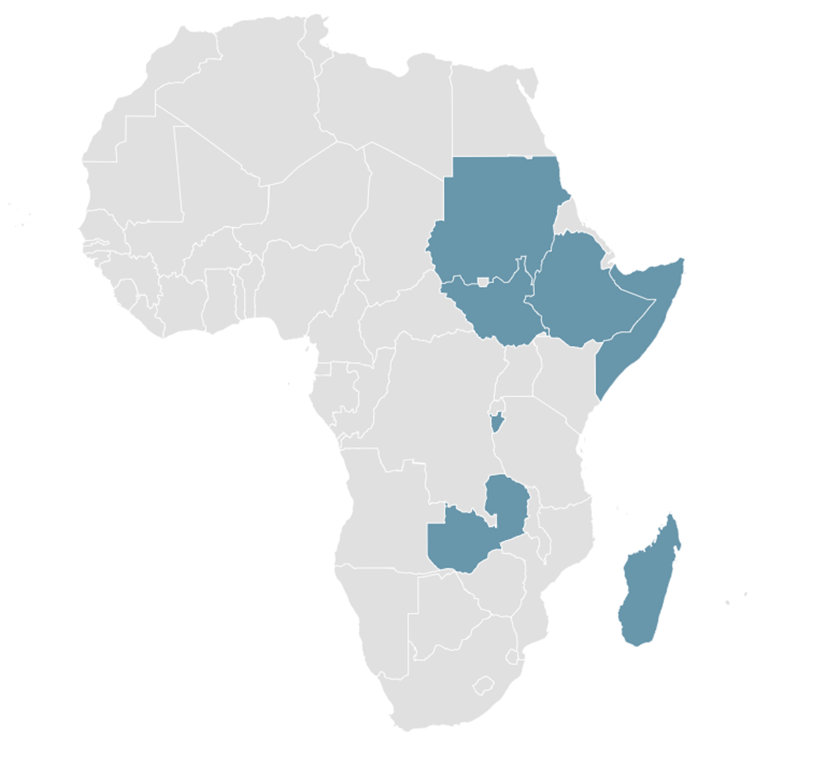
WISH 2 Eastern and Southern Africa works across seven countries including,
- Burundi
- Ethiopia
- Madagascar
- Somalia
- South Sudan
- Sudan
- Zambia
Each country’s approach is adapted to local priorities and contexts, ensuring that interventions are both efficient and community responsive.
3. Leaving No One Behind
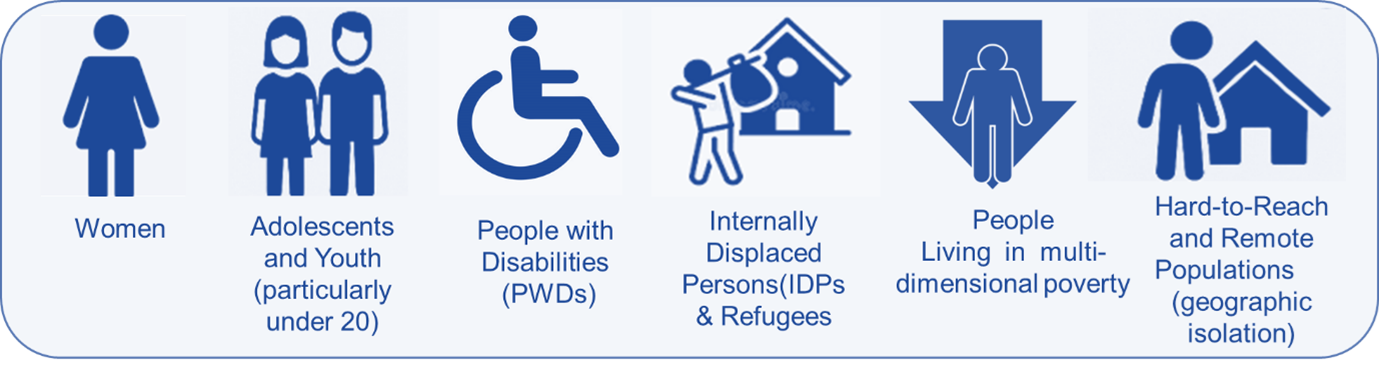
WISH 2 Eastern and Southern Africa is committed to ensuring that every individual, especially those frequently marginalized, is empowered to access life-changing SRHR services. Our integrated approach prioritizes:
Women
Women, particularly those from economically disadvantaged backgrounds or living in patriarchal community, continue to face systemic barriers to SRHR services. WISH2 prioritizes their needs through respectful, client-centred care that is non-judgmental, confidential, and accessible. Services are tailored to uphold women's autonomy, support informed decision-making, and respond to gender-based disparities, including the risk of sexual and gender-based violence (SGBV).
Meeting the Needs of Youth Under 20
In Eastern and Southern Africa, millions of youths, especially adolescents, encounter significant challenges in accessing accurate information and quality SRHR care. WISH2 provides youth-friendly, confidential, and age-appropriate services and education, ensuring young people are empowered to make informed decisions about their bodies, relationships, and futures. The project works closely with schools, youth-led organizations, and communities to create safe spaces for dialogue and service delivery.
Reaching People Living with Disabilities
People with disabilities face intersecting layers of exclusion in accessing health care, including physical, attitudinal, and informational barriers. WISH2 collaborates with Organizations of Persons with Disabilities (OPDs) to co-design inclusive interventions. This includes training service providers on disability rights and stigma reduction, adapting communication materials, and ensuring health facilities are physically and socially accessible.
Serving to Reach the Last Mile
In rural, remote, and impoverished communities, access to SRHR services remains limited. WISH2 uses poverty mapping, mobile outreach, and community-based service models to reach populations often overlooked by mainstream health systems. By partnering with local actors, such as community health workers, faith leaders, and women's groups, the project ensures culturally sensitive and sustainable service delivery in the hardest-to-reach areas.
Health System Resilience During Crises
Fragile and conflict-affected settings such as Ethiopia, Somalia, Sudan and South Sudan require adaptable and responsive health strategies. WISH2 brings services closer to displaced and crisis-affected populations through mobile clinics, referral linkages, and community-based distribution models. These approaches ensure continuity of care, particularly for women and girls who are most at risk during humanitarian emergencies.
This focus on equity ensures that even the most vulnerable groups benefit from and contribute to their communities’ overall health and well-being.
4. Our Approach
The WISH 2 project adopts Cluster Model 2.0 as a strategic approach to enhance coordination, collaboration, and efficiency among implementing partners across project countries. This updated model builds lessons from earlier phases by fostering cross-country learning and technical exchange within defined clusters, each comprising countries with similar contextual realities, such as humanitarian settings, fragile contexts, or policy environments. Cluster Model 2.0 places greater emphasis on peer-to-peer support, decentralised learning, and adaptive programming, ensuring that innovations and evidence-based practices are shared and applied in real time. It also strengthens joint planning, monitoring, and reporting mechanisms, promoting a unified and responsive delivery of SRHR services tailored to each context while maintaining alignment with the overall project strategy.
Strategic Focus through Four Interlinked Outputs
WISH 2 Eastern and Southern Africa is anchored on a multi-pronged approach, organized around four strategic outputs:
-
Output 1: Social Behaviour Change (SBC) and Social Norms
Led by JHU-CCP
Focuses on increasing awareness, demand, and acceptance of modern contraceptive use through evidence-based communication and community engagement.
- Promotes positive SRHR attitudes and behaviours.
- Addresses gender and social barriers, myths, and misconceptions.
- Engages men, youth, religious, and community leaders to drive social norm change.
- Address harmful gender norms and stigma while promoting shared decision-making in family planning.
-
Output 2: Access to Inclusive and Integrated SRHR Services
Led by IPPF, with contributions from IRC
Ensures that women, girls, and marginalized populations can access quality, affordable SRHR services.
- Strengthens service delivery, especially in fragile and humanitarian contexts.
- Maintain robust monitoring systems to track service delivery quality and client outcomes.
- Promotes disability inclusion and youth-friendly services.
- Integrates FP/SRHR with other health services (SGBV response).
- Enhance service delivery through capacity building, client-centred practices, and mobile outreach tailored to youth, people with disabilities, and conflict-affected communities.
-
Output 3: Policy and Systems Environment
Strengthening Policy, Advocacy, and Systems
Led by IPAS & Options Consultancy Services
Strengthens national and subnational policies, systems, and partnerships that support SRHR.
- Advocates for inclusive, rights-based SRHR policies.
- Builds government and civil society capacity.
- Fosters sustainability through domestic financing and coordination.
- Offer technical support for policy development, budget advocacy, and strategic planning.
- Build capacities of national health systems and local governments to ensure long-term sustainability.
-
Output 4: Evidence and Learning
Focuses Evidence-Driven Learning and Knowledge Sharing
Led by Oxford Policy Management (OPM)
Enhances the evidence generation, use, and dissemination to inform programme adaptation and SRHR advocacy.
-
- Utilise data to inform continuous project improvement and monitor key performance indicators.
- Use operational research to influence policy and programme design.
- Promote adaptive learning, knowledge management and facilitate cross-learning exchanges.
- Generate knowledge products and global goods
5. Partners
The success of WISH 2 Eastern and Southern Africa rests on a robust partnership model that combines technical expertise in clinical service delivery, health systems strengthening, policy advocacy, and strategic communications.
Consortium Members:
- IPPF (Lead): Oversees project strategy, quality assurance, and inclusive service delivery.
- International Rescue Committee (IRC): Implements conflict-responsive programming and community-based outreach.
- IPAS: Provides comprehensive safe abortion care and post-abortion services where legally permissible.
- Options Consultancy Services: Drives policy reform, systems strengthening, and governance enhancement to support sustainable SRHR outcomes.
- Johns Hopkins Center for Communication Programs (JHU-CCP): Leads on social and behaviour change initiatives that reshape social norms and empower communities.
Together, these partners harness their individual and collective strengths to ensure the project’s impact is broad, sustainable, and transformative.
6. WISH 2 Targets and Results
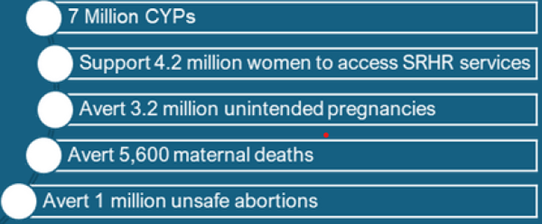
The project’s impact is measured using key performance indicators (KPIs), including:
Couple Years of Protection (CYPs): Estimates the duration of protection provided by various contraceptive methods.
Youth Reach: Tracks the number of young people accessing SRHR information and services.
Sustainability: Assesses the extent to which interventions, systems, and partnerships are maintained beyond project implementation.
Regular updates and dynamic dashboards capture these metrics, ensuring transparency and accountability to stakeholders and clients alike.
when
country
Burundi, Ethiopia, Madagascar, Somaliland, Sudan, Sudan, Zambia
WISH 2 Connect - April 2025

WISH 2 Connect - September 2025
WISH 2 Connect - December 2025
WISH 2 Connect - March 2026