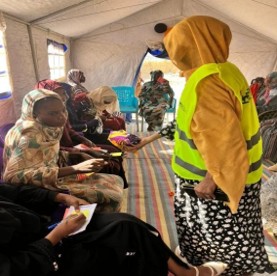




At the height of the crisis along the White Nile, Kosti reception centre was receiving up to 1,500 displaced people every week. Most arrived with nothing. For women, the situation was even more urgent. Nearly six in ten were of reproductive age, many having gone months without any form of healthcare. No antenatal care, no contraception, no support during pregnancy or after loss. The few existing health facilities were overwhelmed, struggling to keep up with the growing demand.
This is where WISH 2 stepped in.
Through its partner SFPA, WISH 2 deployed a mobile health unit designed to meet people where they were, at the edge of displacement, where services had effectively disappeared. The team was small but deliberate: a nurse, a midwife, a community health worker, and a data recorder. They brought with them not just supplies, but a system, one that ensured services were delivered, recorded, and adapted based on real-time needs.
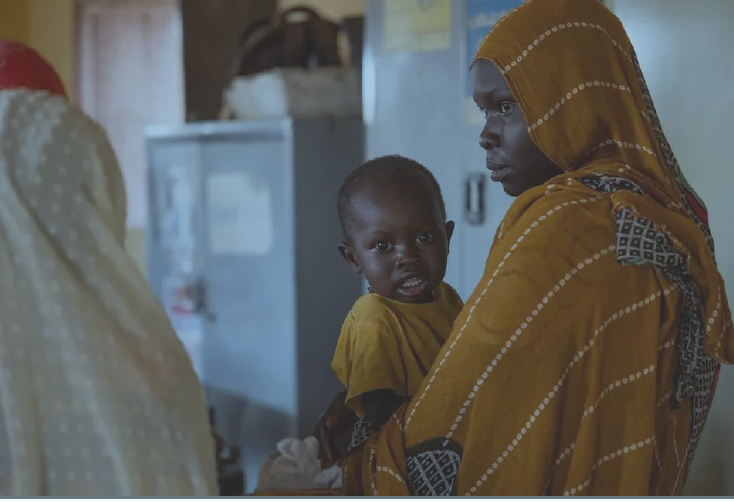
One afternoon, Fatima, a 28-year-old woman, arrived at the clinic after miscarrying during her journey north. She was weak, malnourished, and bleeding heavily. Without immediate care, she would not have survived. The WISH 2-supported midwife stabilised her using misoprostol from the programme’s emergency drug kit and arranged a referral to the nearest hospital. That intervention did more than save her life, it reconnected her to a system of care that had been out of reach.
We came to this place with nothing. The mobile clinic was the first proof that someone remembered we existed, Said Fatima.
In just three months, the mobile clinic became a lifeline. It delivered 2,847 consultations, reached over 1,200 women with family planning counselling, and provided nearly 900 women with contraceptive methods. For many, this was the first time in months, sometimes longer, that they had been able to make informed decisions about their futures. Antenatal care, often the first casualty in crisis settings, was reintroduced for women who had gone unseen and unsupported.But the real impact of WISH 2 is best understood through what happened next.
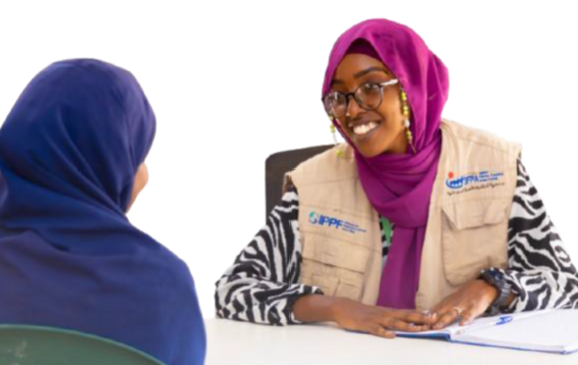
Six weeks later, Fatima came back.
This time, she was not arriving in crisis. She came to choose a family planning method and to thank the team. Her return told a bigger story: access had shifted from emergency response to continuity of care. What began as a life-saving intervention had become an entry point into longer-term reproductive health support.
At first, community leaders were hesitant to engage,” explained a mobile SRHR counsellor. “But as we continued the sessions, trust started to build. Those who were initially resistant began attending regularly, and within a few weeks, some even asked us to bring these discussions to their own villages. What began as outreach quickly became something the community was actively asking for.
This is the difference WISH 2 makes. It goes beyond delivering services to restoring access where it has collapsed, rebuilding trust where systems have failed, and creating a pathway from crisis to continuity of care, ensuring that people in fragile settings are not left behind.
when
country
Sudan
region
Africa