



Articles about Activism
14 May 2026
Standing Firm for SRHR and Women’s Rights Amid Growing Backlash at the 87th ACHPR
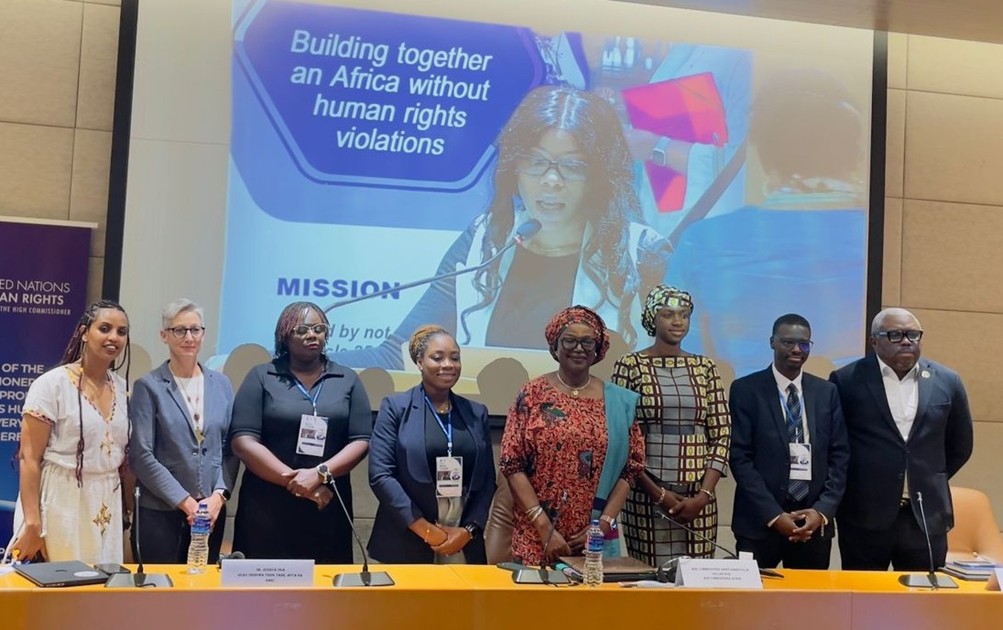
Banjul, The Gambia, May 2026 On the margins of the 87th Ordinary Session of the African Commission on Human and Peoples’ Rights (ACHPR) during the NGO Forum, advocates, policymakers, and human rights leaders came together to confront a shared reality: while Africa has made significant gains in advancing sexual and reproductive health and rights (SRHR) and women’s rights, these gains are increasingly under threat. By Cheikh Tidjane N’DONGO, IPPF Africa Regional Senior Advocacy Advisor A panel organized by the Office of the United Nations High Commissioner for Human Rights (UN OHCHR) and IPPF Africa (IPPF ARO), through the financial support of the Packard Foundation and the Government of Luxembourg, on “Defending Rights in Hostile Contexts: Attacks on Human Rights actors advancing Sexual and Reproductive Health and Rights in the Context of Shrinking Civic Space and Gender Backlash”, panelists examined both the nature of the current backlash and the strategies proving effective in defending hard‑won rights. The panel has been moderated by Hon. Janet Ramatoulie Sallah‑Njie, Commissioner and AU Special Rapporteur on the Rights of Women in Africa, shifting the focus from challenges to solutions. Hon. Sallah‑Njie noted: “Across the continent, we see African actors leading with courage and creativity. These good practices remind us that women’s rights are firmly rooted in African values of dignity, equality, and justice.” A shrinking civic space and coordinated backlash Across the continent, SRHR defenders, health providers, and women’s rights organizations are facing escalating attacks, restrictions, and delegitimization. These challenges were a central focus of the panel 'Defending Rights in Hostile Contexts', which highlighted how opposition to SRHR is increasingly organized, well‑resourced, and often framed through narratives of “culture,” “morality,” or “African values.” Dr. Jessica Oga, Head of Ubingwa Think Tank, Afya Na Haki, highlighted that “The cultural framing is the most sophisticated tool in the anti-rights toolkit. When a woman defends reproductive rights in Africa today, she is not presented as defending human rights. She is presented as betraying her culture, her community, her identity. The counter to it is not to abandon cultural conversation. The counter is to reclaim it, using Africa's own jurisprudence, Africa's own treaty architecture, Africa's own definition of Ubuntu, one that protects the most vulnerable.” Panelists underscored that this backlash does not occur in isolation. It is embedded within a broader shrinking of civic space, marked by restrictive laws, regulatory pressures on civil society, and heightened risks for human rights defenders, particularly women and those working on gender equality and bodily autonomy. Gendered disinformation, intimidation, and legal harassment continue to undermine both advocacy and service delivery, with direct consequences for access to sexual and reproductive health care. Lived realities of defenders and providers The panel brought forward concrete examples of how backlash affects day‑to‑day work. SRHR providers and advocates described professional intimidation, regulatory harassment, and personal attacks that disrupt services and create fear. Drawing on frontline experience, Nelly Munyasia, Executive Director of the Reproductive Health Network Kenya (RHNK), underscored the pressure on service delivery: “Shrinking and reframed funding landscape that shifts away directly from rights-based funding leads to fragmentation of the health system through dismantling of [the] integration of SRHR service delivery.” Institutional resistance and the role of National Human Rights Institutions (NHRIs) Panelists also examined how laws and regulatory frameworks are increasingly used to constrain SRHR advocacy, often indirectly, through licensing rules, funding restrictions, or vague public order provisions. A key moment of the panel focused on the preventive role national human rights institutions (NHRIs) can play when rights come under threat. Commissioner Halima Dibba, National Human Rights Commission of The Gambia, reflected on recent efforts in The Gambia to resist attempts to roll back protections against female genital mutilation (FGM). Commissioner Dibba stressed: “Regression is not inevitable. When institutions act early, ground their positions in the law, and work closely with civil society, it is possible to stop harmful reversals before they take hold.” The discussion highlighted this case as an example of how coordinated institutional action can defend established protections and reinforce public trust in human rights frameworks. Building protection, resilience, and solidarity Throughout the discussions, participants identified protection and solidarity as essential to sustaining SRHR and women’s rights work. Effective strategies include legal support for defenders, digital and psychosocial protection measures, and stronger alliances between civil society, health providers, faith leaders, and institutions. Crucially, there was broad agreement that no single actor can confront the backlash alone. Regional bodies, states, and non‑state actors must work together to strengthen accountability, safeguard civic space, and ensure that defenders can operate without fear. Speakers reaffirmed the Maputo Protocol as a cornerstone of these efforts, emphasizing its relevance as a living instrument for protecting bodily autonomy and gender equality. Looking ahead As the 87th ACHPR session continues, the conversations in Banjul signal both concern and resolve. While the backlash against SRHR and women’s rights is real and intensifying, so too is the determination of African actors to defend progress, protect defenders, and advance rights grounded in equality and justice. For IPPF ARO and its partners, these exchanges reaffirm the importance of sustained advocacy, regional engagement, and solidarity with those on the frontlines, ensuring that sexual and reproductive health and rights, and the rights of women and girls in all their diversity, are not only defended but continue to advance.
19 June 2025
Reclaiming African Pride: We Refuse to Be Legislated Out of Existence
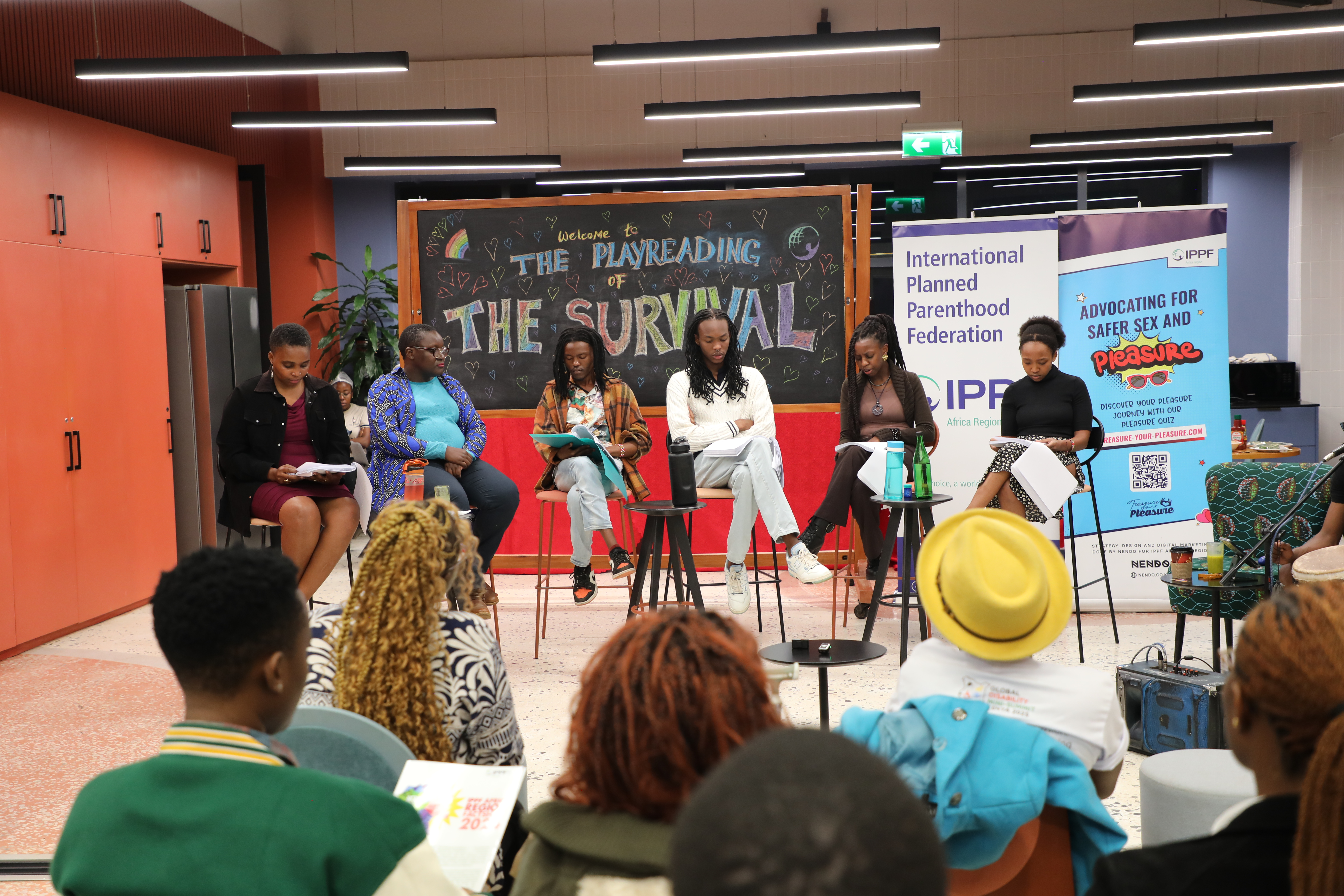
By Benedicta Oyedayo Oyewole, When we speak of celebration in the spirit of Ubuntu, we are not merely referring to events or visibility moments. We are evoking a deeper, collective joy rooted in resistance, relationality, and the politics of being. Ubuntu says, ‘I am because we are,’ and in that spirit, celebration becomes a political act. It takes the form of music, laughter, dance, vibrant colours, and in some African cultures, masquerades that shake the ground beneath our feet. These are not aesthetics for performance. They are expressions of collective memory, resistance, and survival. In those moments, people feel seen. Not tolerated, seen. Not permitted, respected. People move with agency. With defiance. With joy that is not passive, but revolutionary. That is Ubuntu. That is Pride. But that spirit has been systematically stripped away. The rupture between what Pride once meant within our cultural contexts and what was violently imposed through coloniality and heteropatriarchy has bred something else: fear. Fear of being visible. Fear of claiming space. Fear of simply existing outside sanctioned norms. Across the world, recent years have seen the rapid digitalization of social movements, a fourth wave of feminist organizing, and hard-won victories by women, girls, sex workers, LGBTQI+ persons, young people, and historically marginalized communities. From viral digital campaigns to mass protests, we’ve witnessed new forms of movement-building and global solidarity. But with these gains has also come an emboldened rise in fascism and rollback of some of these victories. As liberationist and leftist politics gain renewed momentum, especially across the Global South, we are simultaneously witnessing a concerted effort to attack human rights. In the African region, we have witnessed not only growing visibility of the anti-rights movements but also a sharp rollback in human rights. The rise of regressive laws and policies often framed as a return to so-called “African values” is a deliberate effort to police who we are, who we have been, and who we are allowed to become. It is a chilling testament to the persistence of neo-colonialism in the 21st century, one no longer cloaked solely in economic domination, but also in the export of ideologies that endanger lives. This anti-rights agenda is being aggressively driven by well-funded, right-wing groups from the Global North, who actively fuel regressive laws and narratives across Africa. Their interference not only undermines local human rights efforts but also deepens the structural violence experienced by already marginalised communities. From the signing of Uganda’s Anti-Homosexuality Act, one of the harshest anti-LGBTQ+ laws in the world to the introduction of Kenya’s Family Protection Bill, we are witnessing a region-wide effort to legislate queer existence out of public life. In Ghana, the Human Sexual Rights and Family Values Bill was passed by parliament but withheld from assent by former President Nana Akufo-Addo. It is now set to be reintroduced and is reportedly ready for its first reading. In Mali, same-sex consensual relationships have been criminalized; Burkina Faso’s military junta has proposed a similar bill declaring that "henceforth homosexuality and associated practices will be punished by the law." A member of parliament in the Democratic Republic of Congo has similarly proposed anti-LGBTQ+ legislation. In Liberia, a legislator introduced the Anti-Homosexuality Law of Liberia 2024, which mimics many aspects of the anti-homosexuality laws of Nigeria and Uganda and the anti-LGBTQ bill that Ghana’s parliament approved. Meanwhile, in Namibia, President Nangolo Mbumba declined to sign two anti-LGBTQ+ private members’ bills. Zimbabwe has, in the same light, passed the Private Voluntary Organisations (PVO) Amendment Bill into law, a move that severely constrains community organizing. Across the region, we are seeing not isolated incidents, but a coordinated attack on rights, a systematic effort that places LGBTQI+ Africans under surveillance, under arrest, under threat in their homes, communities, and in their bodies. In these heavy and coordinated attacks across the region, joy has become difficult to hold. The scramble for safety persists, and joy feels distant when the warplanes are still flying overhead. We are living through a terrifying global moment marked by State-sponsored repression, global broadcast of ethnic cleansing, and the shrinking of civic space. For LGBTQI+ Africans, this moment brings disproportionate subjugation. The question remains painfully urgent: Where do we go to be free? So, we hold space to ask: What does freedom truly mean? What counts as liberation when laws may change, but our lives remain policed? Beyond legislation, how do we centre our existence, our joy, our right to be? One way is through the creation of safer spaces that honour the intimacy of community and the power of being in relation with one another. We carry each other. We sustain each other. This was powerfully evident in the celebration that ushered in Pride Month, a queer play reading held in collaboration with IPPF Africa Region. We came together not just to read words on a page, but to affirm our survival, our resistance, and our collective becoming. IPPF Africa Region created a supportive space for this conversation for LGBTQI+ persons to feel safe within themselves and with community. The play reading was described as “we are all a river, growing together,” a metaphor that speaks to our collective flow, strength, and interconnectedness. In this moment, simply being together is an act of resistance. It is revolutionary. Given the current landscape of LGBTQI+ organizing across the continent, where visibility can come at great cost, gathering in joy, in solidarity, and in story is itself a radical form of movement-building. Rooted in collective resistance and relationality, this moment reminds us that movements are not only sharpened in protest but also in presence, in sitting beside one another and bearing witness to each other’s truth. The piece, "The Survival" by Achiro P. Olwoch, follows a young woman in homophobic Uganda who becomes pregnant by a homosexual man, a scandal deemed unthinkable in a society that condemns both. It is a tense, emotional journey to keep the truth hidden in a world that offers little to no mercy. After the reading, guests shared varied reflections, emphasizing both the need for more focused and inclusive spaces and a heightened awareness of the precarious state of human rights, not only regionally but globally. Amid these challenges, our stories of unity and purpose continue to shine. Our voices remain testaments to our resilience, and art stands as part of that resilience. As one participant said, “Let’s continue using art for the value it can bring to our society.” This is what African Pride looks like: fierce, rooted, defiant, collective. It is not a borrowed concept. It is ours, born of the drum, the dance, the survival, the storytelling. African Pride is not a moment. It is a movement. It is a memory. It is the future. And we will not be legislated out of it. Benedicta Oyedayo Oyewole, IPPF Africa Region Community Engagement and Partnership Lead

11 September 2024
Take a Stand against Hate to Protect the Rights of LGBTQI+ in Côte d'Ivoire
Since 21 August, influencers through online campaigns have amplified dangerous narratives, justifying physical and psychological violence on the LGBTQI+ community in Cote d’Ivoire. This is not just an attack on LGBTIQ people, but on the human rights of all Ivorian citizens. Feminist Opportunities Now, together with its partner organisations and activists in Côte d'Ivoire, expresses its outrage at the rise in violence, hate speech and discrimination against lesbian, gay, bisexual, transgender, intersex and queer (LGBTIQ) communities. We are deeply concerned by the increase in calls for violence and crimes targeting individuals because of their sexual orientation and gender identity. Today, we call for urgent action to stop this wave of hatred that threatens the dignity and rights of so many people. Sign the petition This is a call for action and solidarity, aimed at mobilising the authorities, the media and civil society to combat hatred and violence against LGBTIQ people. The Need for Urgent Action We call on everyone to take immediate action to stop this dangerous trend. Hate speech, threats and violence have no place in a democratic society. Public figures and institutions must act decisively to protect all citizens, regardless of sexual orientation or gender identity. We stress that the Constitution of Côte d'Ivoire guarantees equality and human dignity for all, as stipulated in Article 2. There are no laws criminalising LGBTIQ individuals in the country, and any attack on their rights is a violation of the fundamental principles of freedom and equality, as Marie-Jo, programme and project officer for an organisation that campaigns for the human rights of lesbian, bisexual and queer women in Côte d'Ivoire, points out: "Calling for the eradication of the LGBTI community brings us back to Nazi rhetoric. Today we are in Côte d'Ivoire where, in the name of personal convictions, some citizens are calling for the disappearance of other citizens and believe that they should not exist. There is no justification for killing and using violence because we are against someone's sexual orientation, the way they walk or even the way they dress. The state is guilty of what is happening, of all these excesses, by its silence and inertia. Sign the petition The companies behind platforms such as Facebook, TikTok and YouTube must assume their responsibilities by moderating content and deleting hate messages. We demand strict sanctions against accounts that spread hate. The Role of Government and the Legal System The Ivorian government must take immediate action to enforce its laws against hate speech and violence. Article 226 of the Penal Code clearly prohibits discrimination, and the increase in attacks must be addressed through firm legal action. We cannot allow those who incite violence to go unpunished. The lack of sanctions creates a climate of insecurity for LGBTIQ people, undermining confidence in the institutions charged with protecting them. What to do? Sign the petitions: Join our partners in the fight against hate and violence by signing the petitions demanding stronger legal protection for the LGBTIQ community. Read the statement: Read the full statement from our partners in Côte d'Ivoire and their partners, which sets out the legal and moral obligations to protect the rights of all citizens, including LGBTIQ people. We reaffirm our commitment to building a future where everyone can live without fear, where LGBTIQ people in Côte d'Ivoire and around the world can live with dignity, respect and freedom. Together, let us reject hatred, protect human rights and build a society that values every individual. Read the statement drawn up by three of our civil society organisations and their partners on this homophobic propaganda. FON is a project that funds CSOs around the world to combat all forms of gender-based violence. Read the article on the FON Website: Feminist Opportunities Now (FON) - Call to amplify Civil Society Organisations fight against GBV (feministnow.org)

26 August 2021
Togo: Supporting Refugees and Displaced People -the BMZ Project
The BMZ project supported refugees, internally displaced people, and host communities in Burkina Faso, Cameroon and Togo, in accessing quality sexual reproductive health care and in setting up income generating activities. Learn more about the work of our Member Association in Togo - The Association Togolaise pour le Bien-Etre Familial (ATBEF) with regard to the humanitarian response and support to refugees, displaced populations and the host communities, courtesy of the BMZ project.
14 May 2026
Standing Firm for SRHR and Women’s Rights Amid Growing Backlash at the 87th ACHPR
Banjul, The Gambia, May 2026 On the margins of the 87th Ordinary Session of the African Commission on Human and Peoples’ Rights (ACHPR) during the NGO Forum, advocates, policymakers, and human rights leaders came together to confront a shared reality: while Africa has made significant gains in advancing sexual and reproductive health and rights (SRHR) and women’s rights, these gains are increasingly under threat. By Cheikh Tidjane N’DONGO, IPPF Africa Regional Senior Advocacy Advisor A panel organized by the Office of the United Nations High Commissioner for Human Rights (UN OHCHR) and IPPF Africa (IPPF ARO), through the financial support of the Packard Foundation and the Government of Luxembourg, on “Defending Rights in Hostile Contexts: Attacks on Human Rights actors advancing Sexual and Reproductive Health and Rights in the Context of Shrinking Civic Space and Gender Backlash”, panelists examined both the nature of the current backlash and the strategies proving effective in defending hard‑won rights. The panel has been moderated by Hon. Janet Ramatoulie Sallah‑Njie, Commissioner and AU Special Rapporteur on the Rights of Women in Africa, shifting the focus from challenges to solutions. Hon. Sallah‑Njie noted: “Across the continent, we see African actors leading with courage and creativity. These good practices remind us that women’s rights are firmly rooted in African values of dignity, equality, and justice.” A shrinking civic space and coordinated backlash Across the continent, SRHR defenders, health providers, and women’s rights organizations are facing escalating attacks, restrictions, and delegitimization. These challenges were a central focus of the panel 'Defending Rights in Hostile Contexts', which highlighted how opposition to SRHR is increasingly organized, well‑resourced, and often framed through narratives of “culture,” “morality,” or “African values.” Dr. Jessica Oga, Head of Ubingwa Think Tank, Afya Na Haki, highlighted that “The cultural framing is the most sophisticated tool in the anti-rights toolkit. When a woman defends reproductive rights in Africa today, she is not presented as defending human rights. She is presented as betraying her culture, her community, her identity. The counter to it is not to abandon cultural conversation. The counter is to reclaim it, using Africa's own jurisprudence, Africa's own treaty architecture, Africa's own definition of Ubuntu, one that protects the most vulnerable.” Panelists underscored that this backlash does not occur in isolation. It is embedded within a broader shrinking of civic space, marked by restrictive laws, regulatory pressures on civil society, and heightened risks for human rights defenders, particularly women and those working on gender equality and bodily autonomy. Gendered disinformation, intimidation, and legal harassment continue to undermine both advocacy and service delivery, with direct consequences for access to sexual and reproductive health care. Lived realities of defenders and providers The panel brought forward concrete examples of how backlash affects day‑to‑day work. SRHR providers and advocates described professional intimidation, regulatory harassment, and personal attacks that disrupt services and create fear. Drawing on frontline experience, Nelly Munyasia, Executive Director of the Reproductive Health Network Kenya (RHNK), underscored the pressure on service delivery: “Shrinking and reframed funding landscape that shifts away directly from rights-based funding leads to fragmentation of the health system through dismantling of [the] integration of SRHR service delivery.” Institutional resistance and the role of National Human Rights Institutions (NHRIs) Panelists also examined how laws and regulatory frameworks are increasingly used to constrain SRHR advocacy, often indirectly, through licensing rules, funding restrictions, or vague public order provisions. A key moment of the panel focused on the preventive role national human rights institutions (NHRIs) can play when rights come under threat. Commissioner Halima Dibba, National Human Rights Commission of The Gambia, reflected on recent efforts in The Gambia to resist attempts to roll back protections against female genital mutilation (FGM). Commissioner Dibba stressed: “Regression is not inevitable. When institutions act early, ground their positions in the law, and work closely with civil society, it is possible to stop harmful reversals before they take hold.” The discussion highlighted this case as an example of how coordinated institutional action can defend established protections and reinforce public trust in human rights frameworks. Building protection, resilience, and solidarity Throughout the discussions, participants identified protection and solidarity as essential to sustaining SRHR and women’s rights work. Effective strategies include legal support for defenders, digital and psychosocial protection measures, and stronger alliances between civil society, health providers, faith leaders, and institutions. Crucially, there was broad agreement that no single actor can confront the backlash alone. Regional bodies, states, and non‑state actors must work together to strengthen accountability, safeguard civic space, and ensure that defenders can operate without fear. Speakers reaffirmed the Maputo Protocol as a cornerstone of these efforts, emphasizing its relevance as a living instrument for protecting bodily autonomy and gender equality. Looking ahead As the 87th ACHPR session continues, the conversations in Banjul signal both concern and resolve. While the backlash against SRHR and women’s rights is real and intensifying, so too is the determination of African actors to defend progress, protect defenders, and advance rights grounded in equality and justice. For IPPF ARO and its partners, these exchanges reaffirm the importance of sustained advocacy, regional engagement, and solidarity with those on the frontlines, ensuring that sexual and reproductive health and rights, and the rights of women and girls in all their diversity, are not only defended but continue to advance.
19 June 2025
Reclaiming African Pride: We Refuse to Be Legislated Out of Existence
By Benedicta Oyedayo Oyewole, When we speak of celebration in the spirit of Ubuntu, we are not merely referring to events or visibility moments. We are evoking a deeper, collective joy rooted in resistance, relationality, and the politics of being. Ubuntu says, ‘I am because we are,’ and in that spirit, celebration becomes a political act. It takes the form of music, laughter, dance, vibrant colours, and in some African cultures, masquerades that shake the ground beneath our feet. These are not aesthetics for performance. They are expressions of collective memory, resistance, and survival. In those moments, people feel seen. Not tolerated, seen. Not permitted, respected. People move with agency. With defiance. With joy that is not passive, but revolutionary. That is Ubuntu. That is Pride. But that spirit has been systematically stripped away. The rupture between what Pride once meant within our cultural contexts and what was violently imposed through coloniality and heteropatriarchy has bred something else: fear. Fear of being visible. Fear of claiming space. Fear of simply existing outside sanctioned norms. Across the world, recent years have seen the rapid digitalization of social movements, a fourth wave of feminist organizing, and hard-won victories by women, girls, sex workers, LGBTQI+ persons, young people, and historically marginalized communities. From viral digital campaigns to mass protests, we’ve witnessed new forms of movement-building and global solidarity. But with these gains has also come an emboldened rise in fascism and rollback of some of these victories. As liberationist and leftist politics gain renewed momentum, especially across the Global South, we are simultaneously witnessing a concerted effort to attack human rights. In the African region, we have witnessed not only growing visibility of the anti-rights movements but also a sharp rollback in human rights. The rise of regressive laws and policies often framed as a return to so-called “African values” is a deliberate effort to police who we are, who we have been, and who we are allowed to become. It is a chilling testament to the persistence of neo-colonialism in the 21st century, one no longer cloaked solely in economic domination, but also in the export of ideologies that endanger lives. This anti-rights agenda is being aggressively driven by well-funded, right-wing groups from the Global North, who actively fuel regressive laws and narratives across Africa. Their interference not only undermines local human rights efforts but also deepens the structural violence experienced by already marginalised communities. From the signing of Uganda’s Anti-Homosexuality Act, one of the harshest anti-LGBTQ+ laws in the world to the introduction of Kenya’s Family Protection Bill, we are witnessing a region-wide effort to legislate queer existence out of public life. In Ghana, the Human Sexual Rights and Family Values Bill was passed by parliament but withheld from assent by former President Nana Akufo-Addo. It is now set to be reintroduced and is reportedly ready for its first reading. In Mali, same-sex consensual relationships have been criminalized; Burkina Faso’s military junta has proposed a similar bill declaring that "henceforth homosexuality and associated practices will be punished by the law." A member of parliament in the Democratic Republic of Congo has similarly proposed anti-LGBTQ+ legislation. In Liberia, a legislator introduced the Anti-Homosexuality Law of Liberia 2024, which mimics many aspects of the anti-homosexuality laws of Nigeria and Uganda and the anti-LGBTQ bill that Ghana’s parliament approved. Meanwhile, in Namibia, President Nangolo Mbumba declined to sign two anti-LGBTQ+ private members’ bills. Zimbabwe has, in the same light, passed the Private Voluntary Organisations (PVO) Amendment Bill into law, a move that severely constrains community organizing. Across the region, we are seeing not isolated incidents, but a coordinated attack on rights, a systematic effort that places LGBTQI+ Africans under surveillance, under arrest, under threat in their homes, communities, and in their bodies. In these heavy and coordinated attacks across the region, joy has become difficult to hold. The scramble for safety persists, and joy feels distant when the warplanes are still flying overhead. We are living through a terrifying global moment marked by State-sponsored repression, global broadcast of ethnic cleansing, and the shrinking of civic space. For LGBTQI+ Africans, this moment brings disproportionate subjugation. The question remains painfully urgent: Where do we go to be free? So, we hold space to ask: What does freedom truly mean? What counts as liberation when laws may change, but our lives remain policed? Beyond legislation, how do we centre our existence, our joy, our right to be? One way is through the creation of safer spaces that honour the intimacy of community and the power of being in relation with one another. We carry each other. We sustain each other. This was powerfully evident in the celebration that ushered in Pride Month, a queer play reading held in collaboration with IPPF Africa Region. We came together not just to read words on a page, but to affirm our survival, our resistance, and our collective becoming. IPPF Africa Region created a supportive space for this conversation for LGBTQI+ persons to feel safe within themselves and with community. The play reading was described as “we are all a river, growing together,” a metaphor that speaks to our collective flow, strength, and interconnectedness. In this moment, simply being together is an act of resistance. It is revolutionary. Given the current landscape of LGBTQI+ organizing across the continent, where visibility can come at great cost, gathering in joy, in solidarity, and in story is itself a radical form of movement-building. Rooted in collective resistance and relationality, this moment reminds us that movements are not only sharpened in protest but also in presence, in sitting beside one another and bearing witness to each other’s truth. The piece, "The Survival" by Achiro P. Olwoch, follows a young woman in homophobic Uganda who becomes pregnant by a homosexual man, a scandal deemed unthinkable in a society that condemns both. It is a tense, emotional journey to keep the truth hidden in a world that offers little to no mercy. After the reading, guests shared varied reflections, emphasizing both the need for more focused and inclusive spaces and a heightened awareness of the precarious state of human rights, not only regionally but globally. Amid these challenges, our stories of unity and purpose continue to shine. Our voices remain testaments to our resilience, and art stands as part of that resilience. As one participant said, “Let’s continue using art for the value it can bring to our society.” This is what African Pride looks like: fierce, rooted, defiant, collective. It is not a borrowed concept. It is ours, born of the drum, the dance, the survival, the storytelling. African Pride is not a moment. It is a movement. It is a memory. It is the future. And we will not be legislated out of it. Benedicta Oyedayo Oyewole, IPPF Africa Region Community Engagement and Partnership Lead
11 September 2024
Take a Stand against Hate to Protect the Rights of LGBTQI+ in Côte d'Ivoire
Since 21 August, influencers through online campaigns have amplified dangerous narratives, justifying physical and psychological violence on the LGBTQI+ community in Cote d’Ivoire. This is not just an attack on LGBTIQ people, but on the human rights of all Ivorian citizens. Feminist Opportunities Now, together with its partner organisations and activists in Côte d'Ivoire, expresses its outrage at the rise in violence, hate speech and discrimination against lesbian, gay, bisexual, transgender, intersex and queer (LGBTIQ) communities. We are deeply concerned by the increase in calls for violence and crimes targeting individuals because of their sexual orientation and gender identity. Today, we call for urgent action to stop this wave of hatred that threatens the dignity and rights of so many people. Sign the petition This is a call for action and solidarity, aimed at mobilising the authorities, the media and civil society to combat hatred and violence against LGBTIQ people. The Need for Urgent Action We call on everyone to take immediate action to stop this dangerous trend. Hate speech, threats and violence have no place in a democratic society. Public figures and institutions must act decisively to protect all citizens, regardless of sexual orientation or gender identity. We stress that the Constitution of Côte d'Ivoire guarantees equality and human dignity for all, as stipulated in Article 2. There are no laws criminalising LGBTIQ individuals in the country, and any attack on their rights is a violation of the fundamental principles of freedom and equality, as Marie-Jo, programme and project officer for an organisation that campaigns for the human rights of lesbian, bisexual and queer women in Côte d'Ivoire, points out: "Calling for the eradication of the LGBTI community brings us back to Nazi rhetoric. Today we are in Côte d'Ivoire where, in the name of personal convictions, some citizens are calling for the disappearance of other citizens and believe that they should not exist. There is no justification for killing and using violence because we are against someone's sexual orientation, the way they walk or even the way they dress. The state is guilty of what is happening, of all these excesses, by its silence and inertia. Sign the petition The companies behind platforms such as Facebook, TikTok and YouTube must assume their responsibilities by moderating content and deleting hate messages. We demand strict sanctions against accounts that spread hate. The Role of Government and the Legal System The Ivorian government must take immediate action to enforce its laws against hate speech and violence. Article 226 of the Penal Code clearly prohibits discrimination, and the increase in attacks must be addressed through firm legal action. We cannot allow those who incite violence to go unpunished. The lack of sanctions creates a climate of insecurity for LGBTIQ people, undermining confidence in the institutions charged with protecting them. What to do? Sign the petitions: Join our partners in the fight against hate and violence by signing the petitions demanding stronger legal protection for the LGBTIQ community. Read the statement: Read the full statement from our partners in Côte d'Ivoire and their partners, which sets out the legal and moral obligations to protect the rights of all citizens, including LGBTIQ people. We reaffirm our commitment to building a future where everyone can live without fear, where LGBTIQ people in Côte d'Ivoire and around the world can live with dignity, respect and freedom. Together, let us reject hatred, protect human rights and build a society that values every individual. Read the statement drawn up by three of our civil society organisations and their partners on this homophobic propaganda. FON is a project that funds CSOs around the world to combat all forms of gender-based violence. Read the article on the FON Website: Feminist Opportunities Now (FON) - Call to amplify Civil Society Organisations fight against GBV (feministnow.org)
26 August 2021
Togo: Supporting Refugees and Displaced People -the BMZ Project
The BMZ project supported refugees, internally displaced people, and host communities in Burkina Faso, Cameroon and Togo, in accessing quality sexual reproductive health care and in setting up income generating activities. Learn more about the work of our Member Association in Togo - The Association Togolaise pour le Bien-Etre Familial (ATBEF) with regard to the humanitarian response and support to refugees, displaced populations and the host communities, courtesy of the BMZ project.