
- - -

Articles about Burkina Faso

Malawi_IPPF_Tommy Trenchard
31 January 2022

Feminist Opportunities Now (FON)

The objective of the project is to build the capacity of women's movements, via sub-grants and organizational development support, especially for small organizations, often non-registered, to address and respond to gender-based violence. Budget:  14,000 000 EUR Donor: Agence Française de Développement (AFD) Timeline: 4 years (Start date – Q2 of 2022) Project implementation areas: Mexico and Columbia in Latin-America (led by MdM), Bangladesh and Sri Lanka in Asia (led by CREA) and Burkina Faso, Ethiopia, Guinea the Ivory Cost, Kenya and Mali (led by IPPFARO) Partners: IPPF ARO, Médecins du Monde (MdM), Creating Resources for Empowerment in Action (CREA), FIDH (International Federation on Human Rights) & Empow’Her. Other interesting information: It is the first time IPPF has received direct funding from AFD, the first time we are partnering with these new consortium partners and delivering on a large global project. The project is supporting CSOs in Bangladesh, Burkina Faso, Colombia, Cote d’Ivoire, Ethiopia, Guinea, Kenya, Mexico, Niger, Sri Lanka. 

3M project
31 January 2022

Mes Droits, Ma Sante, Mon Avenir -3M

  The project seeks to contribute to the reduction of gender inequalities through the empowerment of youth and the technical strengthening of local feminist CSOs towards the transformation of gender norms in favour of the sexual rights of adolescents and youth. Budget:  899,996 EUR Donor: Fonds de Solidarité pour les Projets Innovants (FSPi) Timeline: 2 Years (April 2021 – March 2023) Project implementation areas: Niger, Chad and Burkina Faso Partners: Association Nigérienne pour le Bien Êtr  e Familial (ANBEF), Association Burkinabè pour le Bien Être Familial (ABBEF), Association Tchadienne pour le Bien Être Familial (ASTBEF) and Association Togolaise pour le Bien Être Familial (ATBEF) Key achievements to date: 3 Member Association (MA) supported through MA-to-MA support from ATBEF, More than 600 trainers of trainees trained in Gender and SRH, 100 Youth and feminist associations strengthened in local communities, The organisation of more than 200 community talks on SRHR and gender equality, supported by approaches and channels adapted to the beneficiaries, made it possible to reach 2,299 people, including 1,374 girls and 925 adolescent boys and young people, on unwanted pregnancies, family planning, STIs, HIV/AIDS and contraception. Innovative approaches: This project uses the MA-to-MA Approach, south-south collaboration & Peer to Peer support where ATBEF is supporting the 3 implementing MAs. Active collaboration with Youth and feminist associations at grassroot level. Lessons learned:  Public and private collaboration is critical as well as the need to document best practices. The involvement of the central level (Ministries) in the implementation of the project positively influences the operational levels and strengthens their commitment to the project activities and makes them feel more accountable. Also, collaboration with the health, education and gender departments has enabled the project teams to benefit from technical support for access to pupils, teachers, and parents, to have an orientation on current policies in relation to the projects, and to be accompanied in the training. 

Fane Zara
14 January 2022

The BMZ Project: Supporting People Affected by Humanitarian Crises in sub-Saharan Africa

The BMZ project supported refugees, internally displaced people, and host communities in Burkina Faso, Cameroon and Togo, in accessing quality sexual reproductive health care and in setting up income generating activities. Watch our video to find out how. Also watch the stories of beneficiaries reached through the BMZ project: BMZ Beneficiary story: Cameroon BMZ Beneficiary story: Burkina Faso BMZ Beneficiary story: Togo

Tao
25 August 2021

Burkina Faso: Supporting Refugees and Displaced People -the BMZ Project

With millions of people affected by humanitarian crises in Sub-Saharan Africa, IPPF in partnership with the BMZ project and our Member Association in the West African country of Burkina Faso - l'Association Burkinabé pour le Bien-Etre Familial (ABBEF), provided sexual and reproductive health care to 90,000 people. The BMZ project supported refugees, internally displaced people, and host communities in Burkina Faso, Cameroon and Togo, in accessing quality sexual reproductive health care and in setting up income generating activities. Watch this video to find out more about the project's intervention in Burkina Faso.

Association Burkinabé pour le Bien-Etre Familial

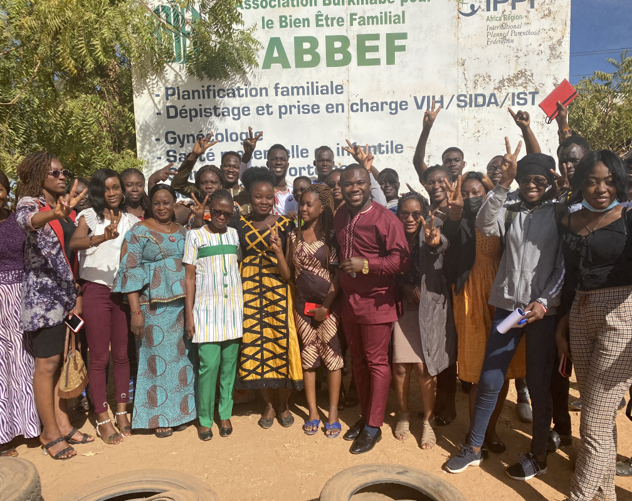
Association Burkinabé pour le Bien-Etre Familial (ABBEF) was set up in 1985. Staff and over 1,000 volunteers work to provide sexual and reproductive health (SRH) services to poor and marginalized people. Services include antenatal and post-natal care, prevention and treatment of sexually transmitted infections (STIs) including HIV and AIDS, provision of antiretroviral drugs, voluntary counseling and testing (VCT), screening for cancers of the reproductive system, post-abortion care, prevention of mother to child transmission (PMTCT) of HIV and AIDS, and home-based care for people living with HIV and AIDS. 

ABBEF’s work reaches out to the poor and marginalized, and the organization runs special initiatives focused on reaching young people on the streets, people living with HIV and AIDS, and students. Professional training is provided to young people, including members of ABBEF’s Youth Action Movement, which enables them to participate in small-scale profitable ventures and escape poverty.

The nation has severe SRH challenges in terms of lifetime risk of maternal death and unmet need for contraception. One of the most serious issues in Burkina Faso is the 66% prevalence of female genital mutilation: a psychologically traumatic experience, an infringement of human rights and a source of substantial physical damage requiring major medical intervention.
    
ABBEF works in partnership with the Ministry of Health, the Secretariat Permanent des Organisations Non-Gouvernementales (SPONG), Réseau des ONG en population et développement (REOPOD) and a range of funders including UNFPA, the EU, UNICEF and DANIDA.

Facebook: https://www.facebook.com/www.abbef.net/

Malawi_IPPF_Tommy Trenchard
31 January 2022

Feminist Opportunities Now (FON)

The objective of the project is to build the capacity of women's movements, via sub-grants and organizational development support, especially for small organizations, often non-registered, to address and respond to gender-based violence. Budget:  14,000 000 EUR Donor: Agence Française de Développement (AFD) Timeline: 4 years (Start date – Q2 of 2022) Project implementation areas: Mexico and Columbia in Latin-America (led by MdM), Bangladesh and Sri Lanka in Asia (led by CREA) and Burkina Faso, Ethiopia, Guinea the Ivory Cost, Kenya and Mali (led by IPPFARO) Partners: IPPF ARO, Médecins du Monde (MdM), Creating Resources for Empowerment in Action (CREA), FIDH (International Federation on Human Rights) & Empow’Her. Other interesting information: It is the first time IPPF has received direct funding from AFD, the first time we are partnering with these new consortium partners and delivering on a large global project. The project is supporting CSOs in Bangladesh, Burkina Faso, Colombia, Cote d’Ivoire, Ethiopia, Guinea, Kenya, Mexico, Niger, Sri Lanka. 

3M project
31 January 2022

Mes Droits, Ma Sante, Mon Avenir -3M

  The project seeks to contribute to the reduction of gender inequalities through the empowerment of youth and the technical strengthening of local feminist CSOs towards the transformation of gender norms in favour of the sexual rights of adolescents and youth. Budget:  899,996 EUR Donor: Fonds de Solidarité pour les Projets Innovants (FSPi) Timeline: 2 Years (April 2021 – March 2023) Project implementation areas: Niger, Chad and Burkina Faso Partners: Association Nigérienne pour le Bien Êtr  e Familial (ANBEF), Association Burkinabè pour le Bien Être Familial (ABBEF), Association Tchadienne pour le Bien Être Familial (ASTBEF) and Association Togolaise pour le Bien Être Familial (ATBEF) Key achievements to date: 3 Member Association (MA) supported through MA-to-MA support from ATBEF, More than 600 trainers of trainees trained in Gender and SRH, 100 Youth and feminist associations strengthened in local communities, The organisation of more than 200 community talks on SRHR and gender equality, supported by approaches and channels adapted to the beneficiaries, made it possible to reach 2,299 people, including 1,374 girls and 925 adolescent boys and young people, on unwanted pregnancies, family planning, STIs, HIV/AIDS and contraception. Innovative approaches: This project uses the MA-to-MA Approach, south-south collaboration & Peer to Peer support where ATBEF is supporting the 3 implementing MAs. Active collaboration with Youth and feminist associations at grassroot level. Lessons learned:  Public and private collaboration is critical as well as the need to document best practices. The involvement of the central level (Ministries) in the implementation of the project positively influences the operational levels and strengthens their commitment to the project activities and makes them feel more accountable. Also, collaboration with the health, education and gender departments has enabled the project teams to benefit from technical support for access to pupils, teachers, and parents, to have an orientation on current policies in relation to the projects, and to be accompanied in the training. 

Fane Zara
14 January 2022

The BMZ Project: Supporting People Affected by Humanitarian Crises in sub-Saharan Africa

The BMZ project supported refugees, internally displaced people, and host communities in Burkina Faso, Cameroon and Togo, in accessing quality sexual reproductive health care and in setting up income generating activities. Watch our video to find out how. Also watch the stories of beneficiaries reached through the BMZ project: BMZ Beneficiary story: Cameroon BMZ Beneficiary story: Burkina Faso BMZ Beneficiary story: Togo

Tao
25 August 2021

Burkina Faso: Supporting Refugees and Displaced People -the BMZ Project

With millions of people affected by humanitarian crises in Sub-Saharan Africa, IPPF in partnership with the BMZ project and our Member Association in the West African country of Burkina Faso - l'Association Burkinabé pour le Bien-Etre Familial (ABBEF), provided sexual and reproductive health care to 90,000 people. The BMZ project supported refugees, internally displaced people, and host communities in Burkina Faso, Cameroon and Togo, in accessing quality sexual reproductive health care and in setting up income generating activities. Watch this video to find out more about the project's intervention in Burkina Faso.

Association Burkinabé pour le Bien-Etre Familial

Association Burkinabé pour le Bien-Etre Familial (ABBEF) was set up in 1985. Staff and over 1,000 volunteers work to provide sexual and reproductive health (SRH) services to poor and marginalized people. Services include antenatal and post-natal care, prevention and treatment of sexually transmitted infections (STIs) including HIV and AIDS, provision of antiretroviral drugs, voluntary counseling and testing (VCT), screening for cancers of the reproductive system, post-abortion care, prevention of mother to child transmission (PMTCT) of HIV and AIDS, and home-based care for people living with HIV and AIDS. 

ABBEF’s work reaches out to the poor and marginalized, and the organization runs special initiatives focused on reaching young people on the streets, people living with HIV and AIDS, and students. Professional training is provided to young people, including members of ABBEF’s Youth Action Movement, which enables them to participate in small-scale profitable ventures and escape poverty.

The nation has severe SRH challenges in terms of lifetime risk of maternal death and unmet need for contraception. One of the most serious issues in Burkina Faso is the 66% prevalence of female genital mutilation: a psychologically traumatic experience, an infringement of human rights and a source of substantial physical damage requiring major medical intervention.
    
ABBEF works in partnership with the Ministry of Health, the Secretariat Permanent des Organisations Non-Gouvernementales (SPONG), Réseau des ONG en population et développement (REOPOD) and a range of funders including UNFPA, the EU, UNICEF and DANIDA.

Facebook: https://www.facebook.com/www.abbef.net/