



Latest press releases
A selection of stories from across the Federation

Ghana
Media center
JOINT STATEMENT: At the Conclusion of the 4th African Inter-Parliamentary Conference on Family, Sovereignty and Values
JOINT STATEMENT
Most Popular This Week
Malawi

Media center
|
Family Planning Association of Malawi Commends the High Court Ruling on amendment of Post-Abortion Care Guidelines
The Family Planning Association of Malawi (FPAM) commends the High Court of Malawi for its landmark ruling ordering the Ministry of Heal

Media center
|
Over 1.4 Million Women and Girls in Africa Left Without Contraception as U.S. Orders Destruction of Global Supply
6 August 2025 - The International Planned Parenthood Federation (IPPF) has learned that over $9.7 million worth of US-funded contraceptives are now set to be inciner
Lesotho, Malawi, Eswatini

Media center
|
Amid Devastating Budget Cuts, Groundbreaking HIV Prevention Injectable Launches in Eswatini, Lesotho & Malawi
30 June 2025 - The International Planned Parenthood Federation (IPPF) is proud to announce the roll out of CAB-LA (cabotegravir-long acting), a form of pre-exposure
Uganda

Media center
|
Statement on the Resumption of World Bank Lending to Uganda Amid Anti-LGBTQ+ Legislation
Nairobi, Kenya: 12 June 2025 – At the International Planned Parenthood Federation Africa Region (IPPFAR), we recognise the critical role of development financing in tackling povert
Kenya

Media center
|
IPPF Africa Region Welcomes Kenya’s Landmark Recognition of Intersex Persons
IPPF Africa Region Welcomes Kenya’s Landmark Recognition of Intersex Persons
Congo, Dem. Rep.

Media center
|
The DRC: IPPFAR Calls for Immediate De-Escalation of Conflict, Establishment of Humanitarian Corridor, and Protection of Women and Girls
Nairobi, Kenya: 5 February 2025 – The International Planned Parenthood Federation Africa Region (IPPFAR) calls for an immediate de-escalation o
Burundi, Madagascar, Ethiopia, Zambia

Media center
|
Major New Health Programme to Expand Sexual and Reproductive Health Services in East and Southern Africa
Nairobi, 23 September 2024 – A groundbreaking £75.125 million project has been announced by the International Planned Parenthood Federation (IPPF) and its partners, the Intern
Africa

Media center
|
IPPF Africa Region Calls for Urgent Action Against Rising Femicide in Africa
IPPF Africa Region Calls for Urgent Action Against Rising Femicide in Africa
media center
| 08 June 2026
JOINT STATEMENT: At the Conclusion of the 4th African Inter-Parliamentary Conference on Family, Sovereignty and Values
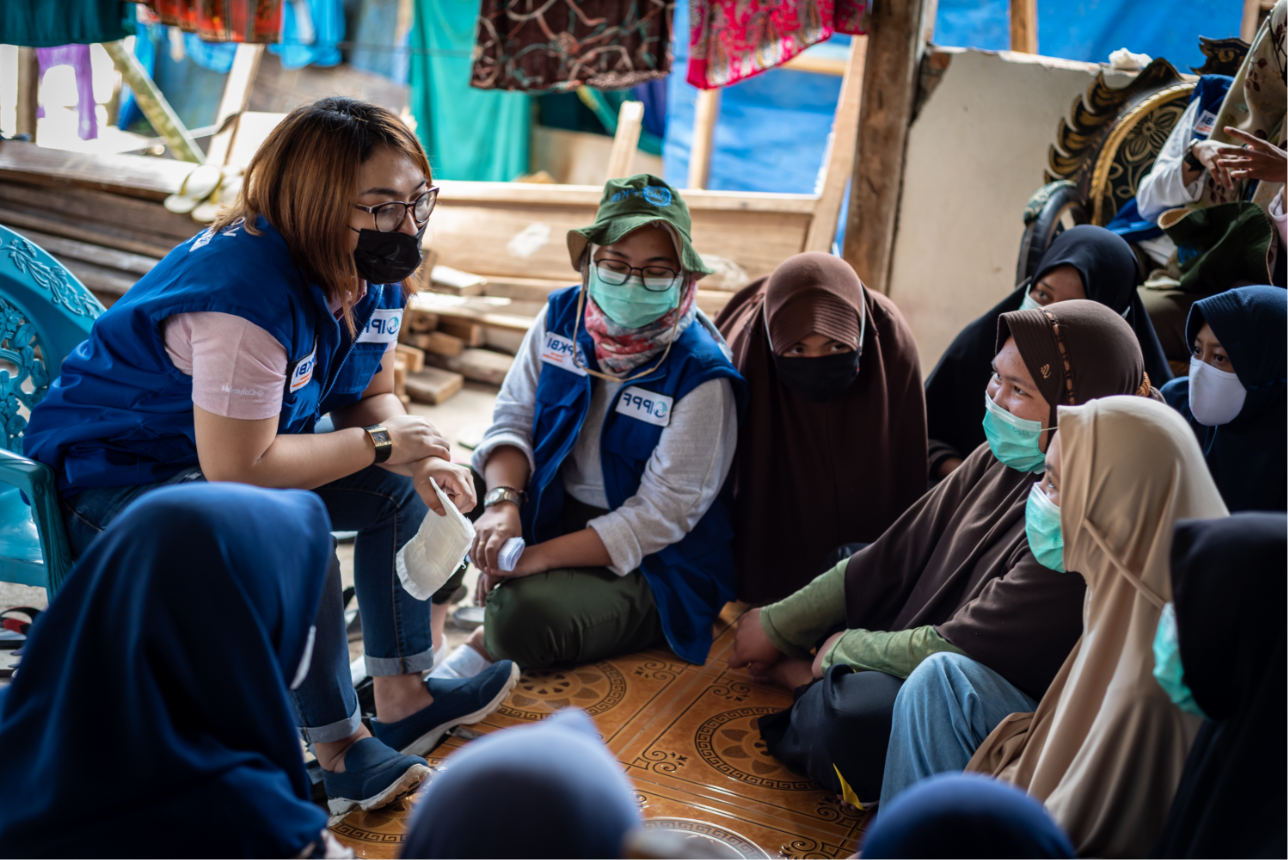
JOINT STATEMENT: At the Conclusion of the 4th African Inter-Parliamentary Conference on Family, Sovereignty and Values As the 4th African Inter-Parliamentary Conference on Family, Sovereignty and Values concludes in Accra, Ghana, we join voices with activists, feminists, human rights defenders, community organisers, and ordinary people across the continent who are increasingly concerned about the growing weaponisation of ‘family values’, African culture’ and ‘sovereignty’ as political tools to justify exclusion, discrimination and the erosion of rights for Africans. Across the continent, we are witnessing increasingly coordinated efforts to roll back sexual and reproductive rights for women and girls in all their diversities, undercut civil and political rights for all, restrict civic spaces, weaken human rights protections, and to portray LGBTQI+ people as threats to society rather than as members of our communities, our families and our nations. These crossborder efforts are even embedded in parliamentary networks, and are being advanced through proposed legal and policy frameworks that seek to reshape African human rights law and institutions, and how rights, family, citizenship and belonging are understood on the continent, and the obligations African States have to respect, protect, and fulfill human rights. Many of the conversations taking place under the banner of protecting African families begin from a series of false premises: that there is only one kind of African family worth protecting, only one way of belonging within African society, and that there is only one kind of African society. This does not reflect the realities of our communities, as African families have always been diverse, dynamic and shaped by care, responsibility and interdependence, and as African countries are culturally and spiritually diverse. Our families have always included extended families, grandparent-led households, single-parent households, non-heterosexual family dynamics, kinship networks, adoptive families and many other systems of care and support that have sustained our communities for generations. This attempt to narrow legal and political definition and recognition to a single vision of family does not strengthen African families, but rather weakens them by creating a targeted tool to exclude many of the people who already form part of them. WHAT WE OBSERVED DURING THE CONFERENCE The most significant outcome of this conference is the adoption of the proposed African Charter on Family, Sovereignty and Values. Far from being a symbolic declaration, the Charter is being advanced as a continent-wide framework intended to influence national legislation, public policy, education, health governance and regional human rights institutions. The conference repeatedly presents the family as the primary unit of society and as the basis upon which rights should be understood. However, both African and international human rights frameworks recognise that while families deserve protection, rights belong to individuals. The purpose of human rights law is not simply to protect institutions, including families, but to ensure that every person within those institutions enjoys dignity, equality and freedom. When the rights of women, children, LGBTQI+ persons or other family members are subordinated to an abstract notion of family unity, the result is not stronger families but greater opportunities for exclusion, coercion and abuse. The discussions that took place during the conference also reinforce concerns already expressed by civil society organisations, feminist movements, media, public health advocates, economic justice advocates, human rights defenders and human rights institutions across Africa. While the conference organisers frame their efforts as a defence of African values and sovereignty, many of the proposals being advanced would have serious implications for human rights, public health, constitutional and democratic governance, academic freedom, civic participation, and the safety of already marginalised communities. We are particularly concerned by attempts to position sexual and reproductive health and rights, gender equality, comprehensive sexuality education and LGBTQI+ inclusion as foreign concepts imposed on Africa. Such claims ignore the long histories of African struggles for dignity, bodily autonomy, freedom, and justice. They also erase the work of countless African activists, human rights defenders, scholars, health professionals, community leaders and social movements that have advanced these conversations from within our own societies. We reject the suggestion that the rights and well-being of women, girls, LGBTQI+ people, and other marginalised communities are incompatible with African values. We equally reject the notion that the fundamental human rights of only majority groups should be protected by the State. Human rights claims that challenge dominant social norms or political interests are important and legitimate. The strength of any society should be measured by how well it protects those who are most vulnerable to marginalisation, scapegoating, exclusion, violence, and discrimination, not by how effectively it silences them. It is particularly important to interrogate claims that the conference’s agenda represents an authentic defence of African sovereignty. The networks that have organised, supported and promoted successive family values conferences across Africa are themselves deeply transnational. For years, well-resourced organisations, advocacy groups and political actors based outside the continent have invested in funding convenings and advancing coordinated campaigns aimed at influencing African laws and policies on gender, sexuality, education and reproductive rights. Any serious conversation about foreign influence must therefore account for all sources of influence, including those operating through the family values movement itself. A Critical Moment for Ghana This conference takes place at a critical juncture for Ghana, when the Human Sexual Rights and Family Values Bill has been passed by Parliament and now awaits presidential assent. This Bill raises serious constitutional, human rights, public health and democratic concerns. Its provisions extend beyond the criminalisation of same-sex relations and into areas of identity, expression, association, advocacy and support. If enacted, it would further legitimise discrimination, deepen fear and stigma, shrink civic space and place already vulnerable communities at increased risk of violence and exclusion. At a time when Ghanaians are confronting pressing economic and social challenges, this legislation offers neither meaningful solutions nor tangible benefits. It will not create jobs, improve healthcare, strengthen education systems, or reduce inequality. Instead, it risks diverting public attention away from urgent national priorities while creating new avenues for surveillance, harassment, and social division. This is why we strongly oppose the foundations of both the African Charter on Family, Sovereignty and Values, and the Human Sexual Rights and Family Values Bill. We call on: President John Dramani Mahama not to assent to the Human Sexual Rights and Family Values Bill, as the decision before him is not merely a political one but a constitutional, moral and historic responsibility whose consequences will extend far beyond the present moment and the communities directly targeted by the legislation. By rejecting the Bill, Ghana can reaffirm its longstanding commitment to democratic governance, constitutionalism and fundamental freedoms, and demonstrate principled leadership at a time when rights and democratic institutions are facing increasing pressure across the world. African States to reject all efforts to instrumentalise culture, religion, family, and sovereignty as justifications for discrimination and exclusion. The African Union and regional human rights institutions to protect the integrity of Africa's human rights framework and institutions and resist attempts to weaken longstanding protections for equality, dignity and freedom. Diplomatic missions, development partners and international organisations to remain engaged and principled in their support for human rights, civic freedoms and democratic governance across the continent. Civil society actors, media practitioners, academics, traditional leaders, and faith leaders, to continue creating space for open and honest conversations about family, belonging and social justice that reflect the realities of African communities rather than narrow political agendas. Finally, we call on all those committed to a more just and inclusive Africa to continue building the alliances, movements and solidarities necessary to resist attempts to divide our communities and diminish our shared humanity. The future of Africa cannot be built through exclusion. It must be built through dignity, justice, freedom, care and a recognition that our societies are strongest when every person is able to belong. Signatories CHEVS IPPF Africa Region Outright International galck+ African LBTIQ Caucus
media_center
| 11 June 2026
JOINT STATEMENT: At the Conclusion of the 4th African Inter-Parliamentary Conference on Family, Sovereignty and Values
JOINT STATEMENT: At the Conclusion of the 4th African Inter-Parliamentary Conference on Family, Sovereignty and Values As the 4th African Inter-Parliamentary Conference on Family, Sovereignty and Values concludes in Accra, Ghana, we join voices with activists, feminists, human rights defenders, community organisers, and ordinary people across the continent who are increasingly concerned about the growing weaponisation of ‘family values’, African culture’ and ‘sovereignty’ as political tools to justify exclusion, discrimination and the erosion of rights for Africans. Across the continent, we are witnessing increasingly coordinated efforts to roll back sexual and reproductive rights for women and girls in all their diversities, undercut civil and political rights for all, restrict civic spaces, weaken human rights protections, and to portray LGBTQI+ people as threats to society rather than as members of our communities, our families and our nations. These crossborder efforts are even embedded in parliamentary networks, and are being advanced through proposed legal and policy frameworks that seek to reshape African human rights law and institutions, and how rights, family, citizenship and belonging are understood on the continent, and the obligations African States have to respect, protect, and fulfill human rights. Many of the conversations taking place under the banner of protecting African families begin from a series of false premises: that there is only one kind of African family worth protecting, only one way of belonging within African society, and that there is only one kind of African society. This does not reflect the realities of our communities, as African families have always been diverse, dynamic and shaped by care, responsibility and interdependence, and as African countries are culturally and spiritually diverse. Our families have always included extended families, grandparent-led households, single-parent households, non-heterosexual family dynamics, kinship networks, adoptive families and many other systems of care and support that have sustained our communities for generations. This attempt to narrow legal and political definition and recognition to a single vision of family does not strengthen African families, but rather weakens them by creating a targeted tool to exclude many of the people who already form part of them. WHAT WE OBSERVED DURING THE CONFERENCE The most significant outcome of this conference is the adoption of the proposed African Charter on Family, Sovereignty and Values. Far from being a symbolic declaration, the Charter is being advanced as a continent-wide framework intended to influence national legislation, public policy, education, health governance and regional human rights institutions. The conference repeatedly presents the family as the primary unit of society and as the basis upon which rights should be understood. However, both African and international human rights frameworks recognise that while families deserve protection, rights belong to individuals. The purpose of human rights law is not simply to protect institutions, including families, but to ensure that every person within those institutions enjoys dignity, equality and freedom. When the rights of women, children, LGBTQI+ persons or other family members are subordinated to an abstract notion of family unity, the result is not stronger families but greater opportunities for exclusion, coercion and abuse. The discussions that took place during the conference also reinforce concerns already expressed by civil society organisations, feminist movements, media, public health advocates, economic justice advocates, human rights defenders and human rights institutions across Africa. While the conference organisers frame their efforts as a defence of African values and sovereignty, many of the proposals being advanced would have serious implications for human rights, public health, constitutional and democratic governance, academic freedom, civic participation, and the safety of already marginalised communities. We are particularly concerned by attempts to position sexual and reproductive health and rights, gender equality, comprehensive sexuality education and LGBTQI+ inclusion as foreign concepts imposed on Africa. Such claims ignore the long histories of African struggles for dignity, bodily autonomy, freedom, and justice. They also erase the work of countless African activists, human rights defenders, scholars, health professionals, community leaders and social movements that have advanced these conversations from within our own societies. We reject the suggestion that the rights and well-being of women, girls, LGBTQI+ people, and other marginalised communities are incompatible with African values. We equally reject the notion that the fundamental human rights of only majority groups should be protected by the State. Human rights claims that challenge dominant social norms or political interests are important and legitimate. The strength of any society should be measured by how well it protects those who are most vulnerable to marginalisation, scapegoating, exclusion, violence, and discrimination, not by how effectively it silences them. It is particularly important to interrogate claims that the conference’s agenda represents an authentic defence of African sovereignty. The networks that have organised, supported and promoted successive family values conferences across Africa are themselves deeply transnational. For years, well-resourced organisations, advocacy groups and political actors based outside the continent have invested in funding convenings and advancing coordinated campaigns aimed at influencing African laws and policies on gender, sexuality, education and reproductive rights. Any serious conversation about foreign influence must therefore account for all sources of influence, including those operating through the family values movement itself. A Critical Moment for Ghana This conference takes place at a critical juncture for Ghana, when the Human Sexual Rights and Family Values Bill has been passed by Parliament and now awaits presidential assent. This Bill raises serious constitutional, human rights, public health and democratic concerns. Its provisions extend beyond the criminalisation of same-sex relations and into areas of identity, expression, association, advocacy and support. If enacted, it would further legitimise discrimination, deepen fear and stigma, shrink civic space and place already vulnerable communities at increased risk of violence and exclusion. At a time when Ghanaians are confronting pressing economic and social challenges, this legislation offers neither meaningful solutions nor tangible benefits. It will not create jobs, improve healthcare, strengthen education systems, or reduce inequality. Instead, it risks diverting public attention away from urgent national priorities while creating new avenues for surveillance, harassment, and social division. This is why we strongly oppose the foundations of both the African Charter on Family, Sovereignty and Values, and the Human Sexual Rights and Family Values Bill. We call on: President John Dramani Mahama not to assent to the Human Sexual Rights and Family Values Bill, as the decision before him is not merely a political one but a constitutional, moral and historic responsibility whose consequences will extend far beyond the present moment and the communities directly targeted by the legislation. By rejecting the Bill, Ghana can reaffirm its longstanding commitment to democratic governance, constitutionalism and fundamental freedoms, and demonstrate principled leadership at a time when rights and democratic institutions are facing increasing pressure across the world. African States to reject all efforts to instrumentalise culture, religion, family, and sovereignty as justifications for discrimination and exclusion. The African Union and regional human rights institutions to protect the integrity of Africa's human rights framework and institutions and resist attempts to weaken longstanding protections for equality, dignity and freedom. Diplomatic missions, development partners and international organisations to remain engaged and principled in their support for human rights, civic freedoms and democratic governance across the continent. Civil society actors, media practitioners, academics, traditional leaders, and faith leaders, to continue creating space for open and honest conversations about family, belonging and social justice that reflect the realities of African communities rather than narrow political agendas. Finally, we call on all those committed to a more just and inclusive Africa to continue building the alliances, movements and solidarities necessary to resist attempts to divide our communities and diminish our shared humanity. The future of Africa cannot be built through exclusion. It must be built through dignity, justice, freedom, care and a recognition that our societies are strongest when every person is able to belong. Signatories CHEVS IPPF Africa Region Outright International galck+ African LBTIQ Caucus
media center
| 04 June 2026
Statement from the International Planned Parenthood Federation Africa Region on the Ghanaian Human Sexual Rights and Family Values Bill, 2025.
2 June 2026: The International Planned Parenthood Federation Africa Region (IPPF ARO) vehemently denounces the passage of the Ghanaian Human Sexual Rights and Family Values Bill 2025 (anti-LGBTQ Bill). The Bill threatens human rights, the provision of health services, and the very cohesion of society. The Bill proposes prison sentences of up to three years for identifying as LGBTQ, five to ten years for so-called “promotion”, bans LGBTQ organisations, and criminalizes the use of media and social media to express support of LGBTQ existence. This is not a moral safeguard; it is the criminalization of identity and solidarity. The Bill, if assented to by President Mahama, will imprison people for being visible, for organizing, or for expressing solidarity. It will fracture families and communities, forcing parents, siblings, health workers, teachers, and others into impossible positions between love and the law. More tangibly, the Bill represents a significant expansion of state control over access to healthcare, it will undermine public health responses, particularly HIV prevention and treatment services. It would also undermine the flagship Free Primary Health Care Programme launched by the President earlier this year. Civil society interventions would be restricted by criminalising lifesaving support, encourage surveillance, denunciation, and fear within communities, and deepen stigma and violence against sexual and gender minorities. Beyond the immediate harm, the Bill sets a precedent that Parliament can criminalize identity itself. Once that principle is established, rights become conditional. Across Africa, we are witnessing a rising pattern of authoritarianism and moral panic, where the bodies and lives of LGBTQ, women, and other vulnerable persons are weaponized as political currently. Following a narrative driven by anti-rights actors, criminalization is being framed as decolonization, and repression as cultural sovereignty. By allowing foreign actors to drive our human rights principles, African states are harming the most marginalized and vulnerable of their citizens. IPPF Africa region strongly urges President John Dramani Mahama to not assent to this Bill. We respectfully call on President Mahama to reject this flagrant abuse of human rights, and to protect the rights of all Ghanaians, while focusing on the structural and institutional issues that can actually improve quality of life for all. IPPF Africa Regional Office continues to stand in solidarity with the entire LGBTQ+ community, human rights defenders, healthcare providers, and civil society organisations who continue to courageously work under increasingly hostile and dangerous conditions in Ghana, the African continent, and beyond. END For further information or to request an interview, please contact: Mahmoud GARGA, Lead Strategic Communication, Voice and Media, IPPF Africa Regional Office – email: [email protected] / Tel: +254 704 626 920 About International Planned Parenthood Federation (IPPF) The International Planned Parenthood Federation is a global healthcare provider and advocacy organization working in over 140 countries to advance sexual and reproductive health and rights. It delivers essential services, including contraception and safe abortion care, and advocates for access to accurate information and bodily autonomy worldwide.
media_center
| 11 June 2026
Statement from the International Planned Parenthood Federation Africa Region on the Ghanaian Human Sexual Rights and Family Values Bill, 2025.
2 June 2026: The International Planned Parenthood Federation Africa Region (IPPF ARO) vehemently denounces the passage of the Ghanaian Human Sexual Rights and Family Values Bill 2025 (anti-LGBTQ Bill). The Bill threatens human rights, the provision of health services, and the very cohesion of society. The Bill proposes prison sentences of up to three years for identifying as LGBTQ, five to ten years for so-called “promotion”, bans LGBTQ organisations, and criminalizes the use of media and social media to express support of LGBTQ existence. This is not a moral safeguard; it is the criminalization of identity and solidarity. The Bill, if assented to by President Mahama, will imprison people for being visible, for organizing, or for expressing solidarity. It will fracture families and communities, forcing parents, siblings, health workers, teachers, and others into impossible positions between love and the law. More tangibly, the Bill represents a significant expansion of state control over access to healthcare, it will undermine public health responses, particularly HIV prevention and treatment services. It would also undermine the flagship Free Primary Health Care Programme launched by the President earlier this year. Civil society interventions would be restricted by criminalising lifesaving support, encourage surveillance, denunciation, and fear within communities, and deepen stigma and violence against sexual and gender minorities. Beyond the immediate harm, the Bill sets a precedent that Parliament can criminalize identity itself. Once that principle is established, rights become conditional. Across Africa, we are witnessing a rising pattern of authoritarianism and moral panic, where the bodies and lives of LGBTQ, women, and other vulnerable persons are weaponized as political currently. Following a narrative driven by anti-rights actors, criminalization is being framed as decolonization, and repression as cultural sovereignty. By allowing foreign actors to drive our human rights principles, African states are harming the most marginalized and vulnerable of their citizens. IPPF Africa region strongly urges President John Dramani Mahama to not assent to this Bill. We respectfully call on President Mahama to reject this flagrant abuse of human rights, and to protect the rights of all Ghanaians, while focusing on the structural and institutional issues that can actually improve quality of life for all. IPPF Africa Regional Office continues to stand in solidarity with the entire LGBTQ+ community, human rights defenders, healthcare providers, and civil society organisations who continue to courageously work under increasingly hostile and dangerous conditions in Ghana, the African continent, and beyond. END For further information or to request an interview, please contact: Mahmoud GARGA, Lead Strategic Communication, Voice and Media, IPPF Africa Regional Office – email: [email protected] / Tel: +254 704 626 920 About International Planned Parenthood Federation (IPPF) The International Planned Parenthood Federation is a global healthcare provider and advocacy organization working in over 140 countries to advance sexual and reproductive health and rights. It delivers essential services, including contraception and safe abortion care, and advocates for access to accurate information and bodily autonomy worldwide.
media center
| 08 June 2026
JOINT STATEMENT: At the Conclusion of the 4th African Inter-Parliamentary Conference on Family, Sovereignty and Values
JOINT STATEMENT: At the Conclusion of the 4th African Inter-Parliamentary Conference on Family, Sovereignty and Values As the 4th African Inter-Parliamentary Conference on Family, Sovereignty and Values concludes in Accra, Ghana, we join voices with activists, feminists, human rights defenders, community organisers, and ordinary people across the continent who are increasingly concerned about the growing weaponisation of ‘family values’, African culture’ and ‘sovereignty’ as political tools to justify exclusion, discrimination and the erosion of rights for Africans. Across the continent, we are witnessing increasingly coordinated efforts to roll back sexual and reproductive rights for women and girls in all their diversities, undercut civil and political rights for all, restrict civic spaces, weaken human rights protections, and to portray LGBTQI+ people as threats to society rather than as members of our communities, our families and our nations. These crossborder efforts are even embedded in parliamentary networks, and are being advanced through proposed legal and policy frameworks that seek to reshape African human rights law and institutions, and how rights, family, citizenship and belonging are understood on the continent, and the obligations African States have to respect, protect, and fulfill human rights. Many of the conversations taking place under the banner of protecting African families begin from a series of false premises: that there is only one kind of African family worth protecting, only one way of belonging within African society, and that there is only one kind of African society. This does not reflect the realities of our communities, as African families have always been diverse, dynamic and shaped by care, responsibility and interdependence, and as African countries are culturally and spiritually diverse. Our families have always included extended families, grandparent-led households, single-parent households, non-heterosexual family dynamics, kinship networks, adoptive families and many other systems of care and support that have sustained our communities for generations. This attempt to narrow legal and political definition and recognition to a single vision of family does not strengthen African families, but rather weakens them by creating a targeted tool to exclude many of the people who already form part of them. WHAT WE OBSERVED DURING THE CONFERENCE The most significant outcome of this conference is the adoption of the proposed African Charter on Family, Sovereignty and Values. Far from being a symbolic declaration, the Charter is being advanced as a continent-wide framework intended to influence national legislation, public policy, education, health governance and regional human rights institutions. The conference repeatedly presents the family as the primary unit of society and as the basis upon which rights should be understood. However, both African and international human rights frameworks recognise that while families deserve protection, rights belong to individuals. The purpose of human rights law is not simply to protect institutions, including families, but to ensure that every person within those institutions enjoys dignity, equality and freedom. When the rights of women, children, LGBTQI+ persons or other family members are subordinated to an abstract notion of family unity, the result is not stronger families but greater opportunities for exclusion, coercion and abuse. The discussions that took place during the conference also reinforce concerns already expressed by civil society organisations, feminist movements, media, public health advocates, economic justice advocates, human rights defenders and human rights institutions across Africa. While the conference organisers frame their efforts as a defence of African values and sovereignty, many of the proposals being advanced would have serious implications for human rights, public health, constitutional and democratic governance, academic freedom, civic participation, and the safety of already marginalised communities. We are particularly concerned by attempts to position sexual and reproductive health and rights, gender equality, comprehensive sexuality education and LGBTQI+ inclusion as foreign concepts imposed on Africa. Such claims ignore the long histories of African struggles for dignity, bodily autonomy, freedom, and justice. They also erase the work of countless African activists, human rights defenders, scholars, health professionals, community leaders and social movements that have advanced these conversations from within our own societies. We reject the suggestion that the rights and well-being of women, girls, LGBTQI+ people, and other marginalised communities are incompatible with African values. We equally reject the notion that the fundamental human rights of only majority groups should be protected by the State. Human rights claims that challenge dominant social norms or political interests are important and legitimate. The strength of any society should be measured by how well it protects those who are most vulnerable to marginalisation, scapegoating, exclusion, violence, and discrimination, not by how effectively it silences them. It is particularly important to interrogate claims that the conference’s agenda represents an authentic defence of African sovereignty. The networks that have organised, supported and promoted successive family values conferences across Africa are themselves deeply transnational. For years, well-resourced organisations, advocacy groups and political actors based outside the continent have invested in funding convenings and advancing coordinated campaigns aimed at influencing African laws and policies on gender, sexuality, education and reproductive rights. Any serious conversation about foreign influence must therefore account for all sources of influence, including those operating through the family values movement itself. A Critical Moment for Ghana This conference takes place at a critical juncture for Ghana, when the Human Sexual Rights and Family Values Bill has been passed by Parliament and now awaits presidential assent. This Bill raises serious constitutional, human rights, public health and democratic concerns. Its provisions extend beyond the criminalisation of same-sex relations and into areas of identity, expression, association, advocacy and support. If enacted, it would further legitimise discrimination, deepen fear and stigma, shrink civic space and place already vulnerable communities at increased risk of violence and exclusion. At a time when Ghanaians are confronting pressing economic and social challenges, this legislation offers neither meaningful solutions nor tangible benefits. It will not create jobs, improve healthcare, strengthen education systems, or reduce inequality. Instead, it risks diverting public attention away from urgent national priorities while creating new avenues for surveillance, harassment, and social division. This is why we strongly oppose the foundations of both the African Charter on Family, Sovereignty and Values, and the Human Sexual Rights and Family Values Bill. We call on: President John Dramani Mahama not to assent to the Human Sexual Rights and Family Values Bill, as the decision before him is not merely a political one but a constitutional, moral and historic responsibility whose consequences will extend far beyond the present moment and the communities directly targeted by the legislation. By rejecting the Bill, Ghana can reaffirm its longstanding commitment to democratic governance, constitutionalism and fundamental freedoms, and demonstrate principled leadership at a time when rights and democratic institutions are facing increasing pressure across the world. African States to reject all efforts to instrumentalise culture, religion, family, and sovereignty as justifications for discrimination and exclusion. The African Union and regional human rights institutions to protect the integrity of Africa's human rights framework and institutions and resist attempts to weaken longstanding protections for equality, dignity and freedom. Diplomatic missions, development partners and international organisations to remain engaged and principled in their support for human rights, civic freedoms and democratic governance across the continent. Civil society actors, media practitioners, academics, traditional leaders, and faith leaders, to continue creating space for open and honest conversations about family, belonging and social justice that reflect the realities of African communities rather than narrow political agendas. Finally, we call on all those committed to a more just and inclusive Africa to continue building the alliances, movements and solidarities necessary to resist attempts to divide our communities and diminish our shared humanity. The future of Africa cannot be built through exclusion. It must be built through dignity, justice, freedom, care and a recognition that our societies are strongest when every person is able to belong. Signatories CHEVS IPPF Africa Region Outright International galck+ African LBTIQ Caucus
media_center
| 11 June 2026
JOINT STATEMENT: At the Conclusion of the 4th African Inter-Parliamentary Conference on Family, Sovereignty and Values
JOINT STATEMENT: At the Conclusion of the 4th African Inter-Parliamentary Conference on Family, Sovereignty and Values As the 4th African Inter-Parliamentary Conference on Family, Sovereignty and Values concludes in Accra, Ghana, we join voices with activists, feminists, human rights defenders, community organisers, and ordinary people across the continent who are increasingly concerned about the growing weaponisation of ‘family values’, African culture’ and ‘sovereignty’ as political tools to justify exclusion, discrimination and the erosion of rights for Africans. Across the continent, we are witnessing increasingly coordinated efforts to roll back sexual and reproductive rights for women and girls in all their diversities, undercut civil and political rights for all, restrict civic spaces, weaken human rights protections, and to portray LGBTQI+ people as threats to society rather than as members of our communities, our families and our nations. These crossborder efforts are even embedded in parliamentary networks, and are being advanced through proposed legal and policy frameworks that seek to reshape African human rights law and institutions, and how rights, family, citizenship and belonging are understood on the continent, and the obligations African States have to respect, protect, and fulfill human rights. Many of the conversations taking place under the banner of protecting African families begin from a series of false premises: that there is only one kind of African family worth protecting, only one way of belonging within African society, and that there is only one kind of African society. This does not reflect the realities of our communities, as African families have always been diverse, dynamic and shaped by care, responsibility and interdependence, and as African countries are culturally and spiritually diverse. Our families have always included extended families, grandparent-led households, single-parent households, non-heterosexual family dynamics, kinship networks, adoptive families and many other systems of care and support that have sustained our communities for generations. This attempt to narrow legal and political definition and recognition to a single vision of family does not strengthen African families, but rather weakens them by creating a targeted tool to exclude many of the people who already form part of them. WHAT WE OBSERVED DURING THE CONFERENCE The most significant outcome of this conference is the adoption of the proposed African Charter on Family, Sovereignty and Values. Far from being a symbolic declaration, the Charter is being advanced as a continent-wide framework intended to influence national legislation, public policy, education, health governance and regional human rights institutions. The conference repeatedly presents the family as the primary unit of society and as the basis upon which rights should be understood. However, both African and international human rights frameworks recognise that while families deserve protection, rights belong to individuals. The purpose of human rights law is not simply to protect institutions, including families, but to ensure that every person within those institutions enjoys dignity, equality and freedom. When the rights of women, children, LGBTQI+ persons or other family members are subordinated to an abstract notion of family unity, the result is not stronger families but greater opportunities for exclusion, coercion and abuse. The discussions that took place during the conference also reinforce concerns already expressed by civil society organisations, feminist movements, media, public health advocates, economic justice advocates, human rights defenders and human rights institutions across Africa. While the conference organisers frame their efforts as a defence of African values and sovereignty, many of the proposals being advanced would have serious implications for human rights, public health, constitutional and democratic governance, academic freedom, civic participation, and the safety of already marginalised communities. We are particularly concerned by attempts to position sexual and reproductive health and rights, gender equality, comprehensive sexuality education and LGBTQI+ inclusion as foreign concepts imposed on Africa. Such claims ignore the long histories of African struggles for dignity, bodily autonomy, freedom, and justice. They also erase the work of countless African activists, human rights defenders, scholars, health professionals, community leaders and social movements that have advanced these conversations from within our own societies. We reject the suggestion that the rights and well-being of women, girls, LGBTQI+ people, and other marginalised communities are incompatible with African values. We equally reject the notion that the fundamental human rights of only majority groups should be protected by the State. Human rights claims that challenge dominant social norms or political interests are important and legitimate. The strength of any society should be measured by how well it protects those who are most vulnerable to marginalisation, scapegoating, exclusion, violence, and discrimination, not by how effectively it silences them. It is particularly important to interrogate claims that the conference’s agenda represents an authentic defence of African sovereignty. The networks that have organised, supported and promoted successive family values conferences across Africa are themselves deeply transnational. For years, well-resourced organisations, advocacy groups and political actors based outside the continent have invested in funding convenings and advancing coordinated campaigns aimed at influencing African laws and policies on gender, sexuality, education and reproductive rights. Any serious conversation about foreign influence must therefore account for all sources of influence, including those operating through the family values movement itself. A Critical Moment for Ghana This conference takes place at a critical juncture for Ghana, when the Human Sexual Rights and Family Values Bill has been passed by Parliament and now awaits presidential assent. This Bill raises serious constitutional, human rights, public health and democratic concerns. Its provisions extend beyond the criminalisation of same-sex relations and into areas of identity, expression, association, advocacy and support. If enacted, it would further legitimise discrimination, deepen fear and stigma, shrink civic space and place already vulnerable communities at increased risk of violence and exclusion. At a time when Ghanaians are confronting pressing economic and social challenges, this legislation offers neither meaningful solutions nor tangible benefits. It will not create jobs, improve healthcare, strengthen education systems, or reduce inequality. Instead, it risks diverting public attention away from urgent national priorities while creating new avenues for surveillance, harassment, and social division. This is why we strongly oppose the foundations of both the African Charter on Family, Sovereignty and Values, and the Human Sexual Rights and Family Values Bill. We call on: President John Dramani Mahama not to assent to the Human Sexual Rights and Family Values Bill, as the decision before him is not merely a political one but a constitutional, moral and historic responsibility whose consequences will extend far beyond the present moment and the communities directly targeted by the legislation. By rejecting the Bill, Ghana can reaffirm its longstanding commitment to democratic governance, constitutionalism and fundamental freedoms, and demonstrate principled leadership at a time when rights and democratic institutions are facing increasing pressure across the world. African States to reject all efforts to instrumentalise culture, religion, family, and sovereignty as justifications for discrimination and exclusion. The African Union and regional human rights institutions to protect the integrity of Africa's human rights framework and institutions and resist attempts to weaken longstanding protections for equality, dignity and freedom. Diplomatic missions, development partners and international organisations to remain engaged and principled in their support for human rights, civic freedoms and democratic governance across the continent. Civil society actors, media practitioners, academics, traditional leaders, and faith leaders, to continue creating space for open and honest conversations about family, belonging and social justice that reflect the realities of African communities rather than narrow political agendas. Finally, we call on all those committed to a more just and inclusive Africa to continue building the alliances, movements and solidarities necessary to resist attempts to divide our communities and diminish our shared humanity. The future of Africa cannot be built through exclusion. It must be built through dignity, justice, freedom, care and a recognition that our societies are strongest when every person is able to belong. Signatories CHEVS IPPF Africa Region Outright International galck+ African LBTIQ Caucus
media center
| 04 June 2026
Statement from the International Planned Parenthood Federation Africa Region on the Ghanaian Human Sexual Rights and Family Values Bill, 2025.
2 June 2026: The International Planned Parenthood Federation Africa Region (IPPF ARO) vehemently denounces the passage of the Ghanaian Human Sexual Rights and Family Values Bill 2025 (anti-LGBTQ Bill). The Bill threatens human rights, the provision of health services, and the very cohesion of society. The Bill proposes prison sentences of up to three years for identifying as LGBTQ, five to ten years for so-called “promotion”, bans LGBTQ organisations, and criminalizes the use of media and social media to express support of LGBTQ existence. This is not a moral safeguard; it is the criminalization of identity and solidarity. The Bill, if assented to by President Mahama, will imprison people for being visible, for organizing, or for expressing solidarity. It will fracture families and communities, forcing parents, siblings, health workers, teachers, and others into impossible positions between love and the law. More tangibly, the Bill represents a significant expansion of state control over access to healthcare, it will undermine public health responses, particularly HIV prevention and treatment services. It would also undermine the flagship Free Primary Health Care Programme launched by the President earlier this year. Civil society interventions would be restricted by criminalising lifesaving support, encourage surveillance, denunciation, and fear within communities, and deepen stigma and violence against sexual and gender minorities. Beyond the immediate harm, the Bill sets a precedent that Parliament can criminalize identity itself. Once that principle is established, rights become conditional. Across Africa, we are witnessing a rising pattern of authoritarianism and moral panic, where the bodies and lives of LGBTQ, women, and other vulnerable persons are weaponized as political currently. Following a narrative driven by anti-rights actors, criminalization is being framed as decolonization, and repression as cultural sovereignty. By allowing foreign actors to drive our human rights principles, African states are harming the most marginalized and vulnerable of their citizens. IPPF Africa region strongly urges President John Dramani Mahama to not assent to this Bill. We respectfully call on President Mahama to reject this flagrant abuse of human rights, and to protect the rights of all Ghanaians, while focusing on the structural and institutional issues that can actually improve quality of life for all. IPPF Africa Regional Office continues to stand in solidarity with the entire LGBTQ+ community, human rights defenders, healthcare providers, and civil society organisations who continue to courageously work under increasingly hostile and dangerous conditions in Ghana, the African continent, and beyond. END For further information or to request an interview, please contact: Mahmoud GARGA, Lead Strategic Communication, Voice and Media, IPPF Africa Regional Office – email: [email protected] / Tel: +254 704 626 920 About International Planned Parenthood Federation (IPPF) The International Planned Parenthood Federation is a global healthcare provider and advocacy organization working in over 140 countries to advance sexual and reproductive health and rights. It delivers essential services, including contraception and safe abortion care, and advocates for access to accurate information and bodily autonomy worldwide.
media_center
| 11 June 2026
Statement from the International Planned Parenthood Federation Africa Region on the Ghanaian Human Sexual Rights and Family Values Bill, 2025.
2 June 2026: The International Planned Parenthood Federation Africa Region (IPPF ARO) vehemently denounces the passage of the Ghanaian Human Sexual Rights and Family Values Bill 2025 (anti-LGBTQ Bill). The Bill threatens human rights, the provision of health services, and the very cohesion of society. The Bill proposes prison sentences of up to three years for identifying as LGBTQ, five to ten years for so-called “promotion”, bans LGBTQ organisations, and criminalizes the use of media and social media to express support of LGBTQ existence. This is not a moral safeguard; it is the criminalization of identity and solidarity. The Bill, if assented to by President Mahama, will imprison people for being visible, for organizing, or for expressing solidarity. It will fracture families and communities, forcing parents, siblings, health workers, teachers, and others into impossible positions between love and the law. More tangibly, the Bill represents a significant expansion of state control over access to healthcare, it will undermine public health responses, particularly HIV prevention and treatment services. It would also undermine the flagship Free Primary Health Care Programme launched by the President earlier this year. Civil society interventions would be restricted by criminalising lifesaving support, encourage surveillance, denunciation, and fear within communities, and deepen stigma and violence against sexual and gender minorities. Beyond the immediate harm, the Bill sets a precedent that Parliament can criminalize identity itself. Once that principle is established, rights become conditional. Across Africa, we are witnessing a rising pattern of authoritarianism and moral panic, where the bodies and lives of LGBTQ, women, and other vulnerable persons are weaponized as political currently. Following a narrative driven by anti-rights actors, criminalization is being framed as decolonization, and repression as cultural sovereignty. By allowing foreign actors to drive our human rights principles, African states are harming the most marginalized and vulnerable of their citizens. IPPF Africa region strongly urges President John Dramani Mahama to not assent to this Bill. We respectfully call on President Mahama to reject this flagrant abuse of human rights, and to protect the rights of all Ghanaians, while focusing on the structural and institutional issues that can actually improve quality of life for all. IPPF Africa Regional Office continues to stand in solidarity with the entire LGBTQ+ community, human rights defenders, healthcare providers, and civil society organisations who continue to courageously work under increasingly hostile and dangerous conditions in Ghana, the African continent, and beyond. END For further information or to request an interview, please contact: Mahmoud GARGA, Lead Strategic Communication, Voice and Media, IPPF Africa Regional Office – email: [email protected] / Tel: +254 704 626 920 About International Planned Parenthood Federation (IPPF) The International Planned Parenthood Federation is a global healthcare provider and advocacy organization working in over 140 countries to advance sexual and reproductive health and rights. It delivers essential services, including contraception and safe abortion care, and advocates for access to accurate information and bodily autonomy worldwide.
