



Articles about Algeria

07 February 2017
ACT!2030
IPPF collaborates with UNAIDS and The PACT to implement ACT!2030 (formerly ACT!2015), a youth-led social action initiative which engages young people in 12 countries with advocacy and accountability around the Sustainable Development Goals (SDGs) and other SRHR agreements/frameworks. ACT!2030 was initiated in 2013 as a way to increase youth participation in the negotiations leading up to the adoption of the post-2015 development agenda, and for two years focused on establishing alliances of youth-led and youth-serving organisations in 12 countries across the world. The project is currently in Phase 4, which runs until the end of 2017, and aims to establish youth-led, data-driven accountability mechanisms to ensure youth engagement with the implementation of the SDGs and build an evidence base for advocacy. Ultimately, Phase 4 of ACT!2030 seeks to identify, assess and address key policy barriers to young people’s sexual and reproductive data by using existing data, supplemented by youth-collected data, to advocate and lobby for policy change. This phase involves four main activities: indicator advocacy (persuading decision makers to adopt youth-friendly SRHR and HIV indicators, including on things like comprehensive sexuality education (CSE) and access to youth-friendly services, into national/global reporting mechanisms); evidence gathering (creating national databases on quality of and access to youth-friendly services and CSE); communications (transforming this data and evidence into communications pieces that can be used to advocacy and lobby at national and international level); and global exchange (facilitating global visibility to share advocacy and engagement learnings and increase youth-led accountability in global and regional processes). ACT!2030 is implemented by national alliances of youth organisations in 12 countries: Algeria, Bulgaria, India, Jamaica, Kenya, Mexico, Nigeria, Philippines, South Africa, Uganda, Zambia and Zimbabwe.
01 December 2016
Learning Centre Initiative
The Learning Center Initiative recognizes the outstanding leadership capabilities of member associations in the different focus areas namely access to family planning and contraception, adolescent and youth programming, integration of sexual and reproductive health services and HIV/AIDS including gender rights and sexuality, provision of safe abortion services, logistics management of commodities and good practices in governance. To capitalize on different member associations strengths the Region embarked on this initiative in 2006 with the aim of providing south to south learning between member associations but this evolved and the focus has since changed. The initial selection included the member associations of: Cameroun for integration of gender, rights and sexuality into their programs; Uganda for increasing access to family planning and contraception; and good practices of governance; Ghana and Mozambique for adolescent and young people programming. The region quickly realized that using this initiative could transform the member associations from providers of services to enablers creating a pull effect in-country especially in the area of service delivery models. This then informed the next selection of countries - Ethiopia, Kenya, Swaziland, Togo and Cote d’Ivoire.

27 August 2021
The BMZ Project: Supporting People Affected by Humanitarian Crises in sub-Saharan Africa
The BMZ project supported refugees, internally displaced people, and host communities in Burkina Faso, Cameroon and Togo, in accessing quality sexual reproductive health care and in setting up income generating activities. Watch our video to find out how.

19 August 2021
BMZ Project: Supporting Refugees And Displaced People in Cameroon
Fané Zara, a Central African Republic (CAR) refugee who lives in Cameroon, was forced to leave her country because of conflict and is now a volunteer helping her community access sexual and reproductive health care thanks to support from the German Federal Ministry for Economic Cooperation and Development and The Cameroon National Planning Association for Family Welfare (CAMNAFAW) our Member Association in Cameroon. The BMZ project provided sexual and reproductive health care to 317 000 people in Cameroon, Burkina Faso and Togo – 62% of whom were refugees or internally displaced people.

08 July 2021
La Puberté Expliquée : Les changements chez les garçons
Ce film divertissant et instructif explique les surprises que réserve la puberté aux jeunes garçons. Les adolescents découvriront par eux-mêmes ce qui va leur arriver durant ces années délicates et pourtant cruciales. Les parents et les éducateurs y trouveront aussi des clés pour communiquer avec les enfants sur ces sujets épineux avec facilité. Ce film a été produit par le Bureau Régional Afrique de la Fédération Internationale pour le Planification Familiale en collaboration avec AMAZE et les membres du Mouvement d’action des Jeunes de l’ATBEF au Togo, de l'ABPF au Bénin et de la CAMNAFAW au Cameroun, avec le soutien d’Affaires Mondiale Canada.

05 July 2021
La Puberté Expliquée : Les changements chez les filles
Ce film divertissant et instructif explique les surprises que réserve la puberté aux jeunes filles. Les adolescentes découvriront par elles-mêmes ce qui va leur arriver durant ces années délicates et pourtant cruciales. Les parents et les éducateurs y trouveront aussi des clés pour communiquer avec les enfants sur ces sujets épineux avec facilité. Ce film a été produit par le Bureau Régional Afrique de la Fédération Internationale pour le Planification Familiale en collaboration avec AMAZE et les membres du Mouvement d’action des Jeunes de l’ATBEF au Togo, de l'ABPF au Benin et la CAMNAFAW au Cameroun, avec le soutien d’Affaires Mondiales Canada.

28 June 2021
Adapting family planning services in time of crisis: Innovations by the IPPF Africa Region Member Associations
On 11 March 2020, the World Health Organization (WHO) declared COVID-19 a global pandemic. The impact of the pandemic would be felt across the world in all sectors, including health, where major disruptions were witnessed. Access to basic health information and services, including sexual reproductive health (SRH) information and services became constrained owing to various government-led protective directives such as restrictions on movement, lockdowns and curfews. The pandemic also put a strain on IPPF Member Associations (MAs) across the world. MAs are IPPF affiliated locally owned health organizations which provide a wide range of sexual reproductive health information and services. The pandemic saw many MAs cut down on their services, with some having to shut down completely or suspend some of their operations in their static clinics, community-based outlets and mobile outreach services. Surveys conducted by the IPPF Africa Region in April and June 2020 to establish the impact of Covid 19 on its MAs established that a total of 1,405 service delivery points (SDPs) were reported to have been closed during round 1 of the survey while 2,161 SDPs were closed during round 2 out of the 13,049 service delivery points reported in 2019. 447 mobile clinics were also shut down. These disruptions affected people’s access to the essential sexual reproductive healthcare services provided in our MA facilities, such as family planning services, sexually transmitted infections services, maternal and child health services, among others. Young people were no longer able to congregate at the youth-friendly centers where they would access SRH information and services. This called for innovation on the part of IPPF in ensuring that the populations, especially the vulnerable and marginalized, continued accessing SRH services. Various partners came on board to mitigate the gap occasioned by COVID-19 by providing various resources for this, including financial resources. These donors included Global Affairs Canada (GAC), Levi Strauss Foundation and Danida. The Danida grant for COVID-19 was disbursed to 45 IPPF MAs in the Africa region and was geared towards filling the gap created by the pandemic by ensuring there was continued SRH service delivery despite the challenges. The interventions facilitated by these grants have yielded commendable results, as more than 100 million SRH services were reported in the Africa Region - mostly women, girls, the vulnerable and hard-to-reach populations have been able to access SRH information and services. The range of services, offered by the MAs in partnership with government agencies and development partners in the private sector, included ante-natal and post-natal care, childbirth services, family planning services, STI treatment and management services, Comprehensive Sexuality Education (CSE) for the young people, Sexual and Gender-Based Violence (SGBV) services. In a series of five case studies, we highlight some innovations and adaptations developed by IPPF Africa Region MAs, that enabled thousands of their target populations to continue accessing quality and affordable sexual reproductive health and rights (SRHR) information and services amidst the pandemic. Cameroun: Adopting a Home-based Service Delivery Approach Nigeria: Establishing Digital Health Interventions Zambia: Training Women on Self-Managed Care for Contraception Benin: Bringing Comprehensive Sexuality Education Online Sao Tome: A Clinic on Wheels

14 June 2021
Adapting Family Planning Services in Times of Crisis: Adopting a Home-based Service Delivery Approach in Cameroon
The COVID-19 pandemic put tremendous pressure on the healthcare sector, with governments diverting their resources to COVID-19 prevention and treatment measures. It severely affected routine service delivery in health facilities, with some essential services, such as sexual reproductive healthcare not being accorded the priority they deserve. Many health facilities scaled down on their regular services, with some suspending services or shutting down some clinics altogether. Government lockdowns and movement restrictions led to low uptake of clients in health facilities, a situation further compounded by people’s anxieties about contracting the virus in health centers. As a result, many adolescent girls, women in the reproductive age group, men and young people were unable to access sexual and reproductive healthcare services at their regular health facilities. These services included contraceptives, ante-natal, safe delivery and post-natal care services, HIV & AIDS services, Sexually Transmitted Infection (STI) treatment and management, among other services. International Planned Parenthood Federation’s (IPPF) Member Associations (MAs) which offer quality and affordable Sexual Reproductive Health (SRH) services were not spared either, and to address this, had to be innovative in their response. In Cameroon, IPPF’s Member Association in the country - Cameroon National Association for Family Welfare (CAMNAFAW) – decided to respond to the sharp decline in clients seeking services at its facilities by adopting an innovative home-based service delivery approach. This strategy enabled CAMNAFAW to continue offering much-needed reproductive healthcare services to its clients during the pandemic. Download the complete case study here: Adopting a Home-based Service Delivery Approach in Cameroon

12 August 2020
Réflexions sur l'engagement significatif des jeunes: Jacqueline Siego (Cameroon)
Aujourd'hui, nous nous joignons au reste du monde pour marquer la journée internationale de la jeunesse sous le thème «l’engagement des jeunes pour une action mondiale». Nous avons demandé aux membres du mouvement d’action des jeunes (YAM), qui est la branche jeunesse du corps de volontaires de l’IPPFAR, de partager leurs points de vue sur l’engagement des jeunes. Nous partageons une conversation avec Jacqueline Siego, une membre du YAM au Cameroon. À votre avis, que signifie un engagement significatif des jeunes et pourquoi est-ce important? D’abord, l’engagement significatif des jeunes fait référence à notre droit à la participation au processus de prise de décision en ce qui concerne tout ce qui touche à notre vie ainsi que celle de nos communautés. Cela implique la reconnaissance de notre droit, la mise en place des cadres et le développement des capacités (adultes et jeunes) pour faciliter cet engagement et faire en sorte qu’il soit significatif. De la part de nous jeunes, cela suppose de la passion et de la détermination en faveur d’une cause. Car, ce n’est pas toujours facile. Comment l'IPPFAR et votre Association Membre ont-ils encouragés l'engagement des jeunes? Nous avons une place de choix au sein de l'IPPFAR et de la CAMNAFAW et nous en sommes conscients. Nous sommes représentés dans les organes de gouvernance. Nous sommes impliqués dans la preparation, la mise en œuvre et l’évaluation des programmes. Nous nous exprimons et nos points de vue sont pris en compte. Ça me fait souvent plaisir de noter que nous jeunes ne sommes pas de simples observateurs à l’IPPF. Et ces participations aux processus de décisions constituent pour nous des opportunités uniques d'apprentissage, d’acquisition des compétences et d’ouverture au monde. Cela n'a pas de prix à mes yeux. Comment les jeunes peuvent-ils être plus impliqués dans les processus décisionnels? En plus des compétences et d’un cadre déjà évoqués plus haut, je pense qu’Il faut de la sincérité, de la transparence et du respect dans la collaboration et la communication entre nous jeunes et les adultes. Chacun a quelque chose à offrir à l’autre, peu importe son âge. C’est important que les adultes nous considèrent comme des partenaires car la participation n’est une faveur, mais un droit. Nous devons être impliqués dès les débuts des programmes. Enfin, il nous faut garder à l’esprit que nous les jeunes ne constituons pas un groupe homogène et profiter des nouvelles technologies pour étendre les opportunités de participation, y compris exclus et aux plus vulnérables parmi les jeunes. If you are young person and would like to join the Youth Action Movement, see where we work and get in touch. You can also reach us through @YAM Africa For more information about the work of IPPF Africa Region, connect with us on Facebook and Twitter.
04 June 2020
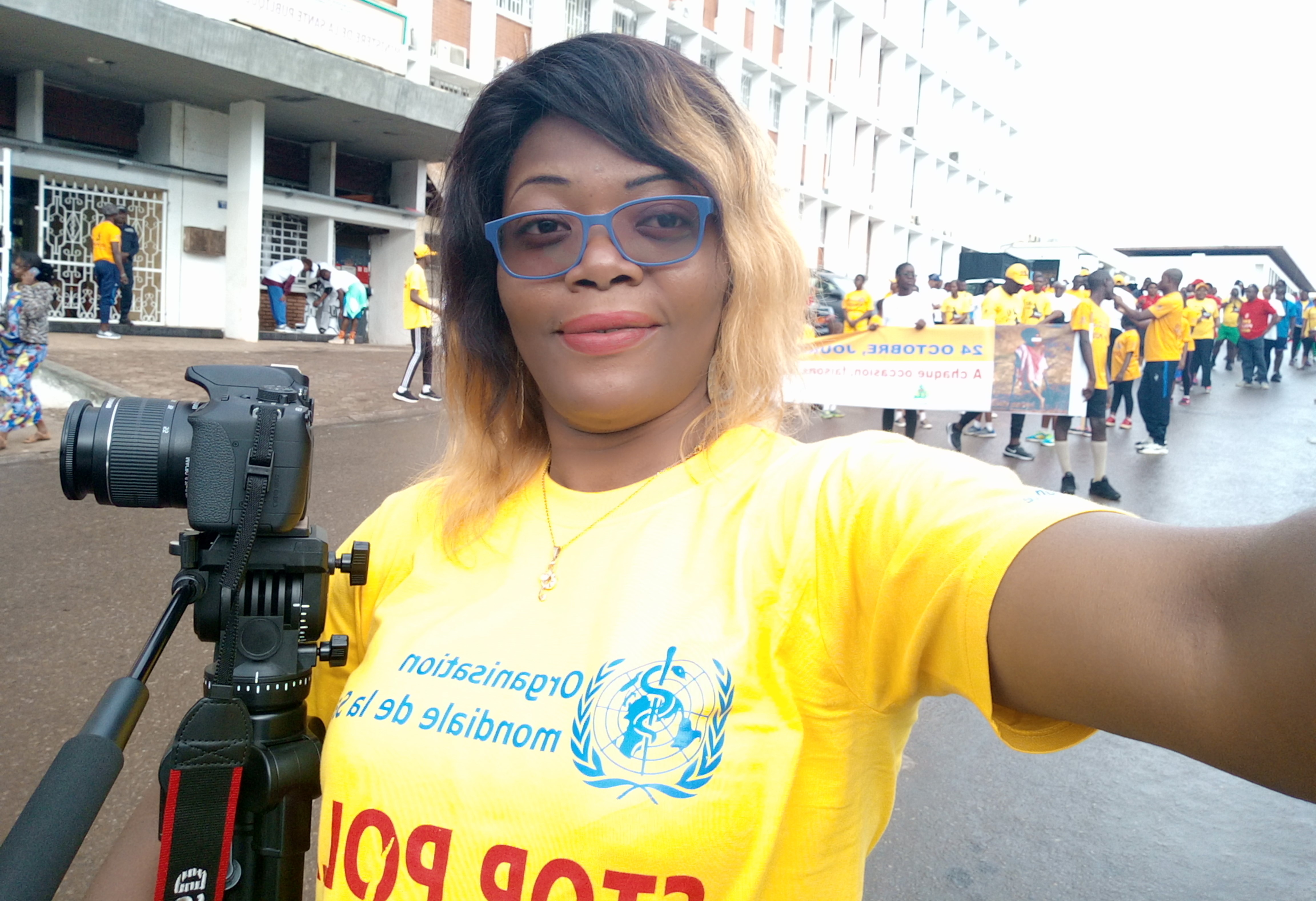
My Experience as a Journalist Reporting on Sexual and Reproductive Health in Africa - Elise Kenimbeni
Elise Kenimbeni is a prolific journalist from Cameroon in Central Africa. She talks about how her passion for sexual reproductive health and rights (SRHR) was nurtured by IPPF Africa Region, and how she is today a SRHR champion for the #RightByHer Campaign. The #RightByHer is a campaign that is pushing for the implementation of continental commitments, specifically the Maputo Protocol and Maputo Plan of Action. The campaign works with champions including young men and women, First Ladies, parliamentarians, journalists, feminists and religious leaders to raise awareness in their circles of influence and push for implementation of policies on gender equality and sexual and reproductive health and rights in Africa. "My name is Elise Kenimbeni, a journalist with TimesNews2.info in Cameroon. I was trained in writing about health issues in 2012, and later on in sexual and reproductive health and rights by two local non-governmental organizations in my country. I however developed more interest in reporting on SRHR issues when I produced some sponsored radio programmes for IPPF’s Member Association (MA) in my country -Cameroon National Association for Family Welfare (CAMNAFAW). Through this work, I got the opportunity to join the IPPF Africa Region’s journalists’ network in November 2014. As a member of the journalists’ network, I attended a capacity building training workshop in Nairobi, Kenya, where I met journalists from other African countries who had impacted on their respective communities by reporting on development issues. The journalists –from Togo, Uganda and Kenya – had won media awards and during the three days’ workshop, they share their experiences. I was really moved by their stories and I asked myself, if their reporting could impact the lives of people, why couldn’t I do the same with the resources I had? From the Newsroom to the Field I decided to sharpen my skills and knowledge on SRHR issues by working with CAMNAFAW when I returned home. For several months, I worked closely with CAMNAFAW’s youth and Gender Advocacy Officer, who taught me how to write impactful reports. This came as a big boost to my writing as I got more interested in issues affecting refugees, internally displaced persons (IDPs) and vulnerable groups like young girls and women in northern Cameroon. Most of the time I tried to put myself in the shoes of these people and my first reaction was to go to the field and get stories about their lives. My passion grew when I was supported by IPPF Africa Region to get out of the newsroom and go to the field to write more stories about people’s lives. Reporting, Building and Growing Networks I was inspired and worked hard and hoped that I would be recognized for my efforts. I traveled long distances by road and railway to the eastern and northern parts of Cameroon to cover SRHR issues including female genital mutilation (FGM), early child marriages, obstetric fistula, maternal and infant mortality, HIV and AIDS and use of modern contraceptives by the youth. I established good relationships with local and international organizations, as well as with other journalists and community agents, who helped me get reliable statistics and facts from the ground. I also interviewed refugees and IDPs following the Boko Haram crisis. Many of the people I met during this time have become my friends and I often call them to get updates on what is going on in their regions. I even worked in hostile environments, but I never relented. I was motivated and believed I could write stories that would highlight important issues and push the government to address them. As a journalist and champion for the #RightByHer campaign, I have been involved in many advocacy activities and workshops as well as the action learning sessions organized in Belgium and Kenya by IPPF and its consortium partners in the State of the Africa Woman (SOWAC) project. I also learnt how to conduct scientific data research for my reports during a similar workshop held in Navaisha, Kenya. Through this platform, I have met and shared ideas with many champions from all walks of life: journalists, activists, feminists, and religious leaders. As a media practitioner, I have learned a lot about how we can move the African SRHR agenda forward. All this knowledge has helped me as I cover the current COVID-19 pandemic in Cameroon. Most of the articles I write for my online media are from information shared via Facebook or WhatsApp by some experts, NGOs, the government or institutions. I am also working on a series of reports on how COVID-19 is affecting SRHR. Due to the containment measures to stop the spread of the virus, I am not doing any field work at the moment. The current health crisis has highlighted the need for a robust health policy to address loopholes in our country’s weak health infrastructure. There is also need to set up a good communication strategy in various local languages to reach the grassroots with information on how to prevent the spread of the coronavirus disease and engage community health workers in the fight against COVID-19." Follow Elise Kenimbeni on Twitter here. For more information about the work of IPPF Africa Region, follow us on Facebook and Twitter.
07 February 2017
ACT!2030
IPPF collaborates with UNAIDS and The PACT to implement ACT!2030 (formerly ACT!2015), a youth-led social action initiative which engages young people in 12 countries with advocacy and accountability around the Sustainable Development Goals (SDGs) and other SRHR agreements/frameworks. ACT!2030 was initiated in 2013 as a way to increase youth participation in the negotiations leading up to the adoption of the post-2015 development agenda, and for two years focused on establishing alliances of youth-led and youth-serving organisations in 12 countries across the world. The project is currently in Phase 4, which runs until the end of 2017, and aims to establish youth-led, data-driven accountability mechanisms to ensure youth engagement with the implementation of the SDGs and build an evidence base for advocacy. Ultimately, Phase 4 of ACT!2030 seeks to identify, assess and address key policy barriers to young people’s sexual and reproductive data by using existing data, supplemented by youth-collected data, to advocate and lobby for policy change. This phase involves four main activities: indicator advocacy (persuading decision makers to adopt youth-friendly SRHR and HIV indicators, including on things like comprehensive sexuality education (CSE) and access to youth-friendly services, into national/global reporting mechanisms); evidence gathering (creating national databases on quality of and access to youth-friendly services and CSE); communications (transforming this data and evidence into communications pieces that can be used to advocacy and lobby at national and international level); and global exchange (facilitating global visibility to share advocacy and engagement learnings and increase youth-led accountability in global and regional processes). ACT!2030 is implemented by national alliances of youth organisations in 12 countries: Algeria, Bulgaria, India, Jamaica, Kenya, Mexico, Nigeria, Philippines, South Africa, Uganda, Zambia and Zimbabwe.
01 December 2016
Learning Centre Initiative
The Learning Center Initiative recognizes the outstanding leadership capabilities of member associations in the different focus areas namely access to family planning and contraception, adolescent and youth programming, integration of sexual and reproductive health services and HIV/AIDS including gender rights and sexuality, provision of safe abortion services, logistics management of commodities and good practices in governance. To capitalize on different member associations strengths the Region embarked on this initiative in 2006 with the aim of providing south to south learning between member associations but this evolved and the focus has since changed. The initial selection included the member associations of: Cameroun for integration of gender, rights and sexuality into their programs; Uganda for increasing access to family planning and contraception; and good practices of governance; Ghana and Mozambique for adolescent and young people programming. The region quickly realized that using this initiative could transform the member associations from providers of services to enablers creating a pull effect in-country especially in the area of service delivery models. This then informed the next selection of countries - Ethiopia, Kenya, Swaziland, Togo and Cote d’Ivoire.
27 August 2021
The BMZ Project: Supporting People Affected by Humanitarian Crises in sub-Saharan Africa
The BMZ project supported refugees, internally displaced people, and host communities in Burkina Faso, Cameroon and Togo, in accessing quality sexual reproductive health care and in setting up income generating activities. Watch our video to find out how.
19 August 2021
BMZ Project: Supporting Refugees And Displaced People in Cameroon
Fané Zara, a Central African Republic (CAR) refugee who lives in Cameroon, was forced to leave her country because of conflict and is now a volunteer helping her community access sexual and reproductive health care thanks to support from the German Federal Ministry for Economic Cooperation and Development and The Cameroon National Planning Association for Family Welfare (CAMNAFAW) our Member Association in Cameroon. The BMZ project provided sexual and reproductive health care to 317 000 people in Cameroon, Burkina Faso and Togo – 62% of whom were refugees or internally displaced people.
08 July 2021
La Puberté Expliquée : Les changements chez les garçons
Ce film divertissant et instructif explique les surprises que réserve la puberté aux jeunes garçons. Les adolescents découvriront par eux-mêmes ce qui va leur arriver durant ces années délicates et pourtant cruciales. Les parents et les éducateurs y trouveront aussi des clés pour communiquer avec les enfants sur ces sujets épineux avec facilité. Ce film a été produit par le Bureau Régional Afrique de la Fédération Internationale pour le Planification Familiale en collaboration avec AMAZE et les membres du Mouvement d’action des Jeunes de l’ATBEF au Togo, de l'ABPF au Bénin et de la CAMNAFAW au Cameroun, avec le soutien d’Affaires Mondiale Canada.
05 July 2021
La Puberté Expliquée : Les changements chez les filles
Ce film divertissant et instructif explique les surprises que réserve la puberté aux jeunes filles. Les adolescentes découvriront par elles-mêmes ce qui va leur arriver durant ces années délicates et pourtant cruciales. Les parents et les éducateurs y trouveront aussi des clés pour communiquer avec les enfants sur ces sujets épineux avec facilité. Ce film a été produit par le Bureau Régional Afrique de la Fédération Internationale pour le Planification Familiale en collaboration avec AMAZE et les membres du Mouvement d’action des Jeunes de l’ATBEF au Togo, de l'ABPF au Benin et la CAMNAFAW au Cameroun, avec le soutien d’Affaires Mondiales Canada.
28 June 2021
Adapting family planning services in time of crisis: Innovations by the IPPF Africa Region Member Associations
On 11 March 2020, the World Health Organization (WHO) declared COVID-19 a global pandemic. The impact of the pandemic would be felt across the world in all sectors, including health, where major disruptions were witnessed. Access to basic health information and services, including sexual reproductive health (SRH) information and services became constrained owing to various government-led protective directives such as restrictions on movement, lockdowns and curfews. The pandemic also put a strain on IPPF Member Associations (MAs) across the world. MAs are IPPF affiliated locally owned health organizations which provide a wide range of sexual reproductive health information and services. The pandemic saw many MAs cut down on their services, with some having to shut down completely or suspend some of their operations in their static clinics, community-based outlets and mobile outreach services. Surveys conducted by the IPPF Africa Region in April and June 2020 to establish the impact of Covid 19 on its MAs established that a total of 1,405 service delivery points (SDPs) were reported to have been closed during round 1 of the survey while 2,161 SDPs were closed during round 2 out of the 13,049 service delivery points reported in 2019. 447 mobile clinics were also shut down. These disruptions affected people’s access to the essential sexual reproductive healthcare services provided in our MA facilities, such as family planning services, sexually transmitted infections services, maternal and child health services, among others. Young people were no longer able to congregate at the youth-friendly centers where they would access SRH information and services. This called for innovation on the part of IPPF in ensuring that the populations, especially the vulnerable and marginalized, continued accessing SRH services. Various partners came on board to mitigate the gap occasioned by COVID-19 by providing various resources for this, including financial resources. These donors included Global Affairs Canada (GAC), Levi Strauss Foundation and Danida. The Danida grant for COVID-19 was disbursed to 45 IPPF MAs in the Africa region and was geared towards filling the gap created by the pandemic by ensuring there was continued SRH service delivery despite the challenges. The interventions facilitated by these grants have yielded commendable results, as more than 100 million SRH services were reported in the Africa Region - mostly women, girls, the vulnerable and hard-to-reach populations have been able to access SRH information and services. The range of services, offered by the MAs in partnership with government agencies and development partners in the private sector, included ante-natal and post-natal care, childbirth services, family planning services, STI treatment and management services, Comprehensive Sexuality Education (CSE) for the young people, Sexual and Gender-Based Violence (SGBV) services. In a series of five case studies, we highlight some innovations and adaptations developed by IPPF Africa Region MAs, that enabled thousands of their target populations to continue accessing quality and affordable sexual reproductive health and rights (SRHR) information and services amidst the pandemic. Cameroun: Adopting a Home-based Service Delivery Approach Nigeria: Establishing Digital Health Interventions Zambia: Training Women on Self-Managed Care for Contraception Benin: Bringing Comprehensive Sexuality Education Online Sao Tome: A Clinic on Wheels
14 June 2021
Adapting Family Planning Services in Times of Crisis: Adopting a Home-based Service Delivery Approach in Cameroon
The COVID-19 pandemic put tremendous pressure on the healthcare sector, with governments diverting their resources to COVID-19 prevention and treatment measures. It severely affected routine service delivery in health facilities, with some essential services, such as sexual reproductive healthcare not being accorded the priority they deserve. Many health facilities scaled down on their regular services, with some suspending services or shutting down some clinics altogether. Government lockdowns and movement restrictions led to low uptake of clients in health facilities, a situation further compounded by people’s anxieties about contracting the virus in health centers. As a result, many adolescent girls, women in the reproductive age group, men and young people were unable to access sexual and reproductive healthcare services at their regular health facilities. These services included contraceptives, ante-natal, safe delivery and post-natal care services, HIV & AIDS services, Sexually Transmitted Infection (STI) treatment and management, among other services. International Planned Parenthood Federation’s (IPPF) Member Associations (MAs) which offer quality and affordable Sexual Reproductive Health (SRH) services were not spared either, and to address this, had to be innovative in their response. In Cameroon, IPPF’s Member Association in the country - Cameroon National Association for Family Welfare (CAMNAFAW) – decided to respond to the sharp decline in clients seeking services at its facilities by adopting an innovative home-based service delivery approach. This strategy enabled CAMNAFAW to continue offering much-needed reproductive healthcare services to its clients during the pandemic. Download the complete case study here: Adopting a Home-based Service Delivery Approach in Cameroon
12 August 2020
Réflexions sur l'engagement significatif des jeunes: Jacqueline Siego (Cameroon)
Aujourd'hui, nous nous joignons au reste du monde pour marquer la journée internationale de la jeunesse sous le thème «l’engagement des jeunes pour une action mondiale». Nous avons demandé aux membres du mouvement d’action des jeunes (YAM), qui est la branche jeunesse du corps de volontaires de l’IPPFAR, de partager leurs points de vue sur l’engagement des jeunes. Nous partageons une conversation avec Jacqueline Siego, une membre du YAM au Cameroon. À votre avis, que signifie un engagement significatif des jeunes et pourquoi est-ce important? D’abord, l’engagement significatif des jeunes fait référence à notre droit à la participation au processus de prise de décision en ce qui concerne tout ce qui touche à notre vie ainsi que celle de nos communautés. Cela implique la reconnaissance de notre droit, la mise en place des cadres et le développement des capacités (adultes et jeunes) pour faciliter cet engagement et faire en sorte qu’il soit significatif. De la part de nous jeunes, cela suppose de la passion et de la détermination en faveur d’une cause. Car, ce n’est pas toujours facile. Comment l'IPPFAR et votre Association Membre ont-ils encouragés l'engagement des jeunes? Nous avons une place de choix au sein de l'IPPFAR et de la CAMNAFAW et nous en sommes conscients. Nous sommes représentés dans les organes de gouvernance. Nous sommes impliqués dans la preparation, la mise en œuvre et l’évaluation des programmes. Nous nous exprimons et nos points de vue sont pris en compte. Ça me fait souvent plaisir de noter que nous jeunes ne sommes pas de simples observateurs à l’IPPF. Et ces participations aux processus de décisions constituent pour nous des opportunités uniques d'apprentissage, d’acquisition des compétences et d’ouverture au monde. Cela n'a pas de prix à mes yeux. Comment les jeunes peuvent-ils être plus impliqués dans les processus décisionnels? En plus des compétences et d’un cadre déjà évoqués plus haut, je pense qu’Il faut de la sincérité, de la transparence et du respect dans la collaboration et la communication entre nous jeunes et les adultes. Chacun a quelque chose à offrir à l’autre, peu importe son âge. C’est important que les adultes nous considèrent comme des partenaires car la participation n’est une faveur, mais un droit. Nous devons être impliqués dès les débuts des programmes. Enfin, il nous faut garder à l’esprit que nous les jeunes ne constituons pas un groupe homogène et profiter des nouvelles technologies pour étendre les opportunités de participation, y compris exclus et aux plus vulnérables parmi les jeunes. If you are young person and would like to join the Youth Action Movement, see where we work and get in touch. You can also reach us through @YAM Africa For more information about the work of IPPF Africa Region, connect with us on Facebook and Twitter.
04 June 2020
My Experience as a Journalist Reporting on Sexual and Reproductive Health in Africa - Elise Kenimbeni
Elise Kenimbeni is a prolific journalist from Cameroon in Central Africa. She talks about how her passion for sexual reproductive health and rights (SRHR) was nurtured by IPPF Africa Region, and how she is today a SRHR champion for the #RightByHer Campaign. The #RightByHer is a campaign that is pushing for the implementation of continental commitments, specifically the Maputo Protocol and Maputo Plan of Action. The campaign works with champions including young men and women, First Ladies, parliamentarians, journalists, feminists and religious leaders to raise awareness in their circles of influence and push for implementation of policies on gender equality and sexual and reproductive health and rights in Africa. "My name is Elise Kenimbeni, a journalist with TimesNews2.info in Cameroon. I was trained in writing about health issues in 2012, and later on in sexual and reproductive health and rights by two local non-governmental organizations in my country. I however developed more interest in reporting on SRHR issues when I produced some sponsored radio programmes for IPPF’s Member Association (MA) in my country -Cameroon National Association for Family Welfare (CAMNAFAW). Through this work, I got the opportunity to join the IPPF Africa Region’s journalists’ network in November 2014. As a member of the journalists’ network, I attended a capacity building training workshop in Nairobi, Kenya, where I met journalists from other African countries who had impacted on their respective communities by reporting on development issues. The journalists –from Togo, Uganda and Kenya – had won media awards and during the three days’ workshop, they share their experiences. I was really moved by their stories and I asked myself, if their reporting could impact the lives of people, why couldn’t I do the same with the resources I had? From the Newsroom to the Field I decided to sharpen my skills and knowledge on SRHR issues by working with CAMNAFAW when I returned home. For several months, I worked closely with CAMNAFAW’s youth and Gender Advocacy Officer, who taught me how to write impactful reports. This came as a big boost to my writing as I got more interested in issues affecting refugees, internally displaced persons (IDPs) and vulnerable groups like young girls and women in northern Cameroon. Most of the time I tried to put myself in the shoes of these people and my first reaction was to go to the field and get stories about their lives. My passion grew when I was supported by IPPF Africa Region to get out of the newsroom and go to the field to write more stories about people’s lives. Reporting, Building and Growing Networks I was inspired and worked hard and hoped that I would be recognized for my efforts. I traveled long distances by road and railway to the eastern and northern parts of Cameroon to cover SRHR issues including female genital mutilation (FGM), early child marriages, obstetric fistula, maternal and infant mortality, HIV and AIDS and use of modern contraceptives by the youth. I established good relationships with local and international organizations, as well as with other journalists and community agents, who helped me get reliable statistics and facts from the ground. I also interviewed refugees and IDPs following the Boko Haram crisis. Many of the people I met during this time have become my friends and I often call them to get updates on what is going on in their regions. I even worked in hostile environments, but I never relented. I was motivated and believed I could write stories that would highlight important issues and push the government to address them. As a journalist and champion for the #RightByHer campaign, I have been involved in many advocacy activities and workshops as well as the action learning sessions organized in Belgium and Kenya by IPPF and its consortium partners in the State of the Africa Woman (SOWAC) project. I also learnt how to conduct scientific data research for my reports during a similar workshop held in Navaisha, Kenya. Through this platform, I have met and shared ideas with many champions from all walks of life: journalists, activists, feminists, and religious leaders. As a media practitioner, I have learned a lot about how we can move the African SRHR agenda forward. All this knowledge has helped me as I cover the current COVID-19 pandemic in Cameroon. Most of the articles I write for my online media are from information shared via Facebook or WhatsApp by some experts, NGOs, the government or institutions. I am also working on a series of reports on how COVID-19 is affecting SRHR. Due to the containment measures to stop the spread of the virus, I am not doing any field work at the moment. The current health crisis has highlighted the need for a robust health policy to address loopholes in our country’s weak health infrastructure. There is also need to set up a good communication strategy in various local languages to reach the grassroots with information on how to prevent the spread of the coronavirus disease and engage community health workers in the fight against COVID-19." Follow Elise Kenimbeni on Twitter here. For more information about the work of IPPF Africa Region, follow us on Facebook and Twitter.