



Articles about Uganda
10 December 2021
Promoting the Human Rights of Sex Workers in Uganda
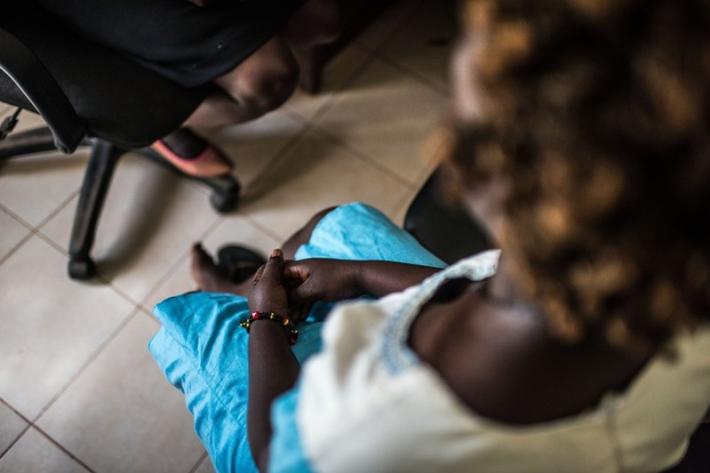
Friday 10 December 2021. Human Rights Day. This is the day the United Nations General Assembly adopted, in 1948, the Universal Declaration of Human Rights (UDHR). The UDHR is a milestone document which proclaims the inalienable rights that everyone is entitled to as a human being - regardless of race, religion, sexual orientation, political or other opinion, national or social origin, or other status. This year’s Human Rights Day theme is ‘Equality, reducing inequalities, advancing human rights.’ IPPF Africa Region is committed to ensuring the protection and upholding of all people’s human rights, including that of the poor, vulnerable and marginalized populations. On this day, IPPFAR tells the story of how its Member Association in Uganda, Reproductive Health Uganda (RHU) works with partners to advocate for the rights of sex workers –a high-risk vulnerable group, and ensure they have access to quality sexual reproductive health services. Story by Maryanne W. Waweru, Communications Officer, IPPF Africa Regional Office When 28-year-old Nasiche* was introduced to sex work by her friend five years ago, she knew the risks involved. “I was scared I would be raped or beaten by male clients. I also feared arrest by police, thus leaving my children with no one to fend for them,” remembers Nasiche, a mother of four. But at that point in her life, Nasiche was desperate. “I had three children from two different men. Neither father was taking responsibility for their children, and I was struggling to put food on the table. My friend urged me to seriously consider sex work. She gave me insights into the trade, shared survival tips, and assured me I’d be fine. I took her advice,” says Nasiche, who dropped out of school in Senior 2. In no time, Nasiche was able to provide for her children. “I didn’t have to beg the fathers of my children for food or school fees anymore. I felt good about this and decided to make sex work my job.” Nasiche was however naïve about practicing safe sex, and soon became pregnant with her fourth child. “After I gave birth, I knew I had to protect myself from another unplanned pregnancy. My friends introduced me to a Drop-in Center (DIC) where I could access condoms and other health services including treatment for Sexually Transmitted Infections (STIs).” A lady picking condoms at the EADWA Drop-in Center. A Safe Space The Drop-in Center that her friends introduced her to is the Empowered at Dusk Women’s Association (EADWA) facility, a peach-colored house located along Bwaise’s streets. EADWA was founded in 2008 by female sex workers from the slums of Bwaise III parish in Kawempe division, Kampala district, who had experienced sexual and physical violence. They additionally faced stigma and discrimination, including in health centers. “It was difficult to access services from health facilities as we would be shamed and ridiculed by the health workers. We really suffered. EADWA became a safe space for us to meet, discuss our challenges and develop effective strategies about our work. We began inviting health service providers such as Reproductive Health Uganda (RHU) to the center. RHU is an organization well known for its non-discriminatory services,” says Grace Kabayaga, EADWA’s Executive Director. We met Nasiche at this safe space, enjoying a boardgame with a friend. “I come here thrice a week. It’s a place where I meet my fellow sex workers and we talk about life, play games, exchange banter over a cup of tea, and just bond.” The Drop-in Center has a bathroom where sex workers can take a relaxing shower, and a kitchenette where they can make tea. There are mattresses where they can rest during the day. Since many don’t have electricity in their shanty houses, they can charge their phones which helps them to communicate with clients who wish to book appointments. The safe haven also enables HIV positive sex workers to safely store and take their anti-retroviral drugs (ARVs). “Stigma is rife in the community, which sees many people living with HIV/AIDS hide their status from their families. At this Drop-in Center, those who are on ARVs can store them comfortably, and come take them at the appointed time each day. This helps promote adherence,” says Nasiche. The prevalence of HIV among adults aged 15 to 64 in Uganda is 6.2%. Among females, the prevalence is 7.6% and it is 4.7% among males. HIV prevalence among sex workers in Uganda was estimated at 37% in 2015/16, with sex workers and their clients accounting for an estimated 18% of new HIV infections during the same period. (Avert) Access to Quality Sexual Reproductive Health Services According to Grace, EADWA’s partnership with RHU, which is IPPF’s Member Association in the country, has been of immense benefit to the female sex workers. RHU’s Moonlight Stars Clinic (Bwaise) is located just 200 meters from the Drop-in Center. RHU supplies the center with condoms, lubricants and emergency contraception, which the sex workers access for free. Due to the proximity to RHU’s clinic, the Drop-in Center never runs out of stock. Once every week, RHU avails a doctor who provides services to the ladies. Many seek treatment for STIs, family planning, HIV Counseling and Testing services, pregnancy testing, cervical cancer screening and safe post-abortion care services. At the Drop-in Center, the ladies also have access to a wide range of reproductive health promotional material which help increase their knowledge on sexual health. Unfortunately, many sex workers, having come from poor backgrounds, can barely read and write. “It would be great if our ladies could enroll in adult literacy classes. It will help them negotiate better and avoid being conned. They can also engage in other income-generating activities. Having a television set at the center would be ideal, as the health education shows would help them gain more knowledge, especially for the illiterate ones,” says Grace. Threats of Violence at Work Just as she had initially feared, Nasiche’s work has not been without incident. Adamant about always using condoms, Nasiche has had to face constant threats of violence from clients who refuse to use condoms, or men who refuse to pay for services rendered. Nasiche however says that while the risks are still there, she feels better equipped to handle them. “I have attended trainings held at the Drop-in Center, facilitated by RHU where we are taught about survival tactics. For example, I’m now very particular about the bars or lodgings I go to. I only go to those whose managers are aware of the work we do and the related risks. Further, whenever I’m with a client who is threatening to be violent, I raise the alarm by screaming or blowing a whistle and the management quickly comes to my rescue. I must however ensure I pay my regular ‘protection fee’ to the lodge’s management. Such arrangements have saved our lives as sex workers,” says Nasiche. Sex workers’ rights are human rights Because sex work is illegal in Uganda, just like in many other African countries, women like Nasiche live in constant fear of their lives. They face threats of rape, battery, harassment, extortion, murder, abduction and trafficking, public humiliation, arrest, detention and denied justice. “I know of sex workers who have been murdered. Survivors of assault who go to police stations get there and are asked: ‘do you know the work you do is illegal, and we should arrest you because you are a criminal’? This prevents many victims from reporting assault cases,” says Hellen*, also a sex worker in Bwaise. Peter Ghali, RHU’s Project Coordinator in Bwaise, says RHU has initiated various strategies aimed at addressing the challenges faced by sex workers. “We educate them about their rights, and further link them to organizations that offer legal aid. We also work with other stakeholders such as lodging and bar owners, the police, local leaders and gate keepers, urging them to put in place measures that protect sex workers from all forms of abuse and exploitation. We additionally conduct regular outreaches in local baraza’s, churches, bars and other places where men congregate. We sensitize them on the need to ensure that all people, including sex workers, are safe and can fully enjoy their human rights,” says Peter. At the national level, RHU is a leading advocate for the protection of the rights of key populations, such as sex workers. ‘The criminalization of sex work predisposes sex workers to various risks, some of them of public health concern, such as HIV. RHU remains committed to providing all people, including sex workers and other minority groups with quality sexual reproductive health services,” says Jackson Chekweko, RHU’s Executive Director. Chekweko adds that RHU works with Legislators, government and other partners in addressing the various legal and structural barriers that inhibit the realization of sex workers’ rights. “Through our programmes, we avail data and other evidence that is important in formulation of non-discriminatory policies and laws. RHU also involves sex workers in the design and implementation of its programmes, enabling us to deliver services in a manner that is comfortable with them,” he adds. During a recent visit to the Drop-In center in Bwaise, the IPPF Africa Regional Director, Marie-Evelyne Petrus-Barry acknowledged EADWA’s partnership with RHU. “EADWA’s noble work with one of the most vulnerable groups in society is commendable. Our partnership will ensure that sex workers continue to receive quality health services that reduce their vulnerabilities to adverse sexual reproductive health outcomes,” she said. Marie-Evelyne Petrus-Barry also committed to seeing to it that the Drop-in Center is supplied with equipment that will enhance the safety and comfort of sex workers who visit the center. “EADWA will receive a television set, seats, tables, kitchen utensils and other necessities,” said the Regional Director. Sex workers who are interested in enrolling in adult literacy classes will be facilitated by RHU to do so, in collaboration with the Ministry of Education. Marie-Evelyne Petrus-Barry further called on the Ugandan government and other stakeholders to prioritize the issue of the violation of the human rights of sex workers, and intensify all efforts aimed at protecting their rights. “Sex workers should be treated with respect and dignity, and any policies and laws that penalize them or prohibit the realization of their rights should be rejected. Sex workers must be enabled to live and thrive in a world free from all forms of abuse and discrimination. They should receive protection when they report crimes, access quality healthcare without discrimination, and have access to justice.” *Names have been changed to protect their identities. For more updates on our work, follow IPPF Africa Region on Facebook, Twitter, Instagram and You Tube.

05 September 2019
Meet Olgah: the sexual health activist challenging gender norms in Uganda
By Maryanne W. Waweru Olgah Daphynne Namukuza, a 25-year-old Ugandan Executive Committee member, has never let traditional gender roles hold her back. “When I was younger I was very argumentative”, she says. “I used to take part in a lot of debates, I used to participate in school competitions for delivering speeches. I wanted to be a lawyer.” Now Olgah is channeling those same skills into advocating for sexual health and reproductive rights for young people in Uganda. Currently the youth country coordinator for the Sexual Reproductive Health and Rights Alliance in Uganda, she was elected as the IPPF regional representative for the Youth Action Movement in 2016, and has volunteered at Reproductive Health Uganda, a non-governmental organization (NGO) since she was a student. Challenging gender roles from a young age Brought up primarily by her mother in a middle-class family in Kampala, she says her mother tried to raise Olgah and her two brothers and two sisters outside of traditional gender roles, asking each to take their turn to cook and do other households chores. But soon, she says, tradition took over. “The more we grew up, it wasn't up to her [Olgah’s mother] anymore, because she would tell the boys to cook and they would just not do it”, she says. “They'd be like, "Why should I cook? There's girls in the family"." In school, traditional gender roles were reinforced, especially when it came to sex education. “It was a fear-based message”, she says. “Many of the talks were centered around: you need to abstain in order to not get pregnant and not get HIV, so that you can be successful in life.” Olgah says shame and fear were the main tools used by teachers and matrons, but she is thankful for her mother and aunts who taught her to speak openly about sexuality and pregnancy. Stigma & society Living in a country where one in four girls give birth before the age of 19, Olgah saw the repercussions of teenage pregnancy early in life, when two of her classmates dropped out aged fifteen because they were pregnant. Aside from the potential health complications, teenage mothers in Uganda face huge social stigma, and often struggle financially, falling into a poverty trap from which it’s almost impossible to escape. “It was very difficult for them. People in school were scared to talk to them”, says Olgah. “They seemed like they were these people who had some disease…They were rejected by their families, they were rejected in school...they had literally no support.” Volunteering at Reproductive Health Uganda While working towards her degree in Development Studies in Makerere University, Olgah was introduced by a friend to Reproductive Health Uganda, IPPF's Member Association in Uganda. After completing an internship during her university course, she continued to volunteer there after she graduated. “During my internship, I saw that there were a lot of young people who are employed, a lot of young people who were in positions of power, who were making decisions on behalf of the organisation”. She says this innovative approach was inspiring. “One thing became clear: that it's not about how old you are, it's about what you can do and how you can do it.” Olgah is determined that young people need to lead the way on sexual health and reproductive rights. “The current reality is, young people are very dynamic and the times we are dealing with are very dynamic. You need to involve young people because they understand those issues more. We're at a crossroads between breaking that generational hold of traditionalism and conservativeness and embracing the new reality of the influence of technology.” Throughout her career, Olgah has been using technology to help young people in Uganda access the information they need to empower them. As a volunteer and ICT coordinator with Reproductive Health Uganda, she worked with the organisation on a project which used ICT to improve access and utilization of SRHR information and services. Investing in youth She now helps run several programmes, including a club for teenage mothers which offers them a small investment and financial advice, to help them to start their own businesses and escape poverty, and the Get Up Speak Out programme, which aims to change the conversation around sexuality and education, and create a more open dialogue between young people and parents, teachers and service providers. The programme trains school staff in sex education, and uses music, dance, drama and lively debates to explore love and sex in an open atmosphere, free of the fear and mistrust she experienced in her own school days. And it’s not just women who benefit. Olgah runs programmes for men and boys to access contraception, and says it’s crucial for both partners to be comfortable discussing and using them. She is determined that men have to be a part of the change. “It is very important to bring them on board, to help them understand the issues”, she says. ”And to help them know that sharing power is not so bad after all - it will actually have greater results for them”.

25 July 2018
IPPFAR African Journalists SRHR Reporting Award
IPPFAR African Journalists Family Planning Reporting Award The International Planned Parenthood Federation – Africa Region (IPPFAR) is the leading non-government sexual and reproductive health and rights (SRHR) service delivery organization in Africa and the leading SRHR advocacy voice in the region. Our overarching goal is to increase access to SRHR services and support for sub-Saharan’s Africa most poor, marginalized, socially-excluded and under-served youth, men and women. Taking stock of the two previous editions of the IPPF Africa Region African journalists Family Planning Reporting Awards held in Addis Ababa, Ethiopia, in 2013 and Bali, Indonesia in 2016 during the International Family Planning Conference, and considering the African Union 2017 theme on “Harnessing the Demographic Dividend through investments in Youth” and ongoing initiatives including FP2020, the Ouagadougou Partnership, IPPF Africa Region is proud to announce the third African Journalists Family Planning Reporting Award. Withthe financial support of the David and Lucile Packard Foundation About the Award Despite the progress made over the last several decades, the unmet need for family planning and contraception remains huge. Twenty-six per cent of married women in sub-Saharan Africa have an unmet need for contraception. Access to services and supplies and/or choices is limited. In some communities there is still fear of social disapproval or opposition by the male partner. Myths and misconceptions form a formidable barrier in which worries of side effects and lack knowledge about contraceptive options and their use are the norm. The media plays a major role in strengthening and expanding coverage of family planning issues. This coverage includes access to contraceptives, method and choices as well as resources and budgets for improved family planning services. As advocates the media promotes dialogue on policy issues and public education on family planning ranging from policy issues critical in creating enabling environment for service delivery. This award recognizes pioneering print, radio and television reports that have:- 1. Promoted dialogue on national/regional family planning policy issues, 2. Challenged governments on their family planning commitments, 3. Highlighted innovative service delivery to increase access to family planning and contraceptive services. Eligibility Entries will be accepted only from sub-Saharan African nationals, working in the continent, whose work has appeared in printed publications or electronic media /online platforms that is primarily targeted at and received by a sub-Saharan Africa audience. Judges The selection and judging process will be overseen by a panel of experienced, independent and highly respected experts. They will be judging for entries that: Were broadcast or published, in English, French or Portuguese only, between January 2017 and June 2018 (proof will be required) Are well researched, balanced, objective, comprehensive and demonstrate a high level of journalistic integrity and innovativeness Communicate family planning and contraception/Sexual and reproductive healthin a way that makes the topic accessible and relevant to their audience How to enter Fill out and submit your forms and attachments to: [email protected]: [email protected] Only one entry per journalist will be accepted. Send 2 copies of your work including date of publication/broadcast, name of publication/broadcaster, contacts of media organization. Print journalists should send a scan of the original article. TV & Radio - please send 2 disks (DVD or CD) to our address below or Submit full URL details where we can view/listen to your work. You can also submit your entry through dropbox.com or wetransfer.com. A copy of your updated Curriculum Vitae Any other relevant background information on your entry/entries that you feel is relevant. Deadline for submissions is 15 August 2018 – 23:59 Hours GMT +3. For queries or additional information please contact James Ngechu | Communication Officer - Design and Media Email: [email protected]; [email protected] Tel: +254 (20) 4909000 Senteu Plaza, 3rd Floor | Lenana/Galana Road junction | P.O. Box 30234 - 00100 | Nairobi – Kenya Download the entry form here: Entry Form Prix IPPF- Région Afrique de journalisme sur la planification familiale La Fédération Internationale pour la Planification Familiale - Région Afrique (IPPFRA) est la principale organisation non gouvernementale dans le domaine des prestations de services en droits et santé sexuelle et reproductive (SDSR) en Afrique et le principal porte-parole en matière de plaidoyer s’agissant de la SDSR dans la région. Notre objectif global est d'accroître l'accès aux services SDSR de même que le soutien aux populations les plus pauvres d'Afrique sub-saharienne, aux marginalisés, aux jeunes socialement exclus et mal desservis, aux hommes et aux femmes. En célébration du 50e anniversaire de l'Union Africaine et afin d’ancrer les actions relatives au soixantième anniversaire de l'IPPF célébré l'année dernière, l'IPPF Région Afrique est fière d'annoncer le lancement inaugural du prix de journalisme sur la planification familiale. Ce prix est organisé par l'IPPF Région Afrique avec le concours financier de la Fondation Packard. À propos du prix En dépit des progrès réalisés au cours des dernières décennies, les besoins non satisfaits en matière de planification familiale et de contraception demeurent énormes. Vingt-six pour cent des femmes mariées en Afrique sub-saharienne ne parviennent pas à satisfaire leurs besoins en matière de contraception. L'accès aux services et aux produits restetlimité ; il en va de même des choix. Dans certaines communautés, la peur de la réprobation sociale existe toujours ; dans d’autres, on a plus à faire à l'opposition du partenaire masculin. Mythes et idées fausses forment ainsi une formidable barrière dans laquelle les soucis à propos des effets secondaires de même que le manque de connaissances sur les options contraceptives et leur utilisation représentent la norme. Les médias jouent un rôle majeur dans le renforcement et l'élargissement de la couverture des questions se rapportant à la planification familiale. Cette couverture comprend l'accès à la contraception, la méthode et les choix de contraceptifs ainsi que les ressources et budgets pour des services de planification familiale améliorés. En tant qu’avocats, les médias favorisent le dialogue sur les questions de politique et d’éducation publique en matière de planification familiale; celles-ci vont des questions stratégiques essentielles à la promotion d'un environnement propice à la prestation de services. Ce prix récompense les articles de presse, de radio et de télévision d'avant-garde qui ont:ont :- Favorisé le dialogue sur les questions nationales/régionales et qui portent sur les politiques de planification familiale, rappelé aux gouvernements leurs engagements en matière de planification familiale, Mis en évidence les prestations de services innovants permettant d’améliorer l'accès à la planification familiale et aux services de contraception. AdmissibilitéEligibilité Seules les soumissions présentées par des ressortissants d'Afrique sub-saharienne, travaillant sur le continent et dont les travaux ont paru dans des journaux ou des médias électroniques s'adressant principalement à une audience sub-saharienne et qui sont reçus par un public résidant en Afrique sub-saharienne, seront acceptées. Jury La sélection et le processus de sélection seront supervisés par un groupe d'experts expérimentés, indépendants et hautement respectés. Ils évalueront les soumissions qui: ont été diffusées ou publiées, en anglais, en français uniquement, entre le mois de janvier 2017 et le mois juin 2018 (une preuve sera exigée) Sont bien documentées, équilibrées, objectives, complètes et qui démontrent un haut niveau d'intégrité journalistique et d'innovation Communiquent le thème de la planification familiale et de la contraception/santé sexuelle et de la reproductiond'une manière qui rend le sujet accessible et d’un intérêt certain pour leur public Comment participer Une fois rempli, il convient de soumettre lesdits formulaires ainsi que les pièces jointes à: [email protected]; [email protected]; Une seule inscription sera acceptée par journaliste. Envoyez 2 copies de votre travail, en y incluant la date de publication/diffusion, le nom de la publication/diffuseur, les contacts du média. Les journalistes de la presse écrite devront envoyer une copie scannée de leur article original. TV & Radio – Merci de nous faire parvenir 2 disques/cassettes (VHS / DVD ou CD) à notre adresse ci-dessous ou De nous soumettre tous les détails de l'URL où l'on peut voir/écouter le travail que vous avez effectué. Vous pouvez également soumettre votre article dans dropbox.com ou wetransfer.com. Une copie de votre curriculum vitae mis à jour Toute autre information concernant votre soumission/entrées que vous jugez pertinente. La date limite pour le dépôt des soumissions est fixée au 15 août 2018 - 23h59 GMT +3. Pour toute question ou information additionnelle veuillez contacter James Ngechu | Communication Officer - Design and Media Email: [email protected]; [email protected] Tel: +254 (20) 4909000 International Planned Parenthood Federation Africa Region Senteu Plaza, 3rd Floor | Lenana/Galana Road junction | P.O. Box 30234 - 00100 | Nairobi – Kenya Téléchargez le formulaire d'inscription ici : Formulaire d'inscription

20 July 2018
Reproductive Health Uganda and Lesotho Planned Parenthood Association Receive Accreditation Certificates
By Maryanne W. Waweru Two IPPF Africa Region Member Associations; Reproductive Health Uganda (RHU) and the Lesotho Planned Parenthood Association (LPPA) have been recognized for their success in the 3rd IPPF Accreditation cycle. About IPPF’s Accreditation Process As a global sexual and reproductive health and rights movement, IPPF is guided by key Standards and Responsibilities of membership. IPPF expects all Member Associations who wish to be a part of the Federation to uphold and promote the well-defined 10 Principles of Membership, and to comply with the different Standards associated with each Principle. The ‘Accreditation Process’ is based on these 10 Principles and Standards. Accreditation is an important tool for every Member Association’s self-reflection and improvement. It also serves as an effective means of improving communication between Member Associations and the IPPF Secretariat. The Accreditation process further helps in ensuring Member Associations’ accountability to the clients they serve, and to the donor community. The 10 Membership Principles and their associated Membership Standards require that a Member Association is: Open and democratic Well governed Strategic and progressive Transparent and accountable Well managed Financially healthy A good employer Committed to results Committed to quality, and A leading SRHR organization in its country When full compliance is achieved, Member Associations are recognized as fully accredited members of the Federation by the Governing Council; IPPF’s highest decision-making body. The 3rd cycle Accreditation certificates for Reproductive Health Uganda (RHU) and Lesotho Planned Parenthood Association (LPPA) were awarded during an awards cocktail ceremony held in Nairobi, Kenya on 29 June 2018 -on the sidelines of the 48th Session of the IPPFAR Regional Council. The awards were presented by the IPPF Africa Regional Chairperson Hon. Antonio Niquice. We congratulate the MAs of Uganda and Lesotho for their success in the 3rd cycle of Accreditation (2016 – 2020). Read more about Reproductive Health Uganda here and Lesotho Planned Parenthood Association here. For more information about the work of IPPF Africa Region, connect with us on Facebook and Twitter. Story by Maryanne W. Waweru, Governance and Compliance Officer, IPPF Africa Region

19 April 2018
62nd Ordinary Session of the African Commission on Human and Peoples’ Rights (ACHPR62)
IPPFAR and RHRN Africa team from 4 countries (Kenya, Uganda, Zimbabwe and Senegal) will be attending the 62nd Ordinary Session of the African Commission on Human and Peoples’ Rights (ACHPR62) in Noaukchott, Mauritania 22nd April to 9th May 2018. The NGO Forum by the African Centre on Human Rights and Democracy Studies (ACHRDS) will kick off the ACHPR62 and will provide the opportunity to the team to link with other advocates and Human Rights Defenders in Africa to share experiences on various issues including advocacy for SRHR of young people through panel discussions including one on Youth SRHR. IPPFAR and platforms will also hold a side event on the theme “Getting it ‘Right’: Debating the linchpin to fulfilling SRHR of Young People in Africa” to take place on Tuesday, 24th April at Hotel Khaima from 11:30 am to 1:30 pm. The team will share, explore and deliberate with participants on among others, embracing the Rights Approach in Youth SRHR Advocacy and the role of CSOs in pushing for accountability by decision-makers as well as highlight the status of the implementation of the Maputo Protocol in Africa.

26 September 2017
IPPF Africa Region Holds First Regional Award for Excellence in Sexual Reproductive Health and Rights
By Maryanne W. Waweru IPPF Africa Region, the leading non-governmental Sexual Reproductive Health and Rights (SRHR) service delivery organization in Africa, and the leading SRHR advocacy voice in the region, held its first IPPF Africa Region Award for Excellence in Sexual Reproductive Health and Rights in July 2017. The award ceremony took place during the 47th session of the Regional Council in Nairobi, Kenya. The award was established to recognize and celebrate the role played by the over 39,000 IPPFAR volunteers, youth, Member Associations (MAs), staff, partner organizations and individuals who make outstanding contribution for the advancement of SRHR in sub-Saharan Africa. It recognizes those who have undertaken remarkable initiatives towards the achievements of Africa’s SRHR goals. The following individuals were feted during the ceremony: Outstanding Lifetime Achievement Award Category The recipient of this award is an individual who has advocated for SRHR and contributed to the advancement of SRHR in his individual capacity. His stringent efforts have led to feasible impact at national, regional and international levels. Dr. Shimelis Adugna from Ethiopia is the 2017 recipient of this award. A founding member of our Member Association in Ethiopia –Family Guidance Association of Ethiopia (FGAE), Dr. Adugna is a passionate SRHR champion and has contributed immensely towards the growth and development of FGAE. Outstanding Youth Volunteer Award Category This award recognizes young people who continue to influence SRHR strides in their country and in the continent. The recipient for the 2017 award was Mr. Daniel Oyom from Uganda. Through Reproductive Health Uganda (RHU) –our Member Association the East African country of Uganda, Mr. Oyom continues to make immense contributions, more so in the area of resource mobilization for RHU. Among others, Mr. Oyom donated his personal land worth $10,000 to the MA. Outstanding IPPFAR Staff Award Category Dr. David Williams from Sierra Leone was feted in this category. Dr. Williams has served in various positions in the MA of Sierra Leone – The Planned Parenthood Association of Sierra Leone (PPASL), where he is the current Executive Director. Dr. Williams played a significant role in the fight against the Ebola epidemic in the country. He serves on various SRHR technical and advisory committees including the Country Coordinating Mechanism Committee (CCM). Also recognized in this category was Ms. Diallo Drame from Burkina Faso. Ms Diallo is a midwife, Head of Clinic and has supported the management of the comprehensive abortion management project in the MA of Burkina Faso. With over 20 years of service in the Association, Ms. Diallo has demonstrated unwavering commitment to promoting the Association's FP/RH activities. One of great achievements is the integration into several teams of SRH trainers. She is in charge of quality of services at service delivery points, she organized mobile teams in social franchising. The number of statistics on services provided has doubled. Outstanding non-IPPFAR Individuals Awards Category Dr. Mustapha Sidiki Kaloko, Commissioner for Social Affairs at Africa Union Commission was recognized by IPPFAR for his great role and contribution in the advancement of SRHR in Africa and beyond. As the AU Commissioner for Social Affairs, Dr. Kaloko played a leading role in the adoption of the new Maputo Plan of Action and the integration of SRHR into the AU Agenda 2063. He also greatly supported IPPFAR Member Associations (MAs) in the fight against the Ebola crisis. In addition, Dr. Kaloko recommended IPPFAR to the Heads of States and First Ladies which has increased in country support and funding. Our hearty congratulations to all the recipients of the first IPPF Africa Region Award for Excellence in Sexual Reproductive Health and Rights For more information about our work, follow us on Facebook and Twitter.

04 February 2017
"The Day I Faced my Greatest Fear Head-On" -Kellen Mbabazi
By Maryanne W. Waweru Kellen Mbabazi, 25, is married with two children aged 10 years and 4 years. She recently faced one of her greatest fears: getting screened for cervical cancer. “Cancer is a big deal in the community today. There are so many people -including women that I know who have the disease. I also know of families that have lost a loved one to cancer. For a long time, I was so terrified of testing for cervical cancer because I was scared I would get a positive result. I imagined that this would be an automatic death sentence for me, yet I’m still young and with a great future ahead of me. I still plan on getting more children, so I didn’t want to be told that I have cervical cancer,” she confesses. However, one day, Kellen decided to take charge of her own health and mustered the courage to get screened for cervical cancer, having learnt of its importance through a community outreach conducted by Reproductive Health Uganda (RHU) –Kampala branch. “During the outreach, I heard one of the mobilizers say that with cancer, the key is to detect it early because when it is discovered at a late stage, then it is what might kill you. This information convinced me and that is why I decided to screen for cervical cancer,” she says. Also Read: "The Radio Announcement that Changed My Life" -Gertrude Mugala Kellen then went to the nearby Kiswa Health Center in Kampala, where she met a team from Reproductive Health Uganda who screened her for cervical cancer. Following her experience, which she says was eye-opening, Kellen then decided to become a cervical cancer mobilizer. “My mother and my sisters were the first people I encouraged to come for screening. I then informed my friends and encouraged them to test too. This is something that I will continue doing, because I have realized that it is not the disease that kills people, but fear for testing. Yet, early screening is one of the best solutions to cervical cancer. This is the information that I have been sharing with my female networks, and I will not relent in doing so,” she says. RHU implements the Cervical Cancer Screening and Preventative Therapy (CCSPT) Initiative, which uses static clinics and outreaches as the main service delivery modes. The CCPT initiative aims at maximizing the number of cancer services offered to women through a validated, low-cost screening and preventative therapy approach. Screening is carried out using Visual Inspection with Acetic Acid (VIA) -an evidence-based and affordable alternative approach for cervical cancer screening in low-resource settings. The CCSPT Initiative offers instant treatment for clients with pre-cancerous lesions using cryotherapy –a method that involves freezing of precancerous lesions. Related: Reproductive Health Uganda: Effectively Responding to the Cervical Cancer Burden Ms. Annet Kyarimpa, the Special Projects Coordinator in the IPPFAR Member Association in Uganda –Reproductive Health Uganda (RHU) says that CCSPT Initiative outreach activities provide the biggest bulk of clients (over 75%). The success of this approach is largely attributed to the fact that the outreaches are conducted in lower level health facilities (including government health facilities) that provide a conducive service delivery environment. Maryanne W. Waweru is the Communications Officer, IPPF Africa Regional Office.

02 November 2016
Early Cervical Cancer Screening Saved my Life! -Enid Kajura
My name is Enid Kajura from Karago, Bukuku in Uganda. I am 46 years old. For a long time, I had been experiencing irregular vaginal bleeding, discharge and lower abdominal pains which greatly worried me. I then decided to go to a local health center where the nurse suggested that I undergo a screening test for cervical cancer, which I did. I cannot begin to explain how I felt when I was informed that the tests were positive. I almost collapsed, thinking that I now had to have my uterus removed. The uterus is the essense of a woman’s being, so I didn’t know what would become of me if it was removed. I was then referred to Mulago Hospital for further treatment, but this only compounded my problems because I did not have any money to get there from my home. All I could do was cry and pray. Two days later, and after composing myself, I decided to go to Reproductive Health Uganda (RHU) because I had heard that they offere cervical cancer treatment. There, I met helpful nurses who took me through some treatment regimen. They asked me to return after six weeks, which I did. By this time, the discharge I had been experiencing before had stopped, and this made me very hopeful. When the nurses confirmed to me that my health was indeed improving, I went through mixed emotions. I wasn’t sure whether to cry, laugh or just stare at the nurse. For some reason, I found it hard to believe that I was getting better. This is because I had heard of women who had died of cancer even after they had accessed treatment in big hospitals, so at at the back of my mind I had been fearing that my days were numbered too. But the nurses at RHU counselled me and told me that I was lucky because I had sought treatment at an early stage. The nurses told me that most of the cases of people who succumb to cancer are those whose cancers were detected at a late stage when it was already too late –even for the best of treatments. The nurses told me to make sure I told my friends back home about the importance of cervical cancer screening for women –regardless of whether they are feeling sick or not, as this would help detect any precancourous cells and consequently help them access treatment and eventually save their lives. The nurses gave me an appointment for one year later and by the time I went, the vaginal bleeding and lower abdominal pains had stopped long before then. I was now living a comfortable life as a woman. When the nurses told me that I was well, I was overjoyed and I have since been spreading the gospel of early detection through cervical screening. But you know what is even better? The fact that my uterus is still intact! Thank you RHU!

04 February 2017
Reproductive Health Uganda: Effectively Responding to the Cervical Cancer Burden
Cervical cancer is a major public health concern in developing countries. In Africa, an estimated 53,000 women die of the disease annualy, according to the World Health Organization (WHO). The IPPF Africa Region Member Association in Uganda -Reproductive Health Uganda implements the Cervical Cancer Screening and Preventative Therapy (CCSPT) Initiative, which uses static clinics and outreaches as the main service delivery modes. The CCPT initiative aims at maximizing the number of cancer services offered to women through a validated, low-cost screening and preventative therapy approach. Screening is carried out using Visual Inspection with Acetic Acid (VIA) -an evidence-based and affordable alternative approach for cervical cancer screening in low-resource settings. The CCSPT Initiative offers instant treatment for clients with pre-cancerous lesions using cryotherapy –a method that involves freezing of precancerous lesions. Ms. Annet Kyarimpa is the Special Projects Coordinator at RHU, and says that the CCSPT Initiative's outreach activities carried out by the organization account for the bulk of clients reached and served (over 75%). "The success of this approach is largely attributed to the fact that the outreaches are conducted in lower level health facilities (including government health facilities) that provide a conducive service delivery environment, where key considerations are factored," she says. These considerations include: - Privacy of the client - Appropriate consultation/examination rooms with adequate lighting - Spacious waiting areas - The opportunity to access other health services such as malaria treatment during the single visit. RHU's cervical cancer outreaches also provide an integrated SRH package including cervical cancer screening and cryotherapy treatment (possible with mobile carbon dioxide 10kg cylinders), STIs screening and management, HIV Counselling and Testing (HCT) as well as family planning services. In addition, RHU targets and works with established ART clinics in various public health facilities to reach out to women living with HIV through the provision of CCSPT services. “These are high-risk women, and RHU takes advantage of the already mobilized groups to offer them services within their existing facilities as they seek other services. For example, every Thursday RHU’s Fort Portal clinic visits and provides CCSPT services to ART patients at the Fort-portal Regional Referral Hospital. Working space was provided by the MCH department to support the partnership,” says Ms. Kyarimpa.. RHU’s Kampala branch recently had a successful collaboration with Infectious Disease Institute (IDI), where we were invited to provide family planning services and cervical cancer screening to HIV positive women attending IDI outreaches and health camps. RHU’s partnership with Rotary clubs has also helped reach-out to women and girls beyond the geographical coverage of the five RHU sites implementing the CCSPT Initiative. Rotary clubs conduct quarterly health camps within identified communities to address various health issues. They mobilize communities for services and procure medical supplies for use during the camp as well as cater for service providers’ accommodation in instances were providers have to sleep in the community. RHU provides transport for the service providers and SDA for the service providers. Story by Maryanne W. Waweru, IPPF Africa Region

16 December 2015
Parliamentarians are Key to Realizing Demographic Dividend in Africa
African parliamentarians must seek ways of mobilizing resources to fund the demographic dividend agenda in their countries. This is according to the IPPF Africa Region Director Mr. Lucien Kouakou, who made these remarks during the closing ceremony of a two-day capacity building workshop for African Parliamentarians held in Nairobi, Kenya, from 14 – 15 December 2015. The meeting, attended by 13 legislators drawn from the Africa Parliamentary Forum on Population and Development (FPA), was aimed at enhancing the legislators' understanding of the concept of the ‘Demographic Dividend’, and their role in moving forward related agenda. The demographic dividend refers to the accelerated economic growth initiated by a rapid decline in fertility and mortality, and which results in a change of the age structure in the population –from one dominated by child dependents to one driven by an economically productive adult workforce. “Harnessing the demographic dividend is fundamental to Africa’s development. A demographic shift in any population is important because of it's direct bearing to among others: economic growth, education levels, poverty levels and the health and well-being of a nation. The current demographic transition in Africa is one that has the ability to steer the next surge of economic growth - with a population characterized by healthier and more educated youth, and who will have greater access to the labour force and economic markets. African leaders therefore need to put in place measures that will ensure that the continent harnesses the dividend from Africa’s youthful population,” he said. A new report from the World Bank reveals that government policies and other related actions undertaken today will increase the likelihood of harnessing various economic and social benefits of demographic change. “Parliamentarians are instrumental in this process, as they are the ones involved in the formulation of policies and legislations. When a country has the right set of policies in place, it is better placed to reap the benefits of a demographic change, hence the need to involve Members of Parliament in all conversations around the demographic dividend. There is no doubt that the demographic dividend can be achieved in Africa, if the right policies are instituted,” said Mr. Kouakou. The capacity building initiative for the African legislators, organized by IPPF and UNFPA and themed: "Moving the Demographic Dividend Agenda: from Ideas to Actions", established a harmonized understanding of the demographic dividend among the MPs, and helped define their level of engagement in advancing this agenda in their countries. A clear roadmap for moving forward the demographic dividend agenda at both regional and national levels was developed during the forum. Members of parliament who attended the forum included: Hon. Chris Baryomunsi (Uganda), Hon. Marie-Rose Nguini Effa (Cameroon), Hon. Jose Manuel Tavares Sanches (Cape Verde), Hon. Mbaidessemel Dionadiji (Chad), Hon. Zalikatou Diallo (Guinea Conakry), Hon. Larry Younquoi (Liberia), Hon. Illa Ousmane (Niger), Hon. Helen Kuyembeh (Sierra Leone), Hon. Dlamini Princess Phumelele (Swaziland), Hon. Highvie Hamdudu (Zambia), Hon. Nurudeen Abatemi-Usman (Nigeria), Hon. Ahmed Babou Babah (Mauritania) and Hon. Sado Nazaire (Benin). In his speech, Mr. Kouakou called on the MPs to take a lead role in mobilizing resources that will ensure that the demographic dividend will be realized in their countries. “Parliamentarians can influence their colleagues and garner their support for the formulation of policies and legislations, specifically those related to population and development. They can call for more budgetary allocation to respective institutions, such as the Ministries of Planning and Development, The Ministries of Health and Education, as well as institutions that focus on the youth. They can also take the lead in seeking innovative ways of mobilizing resources at the local level that would champion population and related issues. Members of Parliament have an unmatched role in steering development in their countries,” he said. Mr. Kouakou further urged the legislators to take advantage of the resource that is partners who have a presence in the region, such as IPPF and UNFPA – entities that are committed to Africa’s growth. Development partners, if convinced that the demographic dividend is key to the growth of the region, will definitely assist in different ways, including offering technical assistance, capacity building and mobilization of resources, he said. “IPPF and UNFPA are committed to this agenda, and are working in collaboration with the Africa Parliamentary Forum on Population and Development (FPA) to implement a programme that will ensure that all African countries are on track to realizing the demographic dividend. The project is initially slated for implementation in the six countries of Mauritania, Ivory Coast, Mali, Burkina Faso, Niger and Chad, with more countries being incorporated in the coming years. We are keen on ensuring that no country is left behind,” he said. The Africa Parliamentary Forum on Population and Development (FPA), which was established in 2012, seeks to exchange and coordinate action in support of the ICPD Beyond 2014. FPA also seeks to ensure that parliamentarians assist in the implementation of the ICPD Beyond 2014 Agenda by adopting initiatives in population policies, as well as harmonisation of African legislation on Sexual and Reproductive Health and Rights (SRHR). At the Abidjan General Assembly meeting in 2014, FPA reaffirmed its purpose as a regional body established to drive the agenda on population and development at both the national and regional levels.
10 December 2021
Promoting the Human Rights of Sex Workers in Uganda
Friday 10 December 2021. Human Rights Day. This is the day the United Nations General Assembly adopted, in 1948, the Universal Declaration of Human Rights (UDHR). The UDHR is a milestone document which proclaims the inalienable rights that everyone is entitled to as a human being - regardless of race, religion, sexual orientation, political or other opinion, national or social origin, or other status. This year’s Human Rights Day theme is ‘Equality, reducing inequalities, advancing human rights.’ IPPF Africa Region is committed to ensuring the protection and upholding of all people’s human rights, including that of the poor, vulnerable and marginalized populations. On this day, IPPFAR tells the story of how its Member Association in Uganda, Reproductive Health Uganda (RHU) works with partners to advocate for the rights of sex workers –a high-risk vulnerable group, and ensure they have access to quality sexual reproductive health services. Story by Maryanne W. Waweru, Communications Officer, IPPF Africa Regional Office When 28-year-old Nasiche* was introduced to sex work by her friend five years ago, she knew the risks involved. “I was scared I would be raped or beaten by male clients. I also feared arrest by police, thus leaving my children with no one to fend for them,” remembers Nasiche, a mother of four. But at that point in her life, Nasiche was desperate. “I had three children from two different men. Neither father was taking responsibility for their children, and I was struggling to put food on the table. My friend urged me to seriously consider sex work. She gave me insights into the trade, shared survival tips, and assured me I’d be fine. I took her advice,” says Nasiche, who dropped out of school in Senior 2. In no time, Nasiche was able to provide for her children. “I didn’t have to beg the fathers of my children for food or school fees anymore. I felt good about this and decided to make sex work my job.” Nasiche was however naïve about practicing safe sex, and soon became pregnant with her fourth child. “After I gave birth, I knew I had to protect myself from another unplanned pregnancy. My friends introduced me to a Drop-in Center (DIC) where I could access condoms and other health services including treatment for Sexually Transmitted Infections (STIs).” A lady picking condoms at the EADWA Drop-in Center. A Safe Space The Drop-in Center that her friends introduced her to is the Empowered at Dusk Women’s Association (EADWA) facility, a peach-colored house located along Bwaise’s streets. EADWA was founded in 2008 by female sex workers from the slums of Bwaise III parish in Kawempe division, Kampala district, who had experienced sexual and physical violence. They additionally faced stigma and discrimination, including in health centers. “It was difficult to access services from health facilities as we would be shamed and ridiculed by the health workers. We really suffered. EADWA became a safe space for us to meet, discuss our challenges and develop effective strategies about our work. We began inviting health service providers such as Reproductive Health Uganda (RHU) to the center. RHU is an organization well known for its non-discriminatory services,” says Grace Kabayaga, EADWA’s Executive Director. We met Nasiche at this safe space, enjoying a boardgame with a friend. “I come here thrice a week. It’s a place where I meet my fellow sex workers and we talk about life, play games, exchange banter over a cup of tea, and just bond.” The Drop-in Center has a bathroom where sex workers can take a relaxing shower, and a kitchenette where they can make tea. There are mattresses where they can rest during the day. Since many don’t have electricity in their shanty houses, they can charge their phones which helps them to communicate with clients who wish to book appointments. The safe haven also enables HIV positive sex workers to safely store and take their anti-retroviral drugs (ARVs). “Stigma is rife in the community, which sees many people living with HIV/AIDS hide their status from their families. At this Drop-in Center, those who are on ARVs can store them comfortably, and come take them at the appointed time each day. This helps promote adherence,” says Nasiche. The prevalence of HIV among adults aged 15 to 64 in Uganda is 6.2%. Among females, the prevalence is 7.6% and it is 4.7% among males. HIV prevalence among sex workers in Uganda was estimated at 37% in 2015/16, with sex workers and their clients accounting for an estimated 18% of new HIV infections during the same period. (Avert) Access to Quality Sexual Reproductive Health Services According to Grace, EADWA’s partnership with RHU, which is IPPF’s Member Association in the country, has been of immense benefit to the female sex workers. RHU’s Moonlight Stars Clinic (Bwaise) is located just 200 meters from the Drop-in Center. RHU supplies the center with condoms, lubricants and emergency contraception, which the sex workers access for free. Due to the proximity to RHU’s clinic, the Drop-in Center never runs out of stock. Once every week, RHU avails a doctor who provides services to the ladies. Many seek treatment for STIs, family planning, HIV Counseling and Testing services, pregnancy testing, cervical cancer screening and safe post-abortion care services. At the Drop-in Center, the ladies also have access to a wide range of reproductive health promotional material which help increase their knowledge on sexual health. Unfortunately, many sex workers, having come from poor backgrounds, can barely read and write. “It would be great if our ladies could enroll in adult literacy classes. It will help them negotiate better and avoid being conned. They can also engage in other income-generating activities. Having a television set at the center would be ideal, as the health education shows would help them gain more knowledge, especially for the illiterate ones,” says Grace. Threats of Violence at Work Just as she had initially feared, Nasiche’s work has not been without incident. Adamant about always using condoms, Nasiche has had to face constant threats of violence from clients who refuse to use condoms, or men who refuse to pay for services rendered. Nasiche however says that while the risks are still there, she feels better equipped to handle them. “I have attended trainings held at the Drop-in Center, facilitated by RHU where we are taught about survival tactics. For example, I’m now very particular about the bars or lodgings I go to. I only go to those whose managers are aware of the work we do and the related risks. Further, whenever I’m with a client who is threatening to be violent, I raise the alarm by screaming or blowing a whistle and the management quickly comes to my rescue. I must however ensure I pay my regular ‘protection fee’ to the lodge’s management. Such arrangements have saved our lives as sex workers,” says Nasiche. Sex workers’ rights are human rights Because sex work is illegal in Uganda, just like in many other African countries, women like Nasiche live in constant fear of their lives. They face threats of rape, battery, harassment, extortion, murder, abduction and trafficking, public humiliation, arrest, detention and denied justice. “I know of sex workers who have been murdered. Survivors of assault who go to police stations get there and are asked: ‘do you know the work you do is illegal, and we should arrest you because you are a criminal’? This prevents many victims from reporting assault cases,” says Hellen*, also a sex worker in Bwaise. Peter Ghali, RHU’s Project Coordinator in Bwaise, says RHU has initiated various strategies aimed at addressing the challenges faced by sex workers. “We educate them about their rights, and further link them to organizations that offer legal aid. We also work with other stakeholders such as lodging and bar owners, the police, local leaders and gate keepers, urging them to put in place measures that protect sex workers from all forms of abuse and exploitation. We additionally conduct regular outreaches in local baraza’s, churches, bars and other places where men congregate. We sensitize them on the need to ensure that all people, including sex workers, are safe and can fully enjoy their human rights,” says Peter. At the national level, RHU is a leading advocate for the protection of the rights of key populations, such as sex workers. ‘The criminalization of sex work predisposes sex workers to various risks, some of them of public health concern, such as HIV. RHU remains committed to providing all people, including sex workers and other minority groups with quality sexual reproductive health services,” says Jackson Chekweko, RHU’s Executive Director. Chekweko adds that RHU works with Legislators, government and other partners in addressing the various legal and structural barriers that inhibit the realization of sex workers’ rights. “Through our programmes, we avail data and other evidence that is important in formulation of non-discriminatory policies and laws. RHU also involves sex workers in the design and implementation of its programmes, enabling us to deliver services in a manner that is comfortable with them,” he adds. During a recent visit to the Drop-In center in Bwaise, the IPPF Africa Regional Director, Marie-Evelyne Petrus-Barry acknowledged EADWA’s partnership with RHU. “EADWA’s noble work with one of the most vulnerable groups in society is commendable. Our partnership will ensure that sex workers continue to receive quality health services that reduce their vulnerabilities to adverse sexual reproductive health outcomes,” she said. Marie-Evelyne Petrus-Barry also committed to seeing to it that the Drop-in Center is supplied with equipment that will enhance the safety and comfort of sex workers who visit the center. “EADWA will receive a television set, seats, tables, kitchen utensils and other necessities,” said the Regional Director. Sex workers who are interested in enrolling in adult literacy classes will be facilitated by RHU to do so, in collaboration with the Ministry of Education. Marie-Evelyne Petrus-Barry further called on the Ugandan government and other stakeholders to prioritize the issue of the violation of the human rights of sex workers, and intensify all efforts aimed at protecting their rights. “Sex workers should be treated with respect and dignity, and any policies and laws that penalize them or prohibit the realization of their rights should be rejected. Sex workers must be enabled to live and thrive in a world free from all forms of abuse and discrimination. They should receive protection when they report crimes, access quality healthcare without discrimination, and have access to justice.” *Names have been changed to protect their identities. For more updates on our work, follow IPPF Africa Region on Facebook, Twitter, Instagram and You Tube.
05 September 2019
Meet Olgah: the sexual health activist challenging gender norms in Uganda
By Maryanne W. Waweru Olgah Daphynne Namukuza, a 25-year-old Ugandan Executive Committee member, has never let traditional gender roles hold her back. “When I was younger I was very argumentative”, she says. “I used to take part in a lot of debates, I used to participate in school competitions for delivering speeches. I wanted to be a lawyer.” Now Olgah is channeling those same skills into advocating for sexual health and reproductive rights for young people in Uganda. Currently the youth country coordinator for the Sexual Reproductive Health and Rights Alliance in Uganda, she was elected as the IPPF regional representative for the Youth Action Movement in 2016, and has volunteered at Reproductive Health Uganda, a non-governmental organization (NGO) since she was a student. Challenging gender roles from a young age Brought up primarily by her mother in a middle-class family in Kampala, she says her mother tried to raise Olgah and her two brothers and two sisters outside of traditional gender roles, asking each to take their turn to cook and do other households chores. But soon, she says, tradition took over. “The more we grew up, it wasn't up to her [Olgah’s mother] anymore, because she would tell the boys to cook and they would just not do it”, she says. “They'd be like, "Why should I cook? There's girls in the family"." In school, traditional gender roles were reinforced, especially when it came to sex education. “It was a fear-based message”, she says. “Many of the talks were centered around: you need to abstain in order to not get pregnant and not get HIV, so that you can be successful in life.” Olgah says shame and fear were the main tools used by teachers and matrons, but she is thankful for her mother and aunts who taught her to speak openly about sexuality and pregnancy. Stigma & society Living in a country where one in four girls give birth before the age of 19, Olgah saw the repercussions of teenage pregnancy early in life, when two of her classmates dropped out aged fifteen because they were pregnant. Aside from the potential health complications, teenage mothers in Uganda face huge social stigma, and often struggle financially, falling into a poverty trap from which it’s almost impossible to escape. “It was very difficult for them. People in school were scared to talk to them”, says Olgah. “They seemed like they were these people who had some disease…They were rejected by their families, they were rejected in school...they had literally no support.” Volunteering at Reproductive Health Uganda While working towards her degree in Development Studies in Makerere University, Olgah was introduced by a friend to Reproductive Health Uganda, IPPF's Member Association in Uganda. After completing an internship during her university course, she continued to volunteer there after she graduated. “During my internship, I saw that there were a lot of young people who are employed, a lot of young people who were in positions of power, who were making decisions on behalf of the organisation”. She says this innovative approach was inspiring. “One thing became clear: that it's not about how old you are, it's about what you can do and how you can do it.” Olgah is determined that young people need to lead the way on sexual health and reproductive rights. “The current reality is, young people are very dynamic and the times we are dealing with are very dynamic. You need to involve young people because they understand those issues more. We're at a crossroads between breaking that generational hold of traditionalism and conservativeness and embracing the new reality of the influence of technology.” Throughout her career, Olgah has been using technology to help young people in Uganda access the information they need to empower them. As a volunteer and ICT coordinator with Reproductive Health Uganda, she worked with the organisation on a project which used ICT to improve access and utilization of SRHR information and services. Investing in youth She now helps run several programmes, including a club for teenage mothers which offers them a small investment and financial advice, to help them to start their own businesses and escape poverty, and the Get Up Speak Out programme, which aims to change the conversation around sexuality and education, and create a more open dialogue between young people and parents, teachers and service providers. The programme trains school staff in sex education, and uses music, dance, drama and lively debates to explore love and sex in an open atmosphere, free of the fear and mistrust she experienced in her own school days. And it’s not just women who benefit. Olgah runs programmes for men and boys to access contraception, and says it’s crucial for both partners to be comfortable discussing and using them. She is determined that men have to be a part of the change. “It is very important to bring them on board, to help them understand the issues”, she says. ”And to help them know that sharing power is not so bad after all - it will actually have greater results for them”.
25 July 2018
IPPFAR African Journalists SRHR Reporting Award
IPPFAR African Journalists Family Planning Reporting Award The International Planned Parenthood Federation – Africa Region (IPPFAR) is the leading non-government sexual and reproductive health and rights (SRHR) service delivery organization in Africa and the leading SRHR advocacy voice in the region. Our overarching goal is to increase access to SRHR services and support for sub-Saharan’s Africa most poor, marginalized, socially-excluded and under-served youth, men and women. Taking stock of the two previous editions of the IPPF Africa Region African journalists Family Planning Reporting Awards held in Addis Ababa, Ethiopia, in 2013 and Bali, Indonesia in 2016 during the International Family Planning Conference, and considering the African Union 2017 theme on “Harnessing the Demographic Dividend through investments in Youth” and ongoing initiatives including FP2020, the Ouagadougou Partnership, IPPF Africa Region is proud to announce the third African Journalists Family Planning Reporting Award. Withthe financial support of the David and Lucile Packard Foundation About the Award Despite the progress made over the last several decades, the unmet need for family planning and contraception remains huge. Twenty-six per cent of married women in sub-Saharan Africa have an unmet need for contraception. Access to services and supplies and/or choices is limited. In some communities there is still fear of social disapproval or opposition by the male partner. Myths and misconceptions form a formidable barrier in which worries of side effects and lack knowledge about contraceptive options and their use are the norm. The media plays a major role in strengthening and expanding coverage of family planning issues. This coverage includes access to contraceptives, method and choices as well as resources and budgets for improved family planning services. As advocates the media promotes dialogue on policy issues and public education on family planning ranging from policy issues critical in creating enabling environment for service delivery. This award recognizes pioneering print, radio and television reports that have:- 1. Promoted dialogue on national/regional family planning policy issues, 2. Challenged governments on their family planning commitments, 3. Highlighted innovative service delivery to increase access to family planning and contraceptive services. Eligibility Entries will be accepted only from sub-Saharan African nationals, working in the continent, whose work has appeared in printed publications or electronic media /online platforms that is primarily targeted at and received by a sub-Saharan Africa audience. Judges The selection and judging process will be overseen by a panel of experienced, independent and highly respected experts. They will be judging for entries that: Were broadcast or published, in English, French or Portuguese only, between January 2017 and June 2018 (proof will be required) Are well researched, balanced, objective, comprehensive and demonstrate a high level of journalistic integrity and innovativeness Communicate family planning and contraception/Sexual and reproductive healthin a way that makes the topic accessible and relevant to their audience How to enter Fill out and submit your forms and attachments to: [email protected]: [email protected] Only one entry per journalist will be accepted. Send 2 copies of your work including date of publication/broadcast, name of publication/broadcaster, contacts of media organization. Print journalists should send a scan of the original article. TV & Radio - please send 2 disks (DVD or CD) to our address below or Submit full URL details where we can view/listen to your work. You can also submit your entry through dropbox.com or wetransfer.com. A copy of your updated Curriculum Vitae Any other relevant background information on your entry/entries that you feel is relevant. Deadline for submissions is 15 August 2018 – 23:59 Hours GMT +3. For queries or additional information please contact James Ngechu | Communication Officer - Design and Media Email: [email protected]; [email protected] Tel: +254 (20) 4909000 Senteu Plaza, 3rd Floor | Lenana/Galana Road junction | P.O. Box 30234 - 00100 | Nairobi – Kenya Download the entry form here: Entry Form Prix IPPF- Région Afrique de journalisme sur la planification familiale La Fédération Internationale pour la Planification Familiale - Région Afrique (IPPFRA) est la principale organisation non gouvernementale dans le domaine des prestations de services en droits et santé sexuelle et reproductive (SDSR) en Afrique et le principal porte-parole en matière de plaidoyer s’agissant de la SDSR dans la région. Notre objectif global est d'accroître l'accès aux services SDSR de même que le soutien aux populations les plus pauvres d'Afrique sub-saharienne, aux marginalisés, aux jeunes socialement exclus et mal desservis, aux hommes et aux femmes. En célébration du 50e anniversaire de l'Union Africaine et afin d’ancrer les actions relatives au soixantième anniversaire de l'IPPF célébré l'année dernière, l'IPPF Région Afrique est fière d'annoncer le lancement inaugural du prix de journalisme sur la planification familiale. Ce prix est organisé par l'IPPF Région Afrique avec le concours financier de la Fondation Packard. À propos du prix En dépit des progrès réalisés au cours des dernières décennies, les besoins non satisfaits en matière de planification familiale et de contraception demeurent énormes. Vingt-six pour cent des femmes mariées en Afrique sub-saharienne ne parviennent pas à satisfaire leurs besoins en matière de contraception. L'accès aux services et aux produits restetlimité ; il en va de même des choix. Dans certaines communautés, la peur de la réprobation sociale existe toujours ; dans d’autres, on a plus à faire à l'opposition du partenaire masculin. Mythes et idées fausses forment ainsi une formidable barrière dans laquelle les soucis à propos des effets secondaires de même que le manque de connaissances sur les options contraceptives et leur utilisation représentent la norme. Les médias jouent un rôle majeur dans le renforcement et l'élargissement de la couverture des questions se rapportant à la planification familiale. Cette couverture comprend l'accès à la contraception, la méthode et les choix de contraceptifs ainsi que les ressources et budgets pour des services de planification familiale améliorés. En tant qu’avocats, les médias favorisent le dialogue sur les questions de politique et d’éducation publique en matière de planification familiale; celles-ci vont des questions stratégiques essentielles à la promotion d'un environnement propice à la prestation de services. Ce prix récompense les articles de presse, de radio et de télévision d'avant-garde qui ont:ont :- Favorisé le dialogue sur les questions nationales/régionales et qui portent sur les politiques de planification familiale, rappelé aux gouvernements leurs engagements en matière de planification familiale, Mis en évidence les prestations de services innovants permettant d’améliorer l'accès à la planification familiale et aux services de contraception. AdmissibilitéEligibilité Seules les soumissions présentées par des ressortissants d'Afrique sub-saharienne, travaillant sur le continent et dont les travaux ont paru dans des journaux ou des médias électroniques s'adressant principalement à une audience sub-saharienne et qui sont reçus par un public résidant en Afrique sub-saharienne, seront acceptées. Jury La sélection et le processus de sélection seront supervisés par un groupe d'experts expérimentés, indépendants et hautement respectés. Ils évalueront les soumissions qui: ont été diffusées ou publiées, en anglais, en français uniquement, entre le mois de janvier 2017 et le mois juin 2018 (une preuve sera exigée) Sont bien documentées, équilibrées, objectives, complètes et qui démontrent un haut niveau d'intégrité journalistique et d'innovation Communiquent le thème de la planification familiale et de la contraception/santé sexuelle et de la reproductiond'une manière qui rend le sujet accessible et d’un intérêt certain pour leur public Comment participer Une fois rempli, il convient de soumettre lesdits formulaires ainsi que les pièces jointes à: [email protected]; [email protected]; Une seule inscription sera acceptée par journaliste. Envoyez 2 copies de votre travail, en y incluant la date de publication/diffusion, le nom de la publication/diffuseur, les contacts du média. Les journalistes de la presse écrite devront envoyer une copie scannée de leur article original. TV & Radio – Merci de nous faire parvenir 2 disques/cassettes (VHS / DVD ou CD) à notre adresse ci-dessous ou De nous soumettre tous les détails de l'URL où l'on peut voir/écouter le travail que vous avez effectué. Vous pouvez également soumettre votre article dans dropbox.com ou wetransfer.com. Une copie de votre curriculum vitae mis à jour Toute autre information concernant votre soumission/entrées que vous jugez pertinente. La date limite pour le dépôt des soumissions est fixée au 15 août 2018 - 23h59 GMT +3. Pour toute question ou information additionnelle veuillez contacter James Ngechu | Communication Officer - Design and Media Email: [email protected]; [email protected] Tel: +254 (20) 4909000 International Planned Parenthood Federation Africa Region Senteu Plaza, 3rd Floor | Lenana/Galana Road junction | P.O. Box 30234 - 00100 | Nairobi – Kenya Téléchargez le formulaire d'inscription ici : Formulaire d'inscription
20 July 2018
Reproductive Health Uganda and Lesotho Planned Parenthood Association Receive Accreditation Certificates
By Maryanne W. Waweru Two IPPF Africa Region Member Associations; Reproductive Health Uganda (RHU) and the Lesotho Planned Parenthood Association (LPPA) have been recognized for their success in the 3rd IPPF Accreditation cycle. About IPPF’s Accreditation Process As a global sexual and reproductive health and rights movement, IPPF is guided by key Standards and Responsibilities of membership. IPPF expects all Member Associations who wish to be a part of the Federation to uphold and promote the well-defined 10 Principles of Membership, and to comply with the different Standards associated with each Principle. The ‘Accreditation Process’ is based on these 10 Principles and Standards. Accreditation is an important tool for every Member Association’s self-reflection and improvement. It also serves as an effective means of improving communication between Member Associations and the IPPF Secretariat. The Accreditation process further helps in ensuring Member Associations’ accountability to the clients they serve, and to the donor community. The 10 Membership Principles and their associated Membership Standards require that a Member Association is: Open and democratic Well governed Strategic and progressive Transparent and accountable Well managed Financially healthy A good employer Committed to results Committed to quality, and A leading SRHR organization in its country When full compliance is achieved, Member Associations are recognized as fully accredited members of the Federation by the Governing Council; IPPF’s highest decision-making body. The 3rd cycle Accreditation certificates for Reproductive Health Uganda (RHU) and Lesotho Planned Parenthood Association (LPPA) were awarded during an awards cocktail ceremony held in Nairobi, Kenya on 29 June 2018 -on the sidelines of the 48th Session of the IPPFAR Regional Council. The awards were presented by the IPPF Africa Regional Chairperson Hon. Antonio Niquice. We congratulate the MAs of Uganda and Lesotho for their success in the 3rd cycle of Accreditation (2016 – 2020). Read more about Reproductive Health Uganda here and Lesotho Planned Parenthood Association here. For more information about the work of IPPF Africa Region, connect with us on Facebook and Twitter. Story by Maryanne W. Waweru, Governance and Compliance Officer, IPPF Africa Region
19 April 2018
62nd Ordinary Session of the African Commission on Human and Peoples’ Rights (ACHPR62)
IPPFAR and RHRN Africa team from 4 countries (Kenya, Uganda, Zimbabwe and Senegal) will be attending the 62nd Ordinary Session of the African Commission on Human and Peoples’ Rights (ACHPR62) in Noaukchott, Mauritania 22nd April to 9th May 2018. The NGO Forum by the African Centre on Human Rights and Democracy Studies (ACHRDS) will kick off the ACHPR62 and will provide the opportunity to the team to link with other advocates and Human Rights Defenders in Africa to share experiences on various issues including advocacy for SRHR of young people through panel discussions including one on Youth SRHR. IPPFAR and platforms will also hold a side event on the theme “Getting it ‘Right’: Debating the linchpin to fulfilling SRHR of Young People in Africa” to take place on Tuesday, 24th April at Hotel Khaima from 11:30 am to 1:30 pm. The team will share, explore and deliberate with participants on among others, embracing the Rights Approach in Youth SRHR Advocacy and the role of CSOs in pushing for accountability by decision-makers as well as highlight the status of the implementation of the Maputo Protocol in Africa.
26 September 2017
IPPF Africa Region Holds First Regional Award for Excellence in Sexual Reproductive Health and Rights
By Maryanne W. Waweru IPPF Africa Region, the leading non-governmental Sexual Reproductive Health and Rights (SRHR) service delivery organization in Africa, and the leading SRHR advocacy voice in the region, held its first IPPF Africa Region Award for Excellence in Sexual Reproductive Health and Rights in July 2017. The award ceremony took place during the 47th session of the Regional Council in Nairobi, Kenya. The award was established to recognize and celebrate the role played by the over 39,000 IPPFAR volunteers, youth, Member Associations (MAs), staff, partner organizations and individuals who make outstanding contribution for the advancement of SRHR in sub-Saharan Africa. It recognizes those who have undertaken remarkable initiatives towards the achievements of Africa’s SRHR goals. The following individuals were feted during the ceremony: Outstanding Lifetime Achievement Award Category The recipient of this award is an individual who has advocated for SRHR and contributed to the advancement of SRHR in his individual capacity. His stringent efforts have led to feasible impact at national, regional and international levels. Dr. Shimelis Adugna from Ethiopia is the 2017 recipient of this award. A founding member of our Member Association in Ethiopia –Family Guidance Association of Ethiopia (FGAE), Dr. Adugna is a passionate SRHR champion and has contributed immensely towards the growth and development of FGAE. Outstanding Youth Volunteer Award Category This award recognizes young people who continue to influence SRHR strides in their country and in the continent. The recipient for the 2017 award was Mr. Daniel Oyom from Uganda. Through Reproductive Health Uganda (RHU) –our Member Association the East African country of Uganda, Mr. Oyom continues to make immense contributions, more so in the area of resource mobilization for RHU. Among others, Mr. Oyom donated his personal land worth $10,000 to the MA. Outstanding IPPFAR Staff Award Category Dr. David Williams from Sierra Leone was feted in this category. Dr. Williams has served in various positions in the MA of Sierra Leone – The Planned Parenthood Association of Sierra Leone (PPASL), where he is the current Executive Director. Dr. Williams played a significant role in the fight against the Ebola epidemic in the country. He serves on various SRHR technical and advisory committees including the Country Coordinating Mechanism Committee (CCM). Also recognized in this category was Ms. Diallo Drame from Burkina Faso. Ms Diallo is a midwife, Head of Clinic and has supported the management of the comprehensive abortion management project in the MA of Burkina Faso. With over 20 years of service in the Association, Ms. Diallo has demonstrated unwavering commitment to promoting the Association's FP/RH activities. One of great achievements is the integration into several teams of SRH trainers. She is in charge of quality of services at service delivery points, she organized mobile teams in social franchising. The number of statistics on services provided has doubled. Outstanding non-IPPFAR Individuals Awards Category Dr. Mustapha Sidiki Kaloko, Commissioner for Social Affairs at Africa Union Commission was recognized by IPPFAR for his great role and contribution in the advancement of SRHR in Africa and beyond. As the AU Commissioner for Social Affairs, Dr. Kaloko played a leading role in the adoption of the new Maputo Plan of Action and the integration of SRHR into the AU Agenda 2063. He also greatly supported IPPFAR Member Associations (MAs) in the fight against the Ebola crisis. In addition, Dr. Kaloko recommended IPPFAR to the Heads of States and First Ladies which has increased in country support and funding. Our hearty congratulations to all the recipients of the first IPPF Africa Region Award for Excellence in Sexual Reproductive Health and Rights For more information about our work, follow us on Facebook and Twitter.
04 February 2017
"The Day I Faced my Greatest Fear Head-On" -Kellen Mbabazi
By Maryanne W. Waweru Kellen Mbabazi, 25, is married with two children aged 10 years and 4 years. She recently faced one of her greatest fears: getting screened for cervical cancer. “Cancer is a big deal in the community today. There are so many people -including women that I know who have the disease. I also know of families that have lost a loved one to cancer. For a long time, I was so terrified of testing for cervical cancer because I was scared I would get a positive result. I imagined that this would be an automatic death sentence for me, yet I’m still young and with a great future ahead of me. I still plan on getting more children, so I didn’t want to be told that I have cervical cancer,” she confesses. However, one day, Kellen decided to take charge of her own health and mustered the courage to get screened for cervical cancer, having learnt of its importance through a community outreach conducted by Reproductive Health Uganda (RHU) –Kampala branch. “During the outreach, I heard one of the mobilizers say that with cancer, the key is to detect it early because when it is discovered at a late stage, then it is what might kill you. This information convinced me and that is why I decided to screen for cervical cancer,” she says. Also Read: "The Radio Announcement that Changed My Life" -Gertrude Mugala Kellen then went to the nearby Kiswa Health Center in Kampala, where she met a team from Reproductive Health Uganda who screened her for cervical cancer. Following her experience, which she says was eye-opening, Kellen then decided to become a cervical cancer mobilizer. “My mother and my sisters were the first people I encouraged to come for screening. I then informed my friends and encouraged them to test too. This is something that I will continue doing, because I have realized that it is not the disease that kills people, but fear for testing. Yet, early screening is one of the best solutions to cervical cancer. This is the information that I have been sharing with my female networks, and I will not relent in doing so,” she says. RHU implements the Cervical Cancer Screening and Preventative Therapy (CCSPT) Initiative, which uses static clinics and outreaches as the main service delivery modes. The CCPT initiative aims at maximizing the number of cancer services offered to women through a validated, low-cost screening and preventative therapy approach. Screening is carried out using Visual Inspection with Acetic Acid (VIA) -an evidence-based and affordable alternative approach for cervical cancer screening in low-resource settings. The CCSPT Initiative offers instant treatment for clients with pre-cancerous lesions using cryotherapy –a method that involves freezing of precancerous lesions. Related: Reproductive Health Uganda: Effectively Responding to the Cervical Cancer Burden Ms. Annet Kyarimpa, the Special Projects Coordinator in the IPPFAR Member Association in Uganda –Reproductive Health Uganda (RHU) says that CCSPT Initiative outreach activities provide the biggest bulk of clients (over 75%). The success of this approach is largely attributed to the fact that the outreaches are conducted in lower level health facilities (including government health facilities) that provide a conducive service delivery environment. Maryanne W. Waweru is the Communications Officer, IPPF Africa Regional Office.
02 November 2016
Early Cervical Cancer Screening Saved my Life! -Enid Kajura
My name is Enid Kajura from Karago, Bukuku in Uganda. I am 46 years old. For a long time, I had been experiencing irregular vaginal bleeding, discharge and lower abdominal pains which greatly worried me. I then decided to go to a local health center where the nurse suggested that I undergo a screening test for cervical cancer, which I did. I cannot begin to explain how I felt when I was informed that the tests were positive. I almost collapsed, thinking that I now had to have my uterus removed. The uterus is the essense of a woman’s being, so I didn’t know what would become of me if it was removed. I was then referred to Mulago Hospital for further treatment, but this only compounded my problems because I did not have any money to get there from my home. All I could do was cry and pray. Two days later, and after composing myself, I decided to go to Reproductive Health Uganda (RHU) because I had heard that they offere cervical cancer treatment. There, I met helpful nurses who took me through some treatment regimen. They asked me to return after six weeks, which I did. By this time, the discharge I had been experiencing before had stopped, and this made me very hopeful. When the nurses confirmed to me that my health was indeed improving, I went through mixed emotions. I wasn’t sure whether to cry, laugh or just stare at the nurse. For some reason, I found it hard to believe that I was getting better. This is because I had heard of women who had died of cancer even after they had accessed treatment in big hospitals, so at at the back of my mind I had been fearing that my days were numbered too. But the nurses at RHU counselled me and told me that I was lucky because I had sought treatment at an early stage. The nurses told me that most of the cases of people who succumb to cancer are those whose cancers were detected at a late stage when it was already too late –even for the best of treatments. The nurses told me to make sure I told my friends back home about the importance of cervical cancer screening for women –regardless of whether they are feeling sick or not, as this would help detect any precancourous cells and consequently help them access treatment and eventually save their lives. The nurses gave me an appointment for one year later and by the time I went, the vaginal bleeding and lower abdominal pains had stopped long before then. I was now living a comfortable life as a woman. When the nurses told me that I was well, I was overjoyed and I have since been spreading the gospel of early detection through cervical screening. But you know what is even better? The fact that my uterus is still intact! Thank you RHU!
04 February 2017
Reproductive Health Uganda: Effectively Responding to the Cervical Cancer Burden
Cervical cancer is a major public health concern in developing countries. In Africa, an estimated 53,000 women die of the disease annualy, according to the World Health Organization (WHO). The IPPF Africa Region Member Association in Uganda -Reproductive Health Uganda implements the Cervical Cancer Screening and Preventative Therapy (CCSPT) Initiative, which uses static clinics and outreaches as the main service delivery modes. The CCPT initiative aims at maximizing the number of cancer services offered to women through a validated, low-cost screening and preventative therapy approach. Screening is carried out using Visual Inspection with Acetic Acid (VIA) -an evidence-based and affordable alternative approach for cervical cancer screening in low-resource settings. The CCSPT Initiative offers instant treatment for clients with pre-cancerous lesions using cryotherapy –a method that involves freezing of precancerous lesions. Ms. Annet Kyarimpa is the Special Projects Coordinator at RHU, and says that the CCSPT Initiative's outreach activities carried out by the organization account for the bulk of clients reached and served (over 75%). "The success of this approach is largely attributed to the fact that the outreaches are conducted in lower level health facilities (including government health facilities) that provide a conducive service delivery environment, where key considerations are factored," she says. These considerations include: - Privacy of the client - Appropriate consultation/examination rooms with adequate lighting - Spacious waiting areas - The opportunity to access other health services such as malaria treatment during the single visit. RHU's cervical cancer outreaches also provide an integrated SRH package including cervical cancer screening and cryotherapy treatment (possible with mobile carbon dioxide 10kg cylinders), STIs screening and management, HIV Counselling and Testing (HCT) as well as family planning services. In addition, RHU targets and works with established ART clinics in various public health facilities to reach out to women living with HIV through the provision of CCSPT services. “These are high-risk women, and RHU takes advantage of the already mobilized groups to offer them services within their existing facilities as they seek other services. For example, every Thursday RHU’s Fort Portal clinic visits and provides CCSPT services to ART patients at the Fort-portal Regional Referral Hospital. Working space was provided by the MCH department to support the partnership,” says Ms. Kyarimpa.. RHU’s Kampala branch recently had a successful collaboration with Infectious Disease Institute (IDI), where we were invited to provide family planning services and cervical cancer screening to HIV positive women attending IDI outreaches and health camps. RHU’s partnership with Rotary clubs has also helped reach-out to women and girls beyond the geographical coverage of the five RHU sites implementing the CCSPT Initiative. Rotary clubs conduct quarterly health camps within identified communities to address various health issues. They mobilize communities for services and procure medical supplies for use during the camp as well as cater for service providers’ accommodation in instances were providers have to sleep in the community. RHU provides transport for the service providers and SDA for the service providers. Story by Maryanne W. Waweru, IPPF Africa Region
16 December 2015
Parliamentarians are Key to Realizing Demographic Dividend in Africa
African parliamentarians must seek ways of mobilizing resources to fund the demographic dividend agenda in their countries. This is according to the IPPF Africa Region Director Mr. Lucien Kouakou, who made these remarks during the closing ceremony of a two-day capacity building workshop for African Parliamentarians held in Nairobi, Kenya, from 14 – 15 December 2015. The meeting, attended by 13 legislators drawn from the Africa Parliamentary Forum on Population and Development (FPA), was aimed at enhancing the legislators' understanding of the concept of the ‘Demographic Dividend’, and their role in moving forward related agenda. The demographic dividend refers to the accelerated economic growth initiated by a rapid decline in fertility and mortality, and which results in a change of the age structure in the population –from one dominated by child dependents to one driven by an economically productive adult workforce. “Harnessing the demographic dividend is fundamental to Africa’s development. A demographic shift in any population is important because of it's direct bearing to among others: economic growth, education levels, poverty levels and the health and well-being of a nation. The current demographic transition in Africa is one that has the ability to steer the next surge of economic growth - with a population characterized by healthier and more educated youth, and who will have greater access to the labour force and economic markets. African leaders therefore need to put in place measures that will ensure that the continent harnesses the dividend from Africa’s youthful population,” he said. A new report from the World Bank reveals that government policies and other related actions undertaken today will increase the likelihood of harnessing various economic and social benefits of demographic change. “Parliamentarians are instrumental in this process, as they are the ones involved in the formulation of policies and legislations. When a country has the right set of policies in place, it is better placed to reap the benefits of a demographic change, hence the need to involve Members of Parliament in all conversations around the demographic dividend. There is no doubt that the demographic dividend can be achieved in Africa, if the right policies are instituted,” said Mr. Kouakou. The capacity building initiative for the African legislators, organized by IPPF and UNFPA and themed: "Moving the Demographic Dividend Agenda: from Ideas to Actions", established a harmonized understanding of the demographic dividend among the MPs, and helped define their level of engagement in advancing this agenda in their countries. A clear roadmap for moving forward the demographic dividend agenda at both regional and national levels was developed during the forum. Members of parliament who attended the forum included: Hon. Chris Baryomunsi (Uganda), Hon. Marie-Rose Nguini Effa (Cameroon), Hon. Jose Manuel Tavares Sanches (Cape Verde), Hon. Mbaidessemel Dionadiji (Chad), Hon. Zalikatou Diallo (Guinea Conakry), Hon. Larry Younquoi (Liberia), Hon. Illa Ousmane (Niger), Hon. Helen Kuyembeh (Sierra Leone), Hon. Dlamini Princess Phumelele (Swaziland), Hon. Highvie Hamdudu (Zambia), Hon. Nurudeen Abatemi-Usman (Nigeria), Hon. Ahmed Babou Babah (Mauritania) and Hon. Sado Nazaire (Benin). In his speech, Mr. Kouakou called on the MPs to take a lead role in mobilizing resources that will ensure that the demographic dividend will be realized in their countries. “Parliamentarians can influence their colleagues and garner their support for the formulation of policies and legislations, specifically those related to population and development. They can call for more budgetary allocation to respective institutions, such as the Ministries of Planning and Development, The Ministries of Health and Education, as well as institutions that focus on the youth. They can also take the lead in seeking innovative ways of mobilizing resources at the local level that would champion population and related issues. Members of Parliament have an unmatched role in steering development in their countries,” he said. Mr. Kouakou further urged the legislators to take advantage of the resource that is partners who have a presence in the region, such as IPPF and UNFPA – entities that are committed to Africa’s growth. Development partners, if convinced that the demographic dividend is key to the growth of the region, will definitely assist in different ways, including offering technical assistance, capacity building and mobilization of resources, he said. “IPPF and UNFPA are committed to this agenda, and are working in collaboration with the Africa Parliamentary Forum on Population and Development (FPA) to implement a programme that will ensure that all African countries are on track to realizing the demographic dividend. The project is initially slated for implementation in the six countries of Mauritania, Ivory Coast, Mali, Burkina Faso, Niger and Chad, with more countries being incorporated in the coming years. We are keen on ensuring that no country is left behind,” he said. The Africa Parliamentary Forum on Population and Development (FPA), which was established in 2012, seeks to exchange and coordinate action in support of the ICPD Beyond 2014. FPA also seeks to ensure that parliamentarians assist in the implementation of the ICPD Beyond 2014 Agenda by adopting initiatives in population policies, as well as harmonisation of African legislation on Sexual and Reproductive Health and Rights (SRHR). At the Abidjan General Assembly meeting in 2014, FPA reaffirmed its purpose as a regional body established to drive the agenda on population and development at both the national and regional levels.